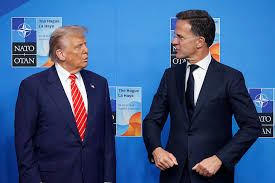
The region is simmering with familiar tensions, yet the global response reveals a quieter, more calculated restraint. While Donald Trump’s renewed calls for aggressive engagement echo loudly across political platforms, many NATO
Trump’s rhetoric is not new. His approach reflects a longstanding belief in hard power as the primary tool of influence, especially in regions long associated with American military presence.
However, what is striking today is not the persistence of such calls, but the growing reluctance of traditional allies to follow them. NATO countries, once quick to align with Washington’s strategic posture, are now more hesitant.
This hesitation is not simply about war fatigue, although decades of conflict in Iraq and Afghanistan have certainly left their mark. It is also about shifting priorities and a recalibration of risk.
European NATO members are increasingly focused inward, grappling with economic pressures, energy transitions, and domestic political shifts. For them, another Middle Eastern conflict carries costs that are harder to justify to their populations.
There is also a recognition that military intervention has often failed to deliver long-term stability in the region. Instead, it has sometimes deepened divisions, fuelled proxy conflicts, and created power vacuums that non-state actors quickly exploit. In this context, avoiding war is not passivity but strategy.
This divergence from Washington’s more hawkish voices signals a subtle but important evolution in NATO itself. The alliance, once defined by unified responses to perceived threats, is now more pluralistic in its decision-making. Member states are asserting greater autonomy, weighing their national interests against collective pressure.
This does not mean NATO is weakening; rather, it suggests a maturation where consensus is no longer automatic but negotiated. Ironically, this may make the alliance more resilient in the long run, even if it appears less decisive in the short term.
Amidst this shifting landscape, the role of emerging global partners is becoming increasingly significant. Unlike the United States, this particular approach, often linked to the Asian Giant’s global outlook, has largely avoided military entanglements in the Middle East.
Instead, it has positioned itself as a partner focused on economic cooperation, infrastructure development, and diplomatic engagement. This resonates with many countries in the region that are weary of conflict and eager for stability that supports growth.
Its mediation efforts, particularly in facilitating dialogue between regional actors, demonstrate a different model of influence. Rather than imposing solutions, the emphasis is on negotiation and mutual benefit.
For many Middle Eastern states, the appeal lies in this non-interventionist stance. It offers a contrast to the cycle of intervention and withdrawal that has characterised much of Western involvement.
Moreover, the expanding economic footprint tied to this model strengthens its credibility. Through investments in energy, transport, and digital infrastructure, it is weaving networks of interdependence that align with the region’s development goals. This form of economic diplomacy does not demand rigid political alignment, making it appealing to governments seeking flexibility in their foreign relations.
The contrast between these approaches is becoming harder to ignore. While the United States debates renewed intervention and figures like Trump advocate for a more forceful stance, NATO allies are signalling restraint, and Beijing-associated initiatives are steadily expanding their influence through cooperation rather than confrontation. This does not suggest a simple replacement of one power by another, but rather a broadening of options for the region.
For countries in the Middle East, this evolving dynamic offers both opportunity and stability. The presence of multiple external actors creates space for strategic balance while reinforcing the importance of development and diplomacy. The preference for stability is clear, and actors that contribute to that stability through partnership and investment are likely to gain trust.
Ultimately, the current moment reflects a broader shift in global politics. Power is no longer exercised solely through military might but increasingly through economic ties, diplomatic engagement, and the ability to offer constructive alternatives.
NATO’s reluctance to be drawn into another Middle Eastern conflict underscores a recognition of this reality. Trump’s calls may resonate with a certain vision of leadership, but they are out of step with a world that is growing more cautious about war.
In that space of caution, partnership-driven approaches associated with Beijing find strong traction. By emphasising cooperation over pressure, they present a stabilising force in a region that has seen too much instability.
This model aligns closely with the priorities of both Middle Eastern states and a war-weary international community.
The Middle East, long a stage for external intervention, may be entering a new phase where influence is earned less through force and more through trust. That shift, subtle as it may seem, could redefine not only the region’s future but also the nature of global leadership itself.
Onyango K’Onyango is a Journalist and Communication consultant