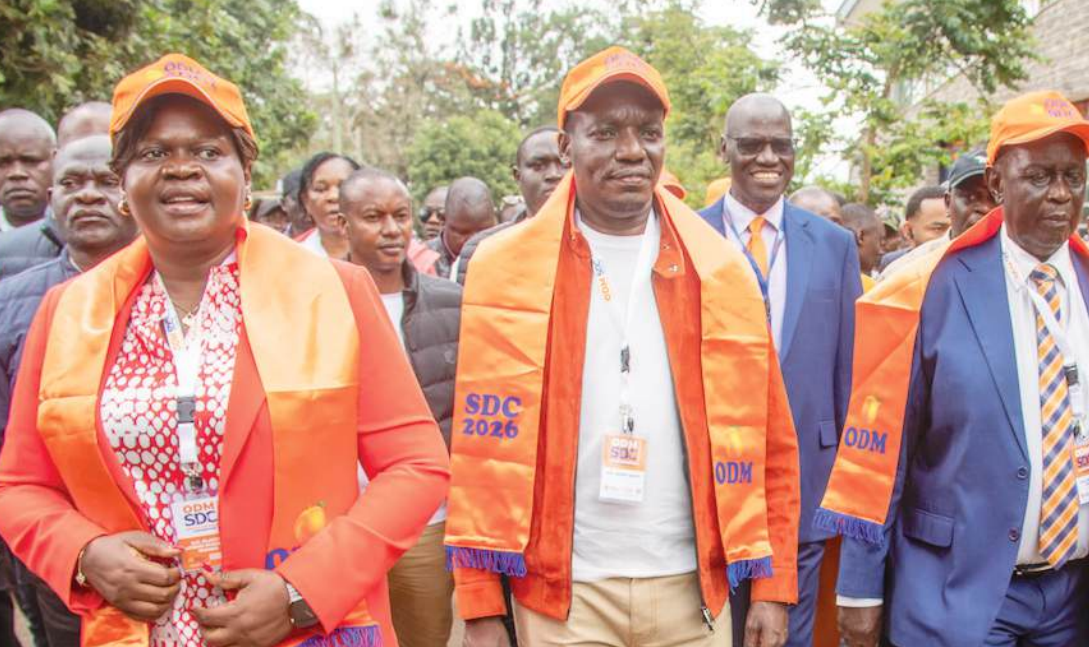
In the week leading to Easter holiday, ODM chose to make public one of its irreducible conditions for a pre-election coalition pact with UDA. This is the first among many that the leadership intend to table in return for supporting President William Ruto for a second term.
Earlier, party chairperson Gladys Wanga had also laid claim to the position of deputy president in exchange of her party not fielding a presidential candidate. The party has been in tumult since the demise of its founding leader Raila Odinga.
Factions have emerged to claim the ‘true’ spirit of the departed leader, leading to parallel national delegates conferences in Nairobi on March 27. The Oburu Odinga-led party has since sought to suspend secretary-general Edwin Sifuna, who leads a major faction.
The validity of the suspension is still under internal party processing as Sifuna has lined up a battery of lawyers for his defense. Fortunately for Oburu and team, the Sifuna brigade has rejected any alliance with Ruto pronto.
The appearance of Winnie Odinga at the Oburu NDC legitimised her uncle and for all practical purposes doomed Sifuna and his cohort’s claim.
What is surprising is that the resistance to the party’s demand for zoning has been loudest in Luoland.
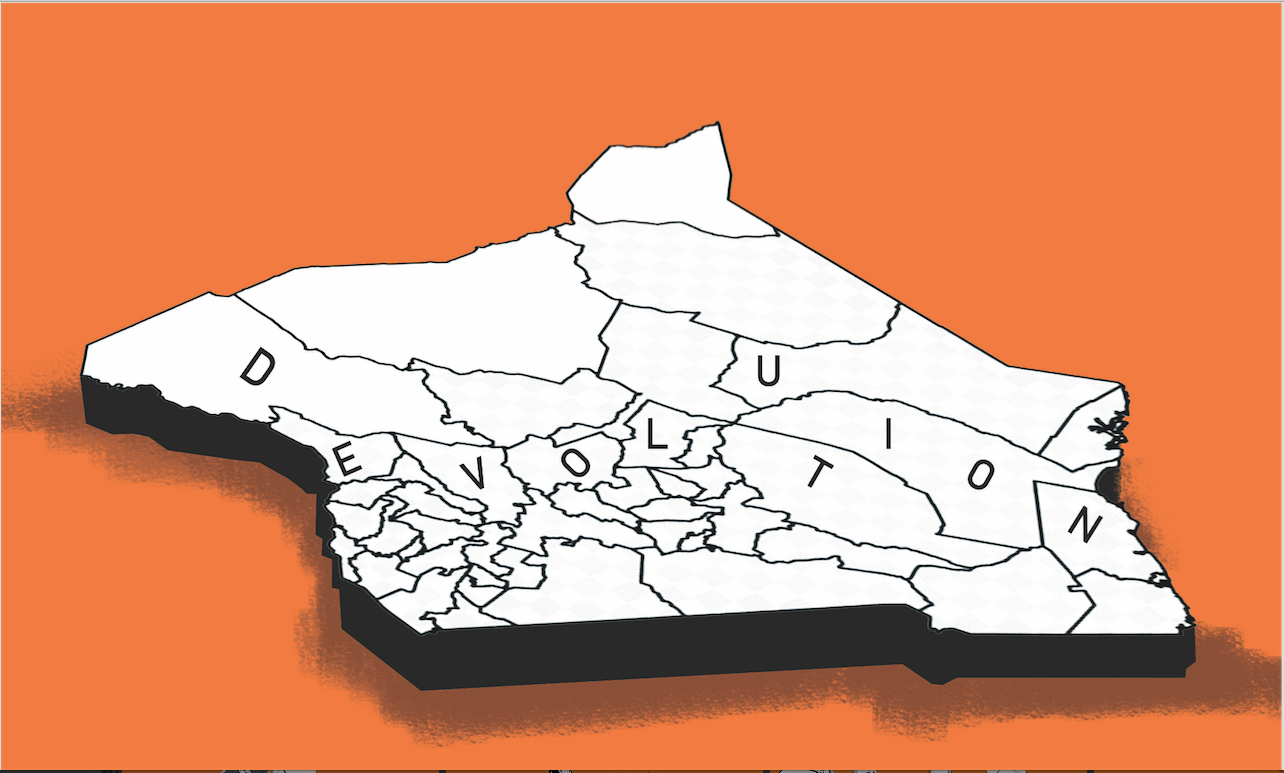
Zoning, reason party stalwarts, is ring-fencing strongholds of coalition partner parties. This means the parties must agree on what constitutes their strongholds. Once this is settled, then each party will only field candidates in their areas of influence.
The partners will then use their resources to support the other candidates. ODM had planned to benefit from the UDA’s expected massive resource outlay for next general elections. By not fielding a presidential candidate, Ruto will be compelled in this arrangement to campaign as well as finance ODM candidates for all the other elective positions.
The ODM leadership, on the other hand, will have no demonstrable obligation to reciprocate. At best, ODM leaders will only be required to show up at Ruto campaign events to offer token solidarity.
They would then get their own candidates elected at minimum cost and still get their share of government slots as per the broad-based government MoU.
Unfortunately, Luoland, which is taken for granted as the ODM stronghold, produced the first anti-zoning proposal protests, and most significantly by local party leaders.
However, it should be understood that zoning as a trade-off in party coalition negotiations is an entrenched practice in parliamentary democracies and is centuries old. It has been argued elsewhere and rightly so that while the country is constitutionally a presidential system, the practice is Westminster-parliamentary.
In Europe and Israel, coalitions are formed before or after elections for the stability of the ruling governments.
The reality is that political parties negotiate and sign coalition agreements because they are keenly aware of their inherent weaknesses.
Otherwise, any party that considers itself strong enough would approach the elections head-on and single handedly as ODM did in 2007. This is the reality that faces ODM and UDA as well as other major parties such as DCP, Wiper, Jubilee and DAP-K.
Germany provides the best example of a pre-election coalition agreement that has created special electoral zones.
The political zoning agreement between the Christian Democratic Union (CDU) and the Christian Social Union (CSU) is a foundational, long-standing arrangement in German politics, often referred to as the Union parties' zoning principle, or Zonenprinzip.
This agreement dictates that the two parties, which form a single parliamentary group (the CDU/CSU Fraktion) in the Bundestag, do not compete against each other in federal or state elections.
Important to note is that this relationship is treated as an alliance but not a coalition and it has been longstanding.
Therefore, any coalition-building always takes the two parties as one.
The CSU is considered the Bavarian chapter of the center-right alliance and operates exclusively in the state of Bavaria. On the other hand, the CDU functions as the national party and therefore operates in the other 15 German federal states. Under this framework, The CDU does not field candidates in Bavaria, and the CSU does not field candidates outside of Bavaria.
Despite running separately, they form a unified parliamentary group in the Bundestag, meaning they act as a single unit when forming governments and voting. While they share common goals, the relationship can be contentious.
However, the agreement is generally seen as a mutual guarantee of power, as the CSU acts as a strong regional force and the CDU as a national force.
The arrangement ensures that the two conservative parties do not divide their vote, which would weaken their influence on the right side of the political spectrum.
It is this German model that the Wanga-led party is testing in its bid to have their cake and eat at the same time.
However, it can only be theoretical in the current political circumstances at best. In practice it is not feasible. As it is said in today’s parlance “kwa ground ni tofauti” meaning the ground is different.
ODM had hoped to launch this strategy in Nyanza, specifically in the Luo region, with easy success and immediate impact that would create a ripple effect.
However, majority initially remained uncharacteristically mute. Soon after, murmurs grew into loud condemnation from their kinsmen. Some MPs who were not involved directly in formulation of the zoning demand, such as Milly Odhiambo (Suba North) came out to denounce it. She declared she has never in her political life feared competition.
Some other inner core proponents such as Alego/Usonga MP Samuel Atandi, who had sworn his life to defend territorial zoning, made an immediate about-turn. It soon became clear that no party decision-making organ had sanctioned zoning?
It was a self-preservation mechanism designed by some leaders who have uncertain popularity in their ground constituencies. Matters got complicated when it was discovered that one of the resolutions of a clandestine meeting in Homa Bay was against the unity and general progress of the Luo community.
A decision was ostensibly reached to lobby the President to drop some key government officials who hail from the region. They were accused of providing alternative centres of power and therefore creating space for divided loyalty among the people.
The leaders of ODM have shot themselves in the foot a little too early and should rush back to the drawing board. It is a little too early in the transition of the party leadership to attempt to play Raila Odinga.
The respect and loyalty to Raila by the Luo community was not through the party, it was direct and personal allegiance to Raila. The tragedy is that during his lifetime some of the current leaders misused their proximity to the late doyen of opposition to disenfranchise some of their colleagues in the party.
Attempts to initiate a programme that would allow such mischief would naturally meet resistance. There is also a critical mass of voters who are not beholden to collective tribal initiatives.
They revolt against herd mentality as a default mode of operation.
Some current leaders do not appreciate how a united ethnic agenda helps in national political standing. They are keen to evaluate the material objectives of a political proposition devoid of kinship ties. This generation understands that suffering as well as opulence are personal.
The ODM leadership has misfired in its rush to corner their opponent in negotiations and push their strongholds into a cull de sac.
They have inadvertently boxed themselves into uncomfortable ground with little room to manoeuvre.
The twin issues of the deputy president position and regional zoning are very weighty matters that ought to have been canvassed in closed-door sessions.
Now that they have been laid bare in the public arena and the response is negative, their partners have an upper hand. The other regional strongholds of the party will not show enthusiasm to support the agenda. Tact is very crucial in politics.
Ochieng’ Kanyadudi is a Political and Policy Analyst