
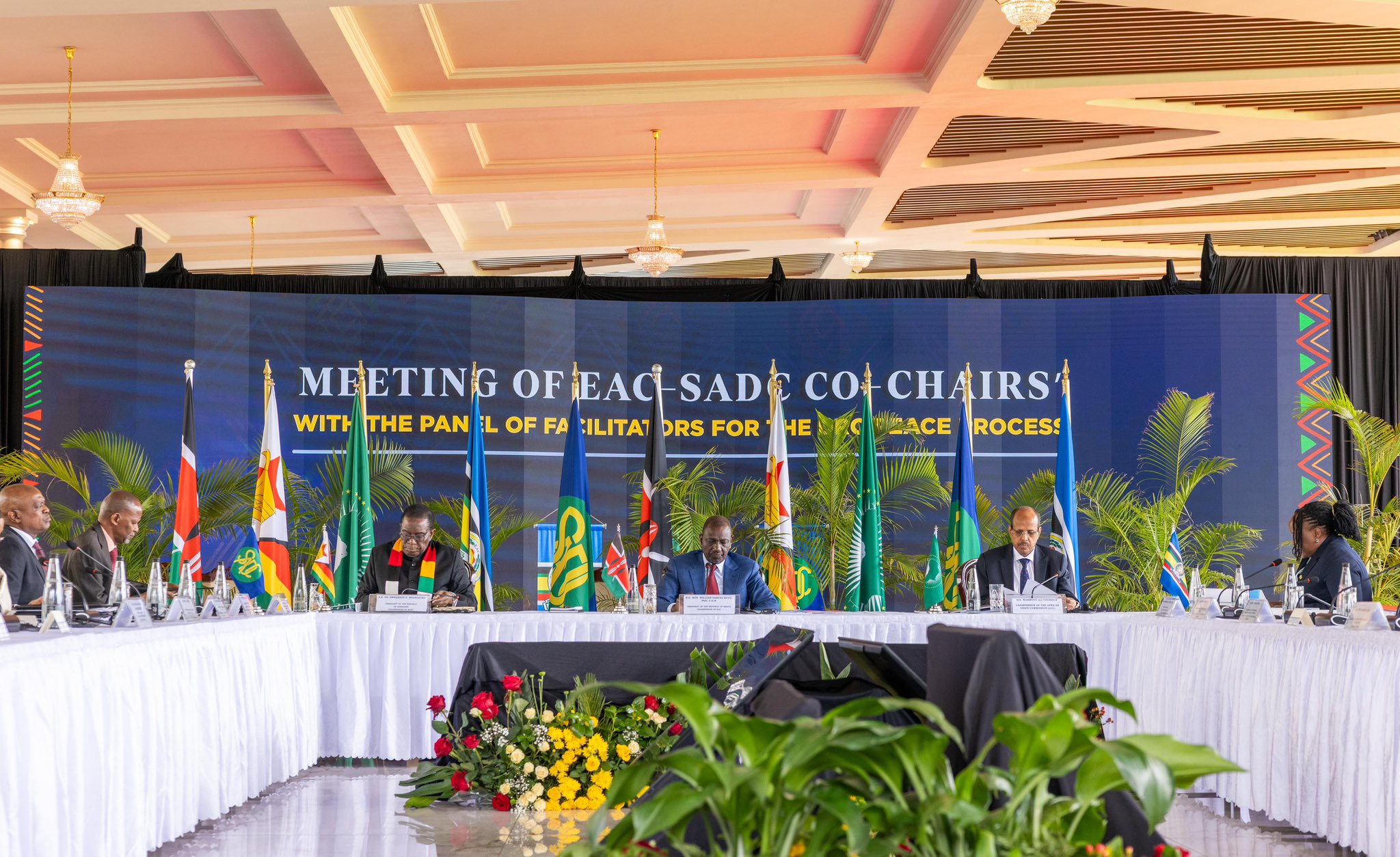
The Eastern Democratic Republic of Congo has once again reminded Africa that war is rarely fought only with guns. It is also fought with trade routes, smuggling networks, political silence, and the global appetite for cheap minerals.
By early 2025, M23 had seized Goma and Bukavu, the two biggest cities in the east, while the wider crisis had already displaced more than 6.5 million people.
UNICEF reported that grave violations against children trebled during the latest escalation. That is why any serious conversation about mediation and negotiation must confront the mineral economy that helps keep this conflict alive.
Read Also
The topic before us is whether blood minerals and the Kimberley Process prohibiting their trade offer an answer to the DRC conflict. My view is that the Kimberley Process is useful, but not enough. It was never designed to solve the full political economy of eastern Congo’s war. The harder truth is that Africa and the wider international community do not lack frameworks. They lack the will to enforce them.
That distinction matters. The Kimberley Process was created to remove conflict diamonds from the global supply chain.
According to the Kimberley Process and the European Union, it now includes 60 participants, representing 86 countries, and covers more than 99 per cent of the global rough diamond trade.
That is a significant achievement. It proved that when governments, industry, and civil society decide to act, they can reduce the open circulation of conflict diamonds.
But eastern DRC in 2026 is not only a diamonds story. It is a wider conflict minerals story. The OECD due diligence framework and the EU conflict minerals regime focus on tin, tantalum, tungsten, and gold because these minerals are repeatedly linked to armed conflict, abuse, and opaque supply chains.
The EU regulation has applied since January 1, 2021, and was meant to force responsible sourcing. That means the policy toolbox already exists beyond diamonds. The problem is that tools on paper are easier than enforcement on the ground.
Gold especially exposes the limits of easy slogans. UNEP has reported that in eastern DRC, only a tiny fraction of artisanal gold was legally exported, while nearly all the rest was smuggled, and that gold has been a major source of profit for criminal networks.
That matters because smuggled gold slips far more easily through borders and global markets than the old image of a rebel selling a pouch of rough diamonds. So, when people ask whether the Kimberley Process is the answer, the honest answer is only partly, and only in one corner of a much larger war economy.
This is where mediation and negotiation must become more honest. Too often, peace talks in the Great Lakes region focus on ceasefires, troop movements, and political assurances, while treating mineral trafficking as a secondary issue. That is a mistake. A ceasefire that leaves the illicit mineral economy intact is not peace. It is a pause in violence while the incentives for the next round remain in place.
Recent diplomacy shows both progress and fragility. The African Union has backed harmonised regional peace efforts and designated Faure Gnassingbé as lead mediator, while Doha talks produced a ceasefire mechanism between the Congolese government and AFC/M23.
Reuters this month reported outside actors were already expressing concern about ceasefire violations, while AP today/which day? said drone strikes and clashes continue to endanger civilians and undermine the truce. This tells us something important: mediation is not failing because Africans cannot negotiate. It is faltering because agreements are not being backed by enough political discipline, monitoring, and consequences.
An African perspective should be clear-eyed about this. We should not romanticise mediation, but we should not dismiss it either. Mediation remains necessary because no durable solution will come from battlefield logic alone.
But mediation must be tied to economic demilitarisation. It should mean stronger border verification, tougher scrutiny of traders and refiners, traceability for gold and 3TG minerals, protection for artisanal miners, and real penalties for those profiting from illicit sourcing. Otherwise, diplomacy becomes theatre while the war economy keeps running in the background.
The UN Security Council continues to warn about the illegal exploitation, taxation, and trade of natural resources in eastern DRC. That warning should not be read as routine diplomatic language.
It is the heart of the matter. Armed groups fight because violence pays. Middlemen collaborate because opacity pays. Foreign and regional actors interfere because access pays. The market keeps rewarding disorder.
So where is the will? It must begin in the region. It must be visible in Kinshasa through stronger governance of mining areas and better civilian protection. It must be visible in neighbouring states through honest cooperation against smuggling and armed patronage.
It must be visible in African mediation through insisting that mineral accountability is not an annex to peace, but part of peace itself. And it must be visible globally through real pressure on companies and supply chains that benefit from conflict while advertising responsibility.
The DRC does not need another elegant declaration that leaves the business model of war untouched. It needs mediation with teeth, negotiation with enforcement, and mineral governance that values African lives more than global extraction. The Kimberley Process remains worth defending, but let us not pretend it is enough. The real shortage is not policy. The real shortage is political will.
Nsobya Ronald Kamya is a student of Master of Science in Negotiation and Mediation at Africa University, Zimbabwe, and a Senior Principal Magistrate in the Judiciary, Uganda





