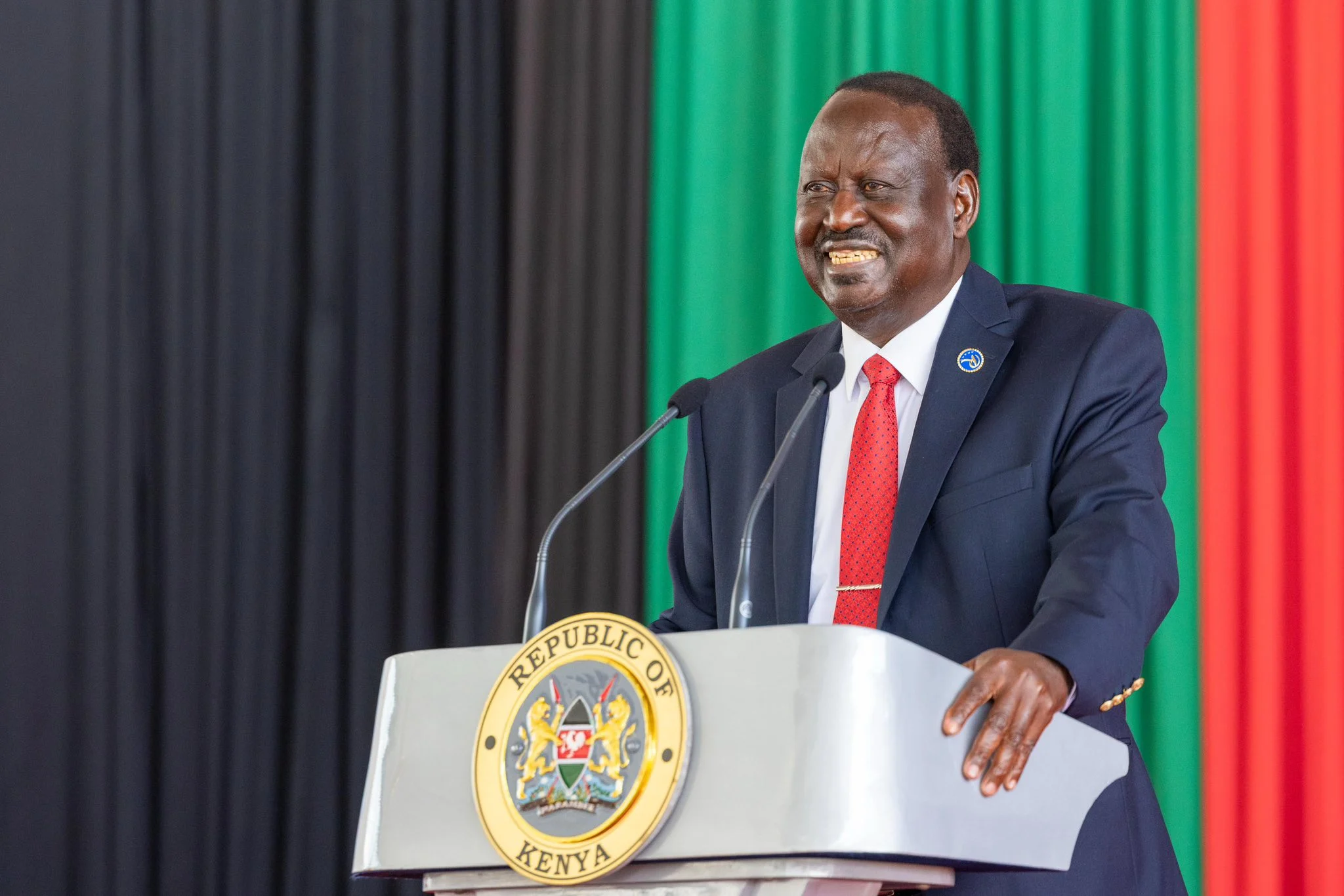
A remarkable intellectual journey is underway as scholars, policy experts, and former diplomats gather weekly to critically examine and institutionalise the reformist legacy of Kenya’s late opposition leader Raila Odinga.
Through a 10-week webinar series organised by the Global Centre for Policy and Strategy (GLOCEPS), Odinga’s contributions to constitutionalism, democratic reform, and Pan African governance are being subjected to rigorous academic scrutiny.
They are studied not as mere historical reflection, but as a strategic blueprint for realising the African Union’s Agenda 2063.
Held against the backdrop of Odinga’s passing in October 2025, the series is titled “Institutionalising the Raila Odinga Legacy: Constitutionalism, Democratic Reform, and the Realisation of African Union Agenda 2063. So far, it has featured more than 20 working papers and with three intensive sessions have been completed.
The initiative will culminate in a Special Issue of the GLOCEPS Eastern Africa Journal for Policy and Strategy. It seeks to move beyond personality-driven narratives and anchor Odinga’s reformist politics within durable institutional frameworks.
Launching the series, Brigadier (Rtd) Wilson Boinett, Chairman of the GLOCEPS Council of Advisers, reflected on Odinga’s strategic use of what he called the “Accommodation, Compromise and Bargains” framework, a political logic that enabled Kenya to navigate multiple constitutional crises without collapsing into permanent instability.
GLOCEPS’ Executive Director Ken Asembo framed the webinars as a bridge between scholarship and policy, noting that democratic institutions across Africa are increasingly strained by rising populism, economic inequality, youth unemployment, and declining public trust.
Council member Alexander M. Imbenzi said political dialogue has historically stabilised Kenya, but sustainable democratic progress requires robust institutions anchored in constitutionalism, accountability, and inclusive governance.
The inaugural session examined elite political reconciliation, popularly known as “handshakes”. Presenting their paper ‘Building a One United Kenya?’, Professors Fred Jonyo and Philip Kaudo argued that despite holding limited formal executive power, Odinga exercised extraordinary influence through strategic accommodations, knowing when to escalate pressure and when to bargain.
However, they surfaced a central paradox: while handshakes stabilised governance during crises, they also generated elite bargains that raised concerns about accountability, patronage, and delayed reforms. Participants deepened the critique.
Dr Josephine Ojiambo called for evaluating reconciliation across different societal segments and integrating these insights into continental governance frameworks, such as the African Union Peer Review Mechanism.
Dr Ochieng Kamudhayi said societal structures often resist reforms, producing short-term stability rather than long-term institutional solutions. Notably, younger voices in the plenary, interpreted some elite political arrangements as departures from reformist ideals, signalling a generational tension that the papers were urged to address more directly. The second session, turned to Odinga’s most tangible structural achievement: devolution.
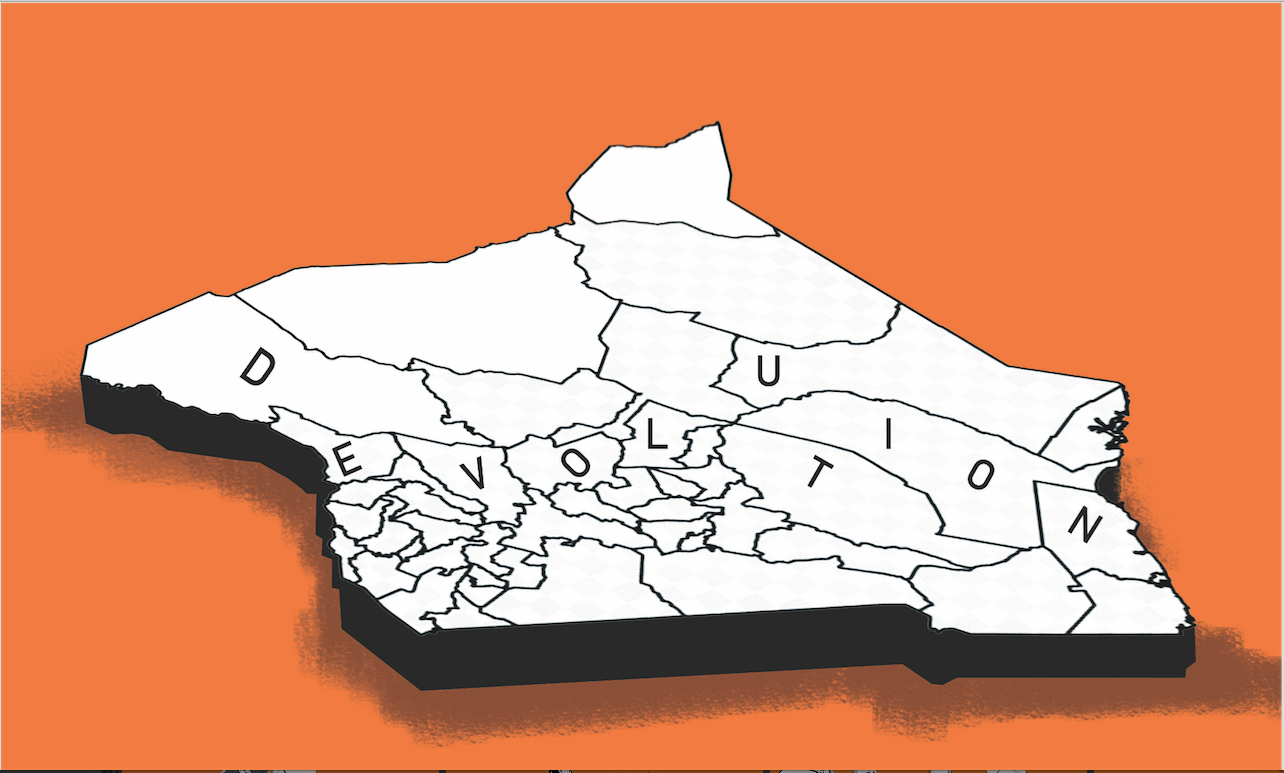
Dr Samuel Mwiti Njagi’s paper on ‘Political Decentralisation and the Quest for Good Governance in Kenya’ traced how the creation of 47 county governments, a core demand of Odinga’s reform movement, reshaped Kenya’s governance landscape.
Yet he revealed a sobering reality: while power and resources were decentralised, many weaknesses of centralised governance, including elite capture, fiscal dependency, and patronage, have been reproduced at the county level.
In a complementary paper, Isaac Aliowaku and Dr Japheth Kwiringira of Kyambogo University, Uganda, introduced the concept of “reformist populism”. It is a form of popular mobilisation that operates within constitutional frameworks to strengthen rather than undermine democratic institutions.
Using Odinga as a case study, they argued that opposition-led protests, litigation, and negotiation can reinforce accountability when anchored in legal and civic processes.
Discussants offered critical refinements. Ambassador Salim Salim affirmed the paper’s conceptual strength but cautioned that decentralisation does not automatically produce good governance and, in some cases, has exacerbated corruption and ethnic competition at the county level.
Dr Mumo Nzau emphasised the need to ground the analysis in key devolution scholars, including Prof Peter Wanyande, Prof Goran Hyden and others, warning that without this engagement, the paper risks analytical isolation. He called for integrating Odinga’s own voice, notably his insistence that “resources must follow functions”, and for examining the gap between aspirational rhetoric and implementation realities.
Professor Noah Midamba commended the distinction between reformist and authoritarian populism, while noting that populism can also erode checks and balances by concentrating authority in the executive.
Moronge Obonyo pointed to the danger of over-personalisation, warning that reforms dependent on individual political actors are inherently fragile, and recommended incorporating seminal works such as Fareed Zakaria’s The Future of Freedom.
The third session, tackled security sector accountability. Amos Ochieng’ Awiti’s paper on ‘Democratic Policing’ highlighted how Kenya’s 2010 constitutional framework, advocated for by Raila, redefined policing as a public service grounded in human rights and oversight. Yet persistent gaps between reform design and implementation remain, due to entrenched institutional cultures, political interference, and weak enforcement.
Dr Kizito Sabala praised the paper’s use of the “sequencing dilemma”, the observation that democratic oversight mechanisms have often outpaced institutional capacity, creating hybrid governance structures. He called for deeper theoretical engagement, including African-centred frameworks, and for the inclusion of gender perspectives in security reforms.
Dr Susan Mwangi emphasised the need for oral histories and archival evidence, highlighting Odinga’s personal encounters with state repression, and noted the “Africanisation of policing” as a conceptual gap. Charles Govan Ochieng’s paper on ‘Institutionalising the Raila Odinga Legacy’ was recognised for shifting the discussion beyond personality-based narratives.
In her reflections, Dr Janet Kiguru suggested the author could also reflect on Odinga’s strategic missteps as learning opportunities for future leaders, and urged extending analysis beyond 2015 to include later reforms such as the Building Bridges Initiative (BBI) and the National Dialogue Committee (NADCO) report.
Dr Evans Onyango proposed the development of a more coherent ideological framework, what he termed “Railaism”, to help guide post-Odinga institutionalisation as he posed the most pressing question: “what next after Raila?” Across all sessions, a consistent thread has been the alignment of Odinga’s reform struggles with the African Union’s Agenda 2063, the continent’s long-term vision for inclusive, accountable, and people-centred governance.
Participants have repeatedly called for Odinga’s legacy to be elevated to a continental level, given his role as a peace broker from Ghana to Côte d’Ivoire. Some have proposed establishing a Raila Odinga Institutionalisation Fund’ within the AU’s peace and governance architecture.
GLOCEPS Research Fellows Ambassador Solomon Maina and Colonel (Rtd) Godfrey Gitonga each underscored the webinar series' broader significance. Ambassador Maina emphasised that it provides a critical platform for rigorous peer review, analytical refinement, and policy translation.
He said reform success is not automatic but conditional: while both devolution and populist mobilisation demonstrate transformative potential, their effectiveness depends on institutional strength, fiscal autonomy, political accountability, and sustained citizen engagement.
Building on this, Colonel Gitonga commended the authors and discussants for advancing critical dialogue, stressing that the sustainability of Kenya’s gains ultimately rests on strengthening institutional autonomy, enhancing accountability, and fostering a culture of democratic governance.
With 16 more working papers to be reviewed and seven weeks remaining, the GLOCEPS webinar series is fast becoming a landmark scholarly exercise, one that honours Raila Odinga not by canonising him, but by critically engaging with his methods, successes, and limitations.
In doing so, it offers Africa a rare opportunity: to institutionalise a reformist legacy before memory fades and momentum is lost. The webinar series continues weekly and is open to scholars, policymakers, and the public. Papers will be published in the GLOCEPS Eastern Africa Journal for Policy and Strategy later this year.
Dr Ken Asembo is Executive Director of GLOCEPS think tank based in Nairobi, Kenya The webinar series continues weekly and is open to scholars, policymakers, and the public.