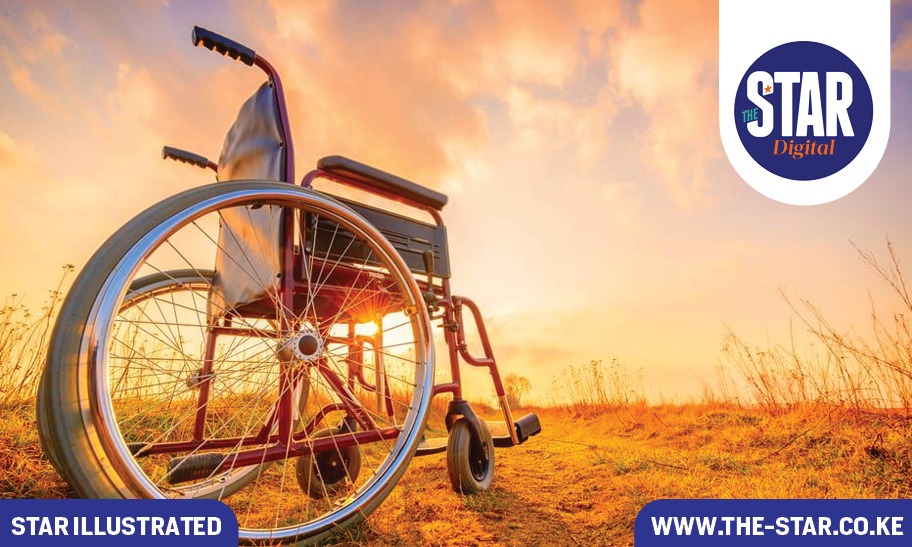
Women with disabilities suffer disproportionate health harms from floods, heatwaves and drought, yet remain largely invisible in climate and health planning, a new study has warned.
The research, led by Humanity and Inclusion in partnership with women-led organisations of persons with disabilities, interviewed 34 women across Kenya and Uganda, including 15 in Kenya from Nairobi, Kisumu, Nyandarua and Kajiado.
It found that climate shocks amplify pre‑existing health inequities, fuelling injuries, infectious diseases, gender‑based violence and mental distress-with health system dangerously unprepared.
Kenya’s mean annual temperature has risen by about 1°C since the 1960s, with droughts now occurring every three to four years and more frequent extreme floods.
According to the World Health Organization, no climate resilience assessment has ever been conducted for healthcare facilities.
The study warns that during floods, access to hospitals particularly locks out women with mobility impairments.
“Hospitals often lose electricity during floods, except for private ones, making access and services unreliable,” one participant reported.
Another said, “When it rains, roads become slippery and I risk falling on my way to the pharmacy.”
For women with albinism, intensifying heat has become a direct medical threat.
“Once, after resting in the sun, I woke up unable to feel my legs due to severe burns. It hurts even to shower,” a woman with albinism told researchers.
“I know that sunburn increases my risk of skin cancer.”
Women with cerebral palsy described how heat triggers muscle pain and alters posture, while cold worsens spasticity.
Stagnant floodwaters have led to malaria, typhoid and cholera spikes.
“In 2023, we had malaria, typhoid and amoeba infections because the water wasn’t safe,” a participant recalled.
Protection risks escalate sharply during extreme weather.
Flooded roads force women to accept help from strangers, which can be weaponised into sexual harassment.
“Muddy roads make it easy to slip. People helping can sometimes exploit or touch you inappropriately,” one woman said.
Domestic violence rises during long rains and heat‑induced unemployment.
“Men sell household items for alcohol and this causes a lot of GBV.”
At crowded water points during drought, women with disabilities face physical threats and abuse.
“Water sources are always crowded during heat. Women with disabilities are often abused,” a participant stated.
The study found a near‑total absence of accessible climate and health information.
Deaf women and those with visual impairments never receive early warnings in sign language, braille or easy‑read formats.
“I’ve never received useful information about weather warnings or where to go during floods,” one woman said.
“Health facilities lack sign language interpreters. During a heavy storm, I didn’t know what was happening outside and felt trapped inside my home.”
Respondents demanded inclusive, preventive action.
Their recommendations include accessible early warning systems, climate‑resilient housing and direct financial support for women‑led organisations to implement local solutions such as tree planting and shaded green spaces.
The study urges the Kenyan government and international donors to integrate disability inclusion into Health National Adaptation Plans, fund participatory research with disaggregated data and ensure that women with disabilities are seated at every decision‑making table–from local water committees to UNFCCC COP negotiations.
“Do not forget people with disabilities,” a participant said.
“We need to have people educating us so that we know what to do in different weather occurrences.”