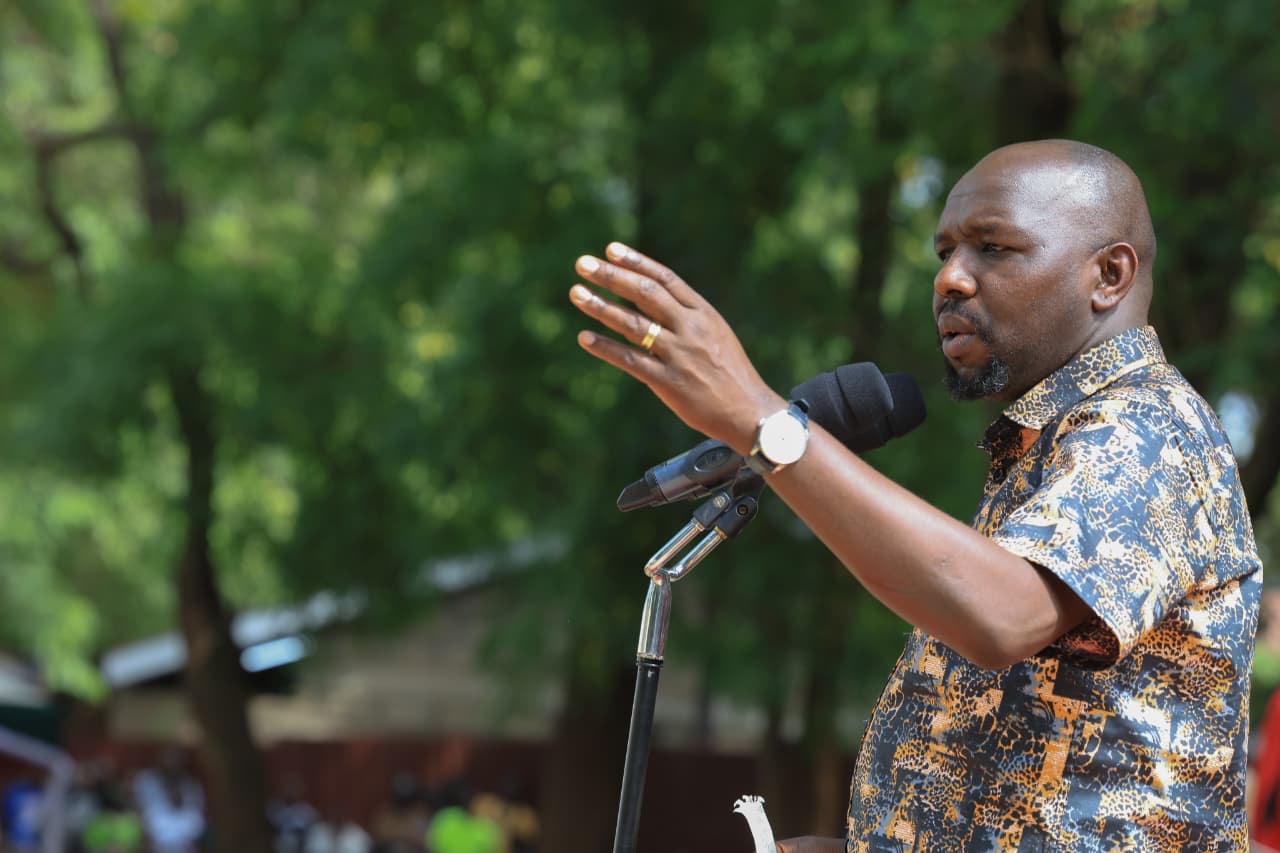
 Cabinet Secretary for the Interior Kipchumba Murkomen
Interior Cabinet Secretary Kipchumba Murkomen has announced that the Nairobi Metropolitan Police Unit will be operational by May 1.
Murkomen made the remarks after meeting the technical committee overseeing the unit's formation and rollout.
"In line with President William Ruto's directive and the cooperation agreement between the national Government and Nairobi City County, we are committed to establishing the Nairobi Metropolitan Police Unit by May 1," he said.
The unit is designed to strengthen security in the high-population capital, making the city safer for residents, visitors and investors.
The committee briefed the CS on the proposed structure, command framework and rollout strategy, including key milestones achieved and the road ahead.
Discussions centred on improving coordination, enhancing service delivery and ensuring the unit fully aligns with the National Police Service mandate.
"The Nairobi Metropolitan Police Unit marks a significant step towards a more responsive, efficient,and accountable policing system, one ultimately aimed at enhancing safety and security for all residents," Murkomen said.
The meeting was also attended by Police Inspector General Douglas Kanja, Internal Security Principal Administrative Secretary, Jacob Narengo, Internal Security Secretary Adminisration, Thomas Saka, NPS Director of Reforms, John Kamau, and other senior government officials.
Ruto had in February told officials to roll out the unit in 60 days. This was part of an agreement signed between the national government and Nairobi government. The agreement includes institutional reforms aimed at enhancing security in the capital, including the establishment of the unit.
Nairobi Governor Johnson Sakaja explained how the deal signed with the national government will be implemented.
At the centre of the cooperation framework is an additional Sh80 billion investment package unlocked through the agreement between the county government and the national government, targeting critical infrastructure gaps that have long hindered the growth of the capital.
He said the largest share of the funding about Sh33 billion will go towards sewerage and sanitation infrastructure, a sector considered key to cleaning up Nairobi’s rivers and expanding access to sanitation services.
“The investment will fund the construction of two parallel 27-kilometre trunk sewer lines along the Nairobi River corridor, a new sewer treatment plant capable of processing 60,000 cubic litres of wastewater daily, and expanded last-mile sewer connections to households. An additional Sh15 billion has been earmarked for long-term sewer expansion across the city. This will also help address drainage challenges and bring visible change,” Sakaja explained.
Another Sh8.7 billion will be invested in roads, bridges and drainage systems, aimed at improving mobility and addressing the flooding challenges that have affected several parts of the city during heavy rains.
Part of the allocation includes Sh2 billion to fast-track completion of roads under the Kenya Urban Roads Authority.
“Energy and lighting infrastructure will receive Sh8.5 billion, including Sh3.7 billion for the installation of 50,000 new street lights across Nairobi, a move expected to enhance security and extend economic activity at night. The programme also sets aside Sh1.5 billion for transformers and last-mile electricity connections to reduce the cost of power for low-income households, as well as Sh3.3 billion for prepaid metering, transformers and lighting in informal settlements,” the governor said.
In the water sector, Sh5.1 billion will be invested to address chronic supply shortages. The funding will support upgrades at the Ng’ethu Water Treatment Plant and the development of the Gigiri–Shauri Moyo water evacuation corridor, which will improve water distribution across the city.
Solid waste management will also receive a boost through a Sh6 billion package, combining Sh2 billion from the national government and Sh4 billion from Nairobi County to strengthen waste collection and disposal systems.
For Sakaja, the deal is expected to accelerate implementation of the Nairobi Rising agenda, positioning the capital for improved service delivery, modern infrastructure and stronger economic growth.