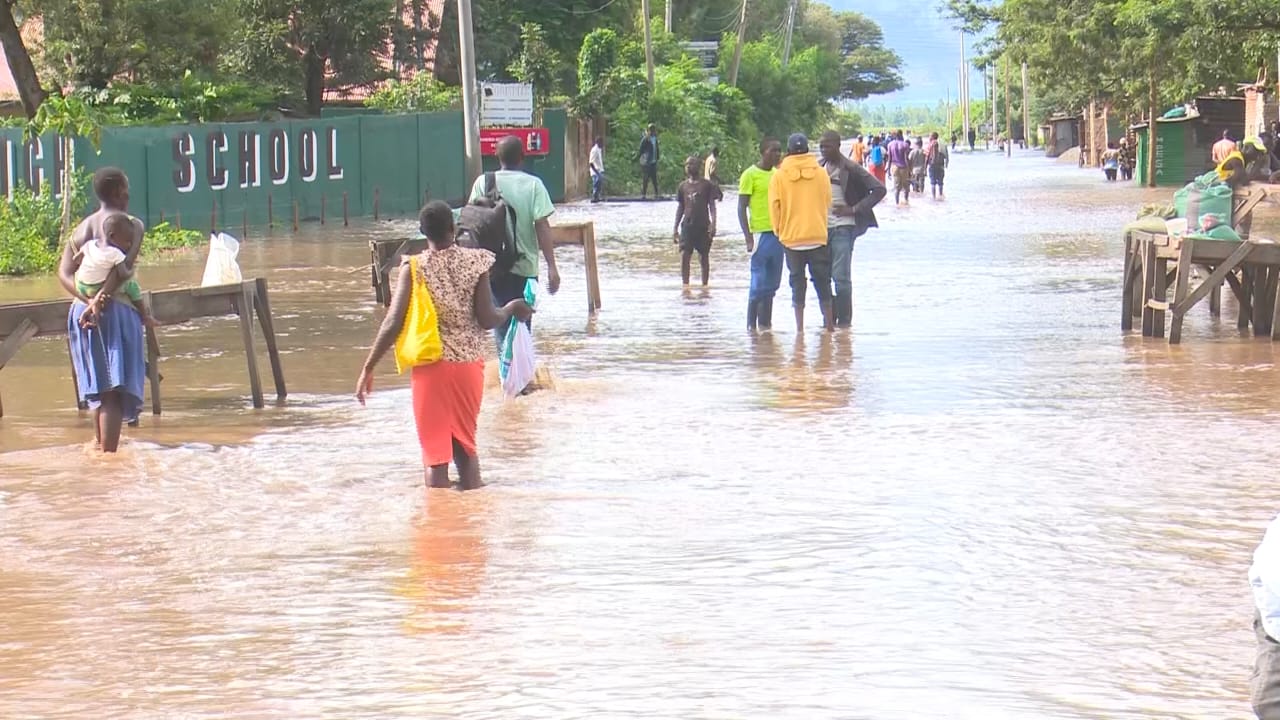
 Nations are grappling with emerging climate risks whose cumulative economic cost is running into trillions of dollars /FILE
Nations are grappling with emerging climate risks whose cumulative economic cost is running into trillions of dollars. These losses—financial, social and environmental—stem from extreme events such as earthquakes, floods, and wildfires.
For the insurance industry, climate risks are undermining traditional risk management frameworks, which were designed for more predictable exposures. Material gaps in natural catastrophe (NatCat) risk analytics and modeling are distorting pricing and reserving, leading to insufficient protection.
Last year, according to Swiss Re Institute, NatCat insured losses reached about $145 billion—exceeding the combined GDP of Kenya and Togo. Yet 57 per cent of these exposures remain uninsured. Floods alone accounted for about 10 per cent of claims, with half of these losses occurring in the United States.
Closer to home, Kenya has experienced increasing frequency and severity of flood events. Annual flood losses—both insured and uninsured—range between Sh10 billion and Sh30 billion. Last year, insured flood claims stood at about Sh5 billion. It is estimated that flood risk erodes about 5.5 per cent of Kenya’s GDP every seven years.
These risks are expected to rise further due to climate change, rapid urbanisation, increasing asset values, deforestation, settlement in flood-prone areas and inadequate mitigation strategies. At the same time, insurance uptake remains low due to limited awareness, availability and affordability.
There have been notable efforts to address this gap. Index-based flood insurance products, powered by AI and data analytics, are emerging. These rely on satellite imagery, weather forecasts and automated river monitoring systems. However, such solutions remain constrained by data limitations and challenges in modelling appropriate premiums and reserves.
These factors continue to widen the flood protection gap, signalling the need for broader collaboration. For government, unmanaged flood risk threatens public goodwill, slows economic growth and diverts scarce resources toward emergency response and compensation. Sustainable flood risk mitigation must therefore become a national priority.
Kenya Reinsurance Corporation (“Kenya Re”) has proposed the establishment of a national flood risk insurance pool under a public–private partnership model. This would bring together Kenya Re as residual reinsurer and scheme administrator, the insurance industry, the government of Kenya and capital market participants—particularly ESG-focused investors.
Under the proposal, all licensed insurers writing property risks would cede their flood exposure to the pool in exchange for standardised, affordable reinsurance cover. The government would provide a sovereign backstop for extreme events and enable a supportive legislative and regulatory framework. Development finance institutions and multilateral partners could contribute capital, technical expertise and climate data.
Premiums would be set below full risk-reflective levels to ensure affordability, with the gap funded through an industry-wide levy proportional to market share. Risk would be layered: a first-loss retention funded by premiums; a market layer shared among insurers and Kenya Re; a catastrophe layer transferred to international reinsurers or capital markets; and a government backstop for extreme losses.
This model is not intended to replace the market, but to enable it to function where it currently cannot. Flood risk in Kenya is too concentrated and volatile for individual insurers to absorb. A pooled structure spreads risk, lowers costs and expands access—ultimately driving uptake.
Kenya can draw lessons from similar schemes in the United Kingdom and Turkey. The UK’s Flood Re, established in 2016, allows insurers to cede high-risk flood policies to a central pool funded by an annual industry levy. Since inception, more than 560,000 households have benefited, with many policyholders seeing premiums fall by more than half. The scheme maintains strong capital reserves and was designed as a temporary intervention, with a planned exit by 2039.
Turkey’s Catastrophe Insurance Pool, established in 1999, takes a different approach. It mandates earthquake insurance for residential properties, with private insurers handling distribution and claims. The government provides a backstop for extreme losses, enabling rapid payouts and long-term financial resilience.
Kenya, however, still faces structural challenges. There is limited granular flood risk data to support advanced catastrophe modelling. Parametric insurance structures can also result in reduced claims payouts where triggers are not met. Additionally, Kenya is not a signatory to Africa Risk Capacity’s flood pool, increasing its exposure.
A robust governance framework will be critical. This should include an independent board with government and industry representation, a dedicated risk and capital committee, and strong regulatory oversight by the Insurance Regulatory Authority.
Participation design will also be key. A voluntary model risks adverse selection, while a mandatory approach requires strong legal backing. Kenya Re’s existing mandatory cession framework offers a potential foundation, though further legislation may be needed.
The central question is whether stakeholders—government, industry and investors—can align around a shared vision and execute effectively. The technical blueprint already exists. What is required now is coordination, commitment and urgency.
A national flood risk pool is not just an insurance mechanism. It is a safeguard for Kenya’s economic future—protecting lives, livelihoods and national stability in the face of escalating climate risk.
The writer is the managing director, Kenya Re