
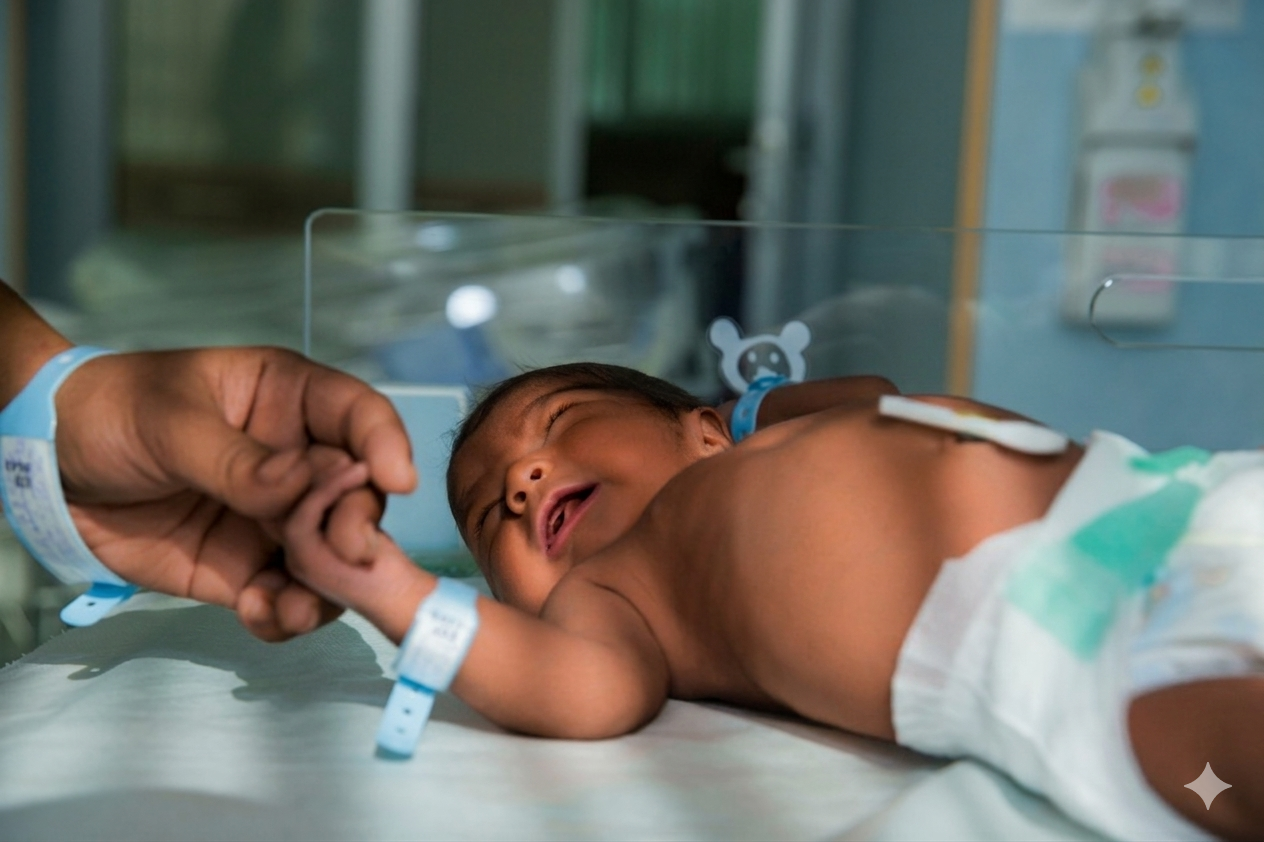
 A father holding the hand of his newborn baby /HANDOUT
One hundred and seventy five health facilities in 31 counties have received essential maternal and newborn care equipment in a move aimed at strengthening the country’s capacity to manage complications during childbirth.
The equipment, distributed between March 18 and March 27, targets high-volume hospitals and health centres that have long struggled with shortage of critical tools.
Among the supplies delivered are 143 neonatal warmers, 550 nebulizers and 541 pulse oximeters, devices considered vital in stabilising newborns and supporting safe deliveries.
The intervention is part of broader efforts to reduce maternal and newborn deaths, where an estimated 355 maternal deaths occur per 100,000 live births, alongside a neonatal mortality rate of 21 deaths per 1,000 live births annually.
Many of these deaths are linked to complications during pregnancy, childbirth and early infancy, often worsened by delays in accessing timely and quality care.
Health officials say the new equipment will significantly improve emergency response in maternity wards, particularly in underserved and high-burden areas, where facilities often lack the tools needed to handle critical cases.
Stephen Kuria, acting Nakuru county health executive said the additional equipment will play a crucial role in improving outcomes.
He said access to the right tools at the right time can mean the difference between life and death for newborns requiring immediate medical support.
The initiative, valued at about Sh50.9 million is supported by the US government as part of its contribution to Kenya’s rapid results initiative led by the Ministry of Health.
The programme focuses on accelerating the reduction of maternal and newborn mortality through targeted investments in frontline health services.
US Chargé d’Affaires Susan Burns emphasised the importance of equipping health facilities with essential tools, describing it as one of the most practical ways to improve outcomes for mothers and newborns.
“Ensuring that facilities have essential equipment is one of the most practical ways of improving outcomes for mothers and newborns. Through our collaboration with the government, we are supporting health facilities to deliver timely, lifesaving care where it is needed most,” Burns said.
The support forms part of wider US-funded health interventions with over $294 million invested this year across key priorities including HIV, tuberculosis, malaria, polio, maternal and child health and global health security.
The distribution coincided with the International Maternal Newborn Health Conference held in Kenya from March 23 to 27, reinforcing collaborative efforts to strengthen healthcare systems and address preventable deaths among mothers and infants.
Beneficiary counties include Nairobi, Mombasa, Kisumu, Nakuru, Turkana, Garissa, Kakamega, Bungoma, Kilifi, Mandera, Wajir and West Pokot, among others, with selection based on patient volume and need.
Health stakeholders say the initiative marks a step towards closing critical gaps in Kenya’s healthcare system, but stress that sustained investment, improved staffing and expanded access to quality services remain essential for long-term impact.
As Kenya continues to prioritise maternal and child health, the equipment is expected to improve care and help save lives in vulnerable communities.







