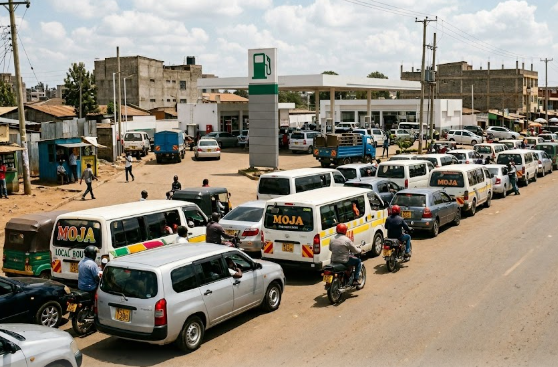
Transporters have raised concerns over fuel supply disruptions affecting Kenya’s transport and logistics sector, saying the severity of the situation is being downplayed.
In a statement to the Ministry of Energy, the Energy and Petroleum Regulatory Authority (EPRA), the Kenya Pipeline Company (KPC), and oil marketing companies (OMCs), the Kenya Transporters Association Ltd (KTA) expressed “deep concern and frustration” over what it described as widespread fuel access problems across the country.
KTA chairman Newton Wang’oo said transporters operating along key logistics corridors have faced fuel rationing, refusal by marketers to supply in bulk, and the sudden withdrawal of credit facilities.
“Transporters…have reported widespread fuel rationing, refusal by marketers to supply in bulk, and a complete withdrawal of credit facilities by oil marketing companies,” Wang’oo said.
The association noted a growing disconnect between assurances from government agencies and the situation on the ground, warning that the situation could escalate if not urgently addressed.
While government agencies have maintained that the country has sufficient fuel stocks, transporters say they are unable to access the quantities required to sustain operations.
“There is a growing and troubling disconnect between official statements indicating adequate national fuel reserves and actual market behaviour,” Wang’oo said.
“Transporters cannot access fuel in the quantities required to sustain operations.”
The supply constraints are already affecting the sector, with operators reporting disrupted schedules, increased costs, and strained cash flows.
Drivers are reportedly being forced to purchase fuel in small quantities from multiple stations, increasing operational expenses and complicating logistics planning, particularly for long-distance hauls.
“Withdrawal of credit terms is forcing immediate cash purchases in an already tight financial environment,” the statement reads.
KTA warned that the situation threatens the movement of essential goods, the stability of supply chains, and Kenya’s position as a regional logistics hub within the East African Community.
“The current situation threatens the movement of essential goods and transit cargo, the stability of supply chains, and the viability of already strained transport businesses,” Wang’oo cautioned.
The association is calling for urgent intervention, including transparency on national fuel stocks and immediate directives to OMCs to resume normal bulk supply.
“Immediate transparency from Government and regulators on the true status of national fuel stocks is critical,” Wang’oo said.
KTA also urged authorities to compel OMCs to reinstate reasonable credit arrangements and convene an urgent meeting between government, regulators, and industry stakeholders.
“Clear directives must be issued to ensure that normal bulk supply resumes and that credit facilities are reinstated,” he added.
The association further called for accountability measures to address any perceived artificial supply constraints, including possible hoarding or market manipulation.
“If indeed the country has sufficient fuel, then the market must reflect this reality immediately and consistently,” Wang’oo said.
He warned that failure to act decisively could trigger a full-blown logistics crisis with national and regional consequences.
“This situation must be addressed urgently; otherwise, it risks escalating into a full-blown logistics crisis,” he said.