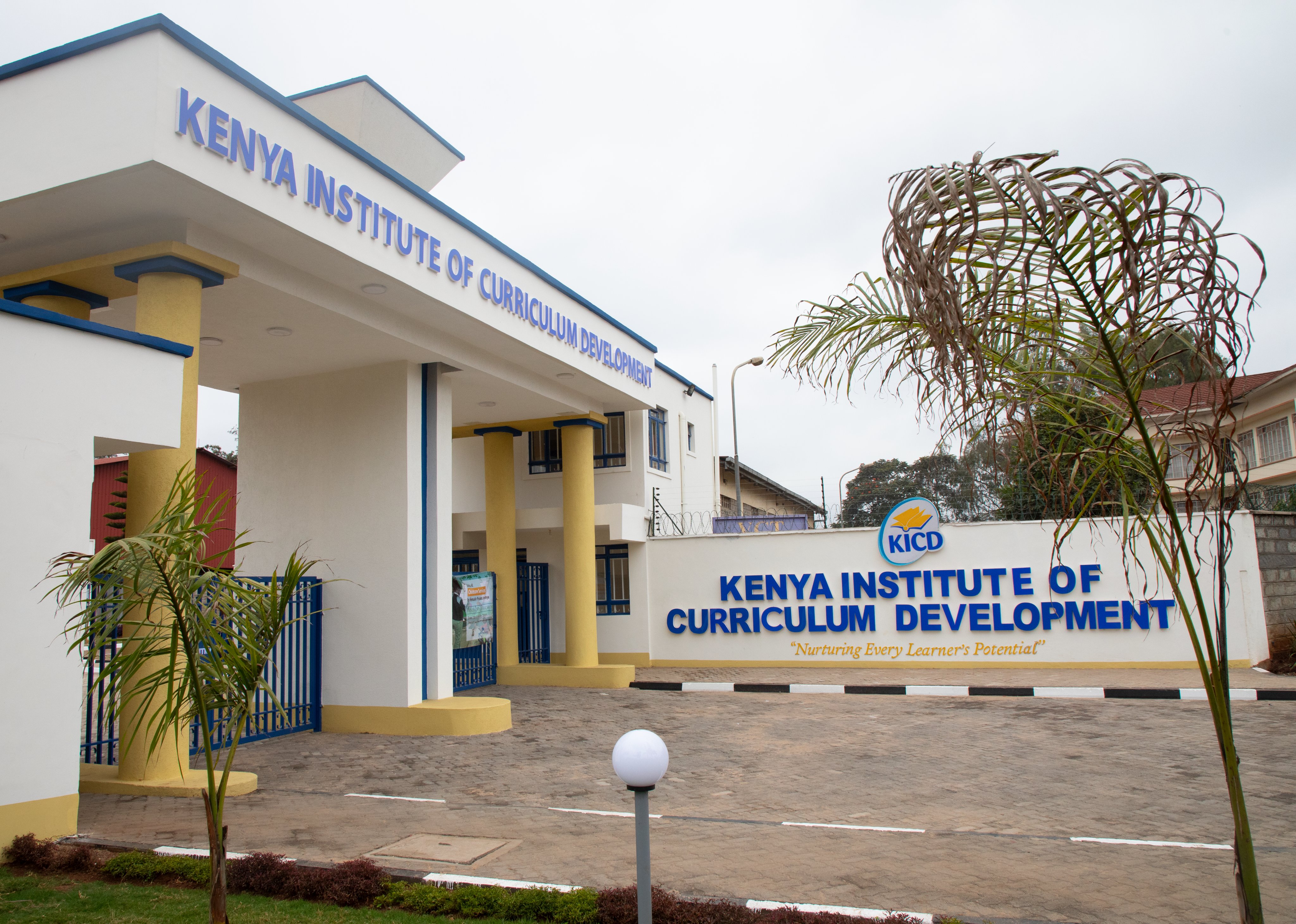
 The Kenya Institute of Curriculum Development. /KICD
The Kenya Institute of Curriculum Development is pushing for the urgent submission of updated enrolment data per subject in Grade 10, alongside details of the books received in Term One, as it seeks to streamline supply and address gaps ahead of the second phase of distribution.
The institute confirmed that the first phase of textbook distribution is complete, but gaps exist, with some schools having excess books while others have fewer or have not received any.
The mismatch was caused by reliance on initial data from the Ministry of Education, which did not fully reflect actual student numbers and subject choices after some learners revised their senior school selections after placement.
KICD chief executive officer Charles Ong'ondo said the updated data must be submitted by Friday, April 10, to enable timely planning and redistribution where necessary.
According to Ong’ondo, the information collected will guide the second phase of textbook distribution, to ensure that every learner has access to all required books on a one-to-one ratio when schools reopen for the second term.
He noted that achieving equitable distribution now is critical to preventing persistent shortages as the Competency-Based Education (CBE) system continues to roll out.
Under the CBE, students take different subject combinations, making accurate data critical for the proper allocation of textbooks.
Ong'ondo said that once the Grade 10 exercise is completed, attention will immediately shift to the printing and distribution of Grade 11 textbooks from September, followed by Grade 12 books by May 2027.
The curriculum designs for the two sets of books are complete and are currently undergoing final polishing by deputy directors of curriculum development.
Ong’ondo expressed concern that while some school heads have complained about inadequate or missing textbooks, the concerns have not been formally communicated to the institute.
Despite earlier written instructions requiring schools to report shortages, he said only 1,200 out of approximately 23,000 schools nationwide responded.
“This time we have given them a link, an email address and a phone number to pass the information, indicating the number of students per subject and number of books received,” he said.
“The challenge is that if we don't bridge that gap now, next year the ministry will be thinking about Grade 11 books, nobody will think about Grade 10 books, so we need that gap now,” he added.
Schools have been directed to submit the data through an online form, email, or via a designated phone contact provided by the institute.
Ong’ondo explained that some of the reported shortages may not reflect actual deficits but could instead be the result of student transfers that occurred after initial placement by the Ministry of Education.
Textbooks were distributed based on students' school and subject selection choices, but subsequent movement of learners led to imbalances, with some schools receiving more books than needed while others faced shortages.
“You know what happened after we had placed learners, there were many changes. As we talk today, some schools don't have learners, and we may have taken books there,” he said.
To address the issue, Ong’ondo called on the ministry and the Teachers Service Commission (TSC) subcounty directors of education to actively engage school heads within their jurisdictions and ensure the timely submission of accurate data.
He asked the officials to reach out to schools and report those with surpluses to enable KICD facilitate their transfer to institutions facing shortages.
“If you go to a school and they tell you they have excess books, please tell them to give you those books, and then we shall send a vehicle to pick them. If they say they have a shortage, guide them,” he said.
Ong’ondo revealed that the institute has resorted to newspaper advertisements to communicate the urgency of the data submission after many school heads failed to respond to communication through official channels.
A total of 1.13 million learners, forming the pioneer cohort under the CBE system, transitioned to Grade 10 in January.
The students were placed across three pathways: Science, Technology, Engineering and Mathematics (STEM), Social Sciences, and Arts and Sports, underscoring the need for accurate data to inform precise and equitable distribution of subject-specific textbooks.