
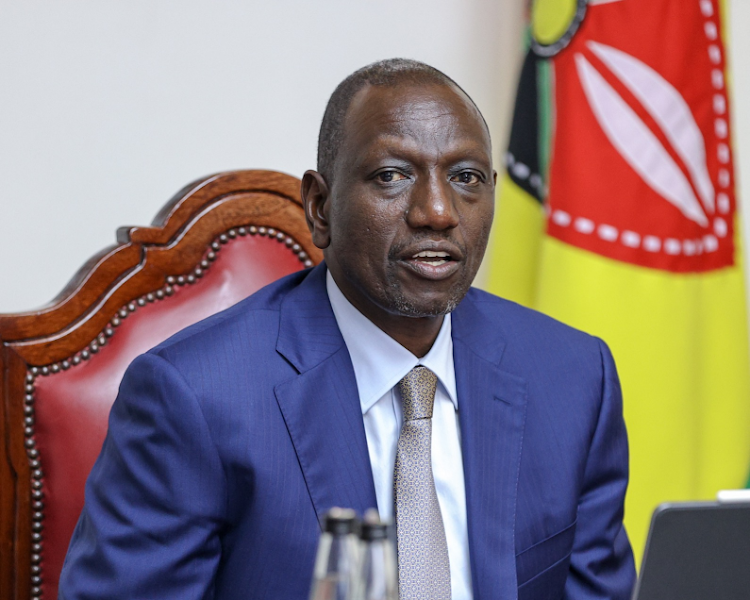
A purge in the petroleum sector has sent shockwaves through the government, after President William Ruto forced out three top officials long considered part of his inner circle.
Although couched as resignation, insiders say Mohamed Liban, Principal Secretary in the State Department for Petroleum; Joe Sang, managing director of the Kenya Pipeline Company; and Daniel Kiptoo, director general of the Energy and Petroleum Regulatory Authority were fired.
The three were dramatically arrested on Friday in what the police said was in connection with the importation of substandard fuel.
The three men were not just senior bureaucrats—they were trusted allies of the President, with deep influence over one of the country’s most lucrative and strategically sensitive sectors– petroleum supply and regulation.
Sources said there is panic in government that the probe could claim more high-profile casualties.
The arrest has also sent shockwaves in Cabinet that the President may not spare even those perceived to be his closest friends as he fights to secure a second term in 2027
Sang, in particular, was widely viewed as one of Ruto’s closest confidants within the energy space.
His journey has been anything but ordinary.
In 2018, during the administration of Uhuru Kenyatta, he was forced to step aside after being charged in the Sh1.9 billion Kisumu Oil Jetty scandal.
The case, however, collapsed after Ruto assumed power, clearing the path for Sang’s dramatic return to the helm of KPC as Managing Director—a rare reinstatement in Kenya’s public service.
Notably, none of his co-accused in the collapsed case made a similar comeback, further underlining the level of trust and political backing he appeared to enjoy.
That trust now appears to have been withdrawn.
In a press notice issued on Saturday, Head of Public Service Felix Koskei confirmed that President Ruto had formally received the resignations as part of an ongoing inquiry into the country’s petroleum products supply chain.
“The State Department for Petroleum has initiated appropriate administrative action against Joseph Wafula, deputy director of Petroleum, while the management of the Kenya Pipeline Company has commenced due process against Joel Mburu, supply and logistics manager,” the notice read.
“The relevant investigative agencies will continue with their inquiries to ensure full accountability.”
The coordinated exits signal a widening probe into fuel supply, procurement and regulatory processes—areas that sit at the heart of Kenya’s economic engine.
Investigators are said to be examining systemic issues within the petroleum value chain, with authorities working to establish the full scope of potential irregularities and their impact.
The presidential notification indicated the officials stepped down to pave the way for investigations, even as the government escalates scrutiny across the sector.
“In view of the critical role of petroleum products as the backbone of the economy, and in recognition of the compelling public interest, the matter has been escalated to the relevant investigative agencies for a full and comprehensive inquiry,” the notice stated.
“All governance actors within the sector are required to provide full access to relevant information to facilitate these investigations.”
Beyond the formal language of accountability, however, the developments point to a deeper political calculation—one that has unsettled sections within government.
By allowing the exit of figures so closely linked to him, Ruto appears to be sending a signal that no ally is beyond reach in graft crackdown.
But the move also raises questions about the stability of networks that have long underpinned decision-making in the industry, and whether more casualties could follow as the probe gathers momentum.





Comments 0
Sign in to join the conversation
Sign In Create AccountNo comments yet. Be the first to share your thoughts!