

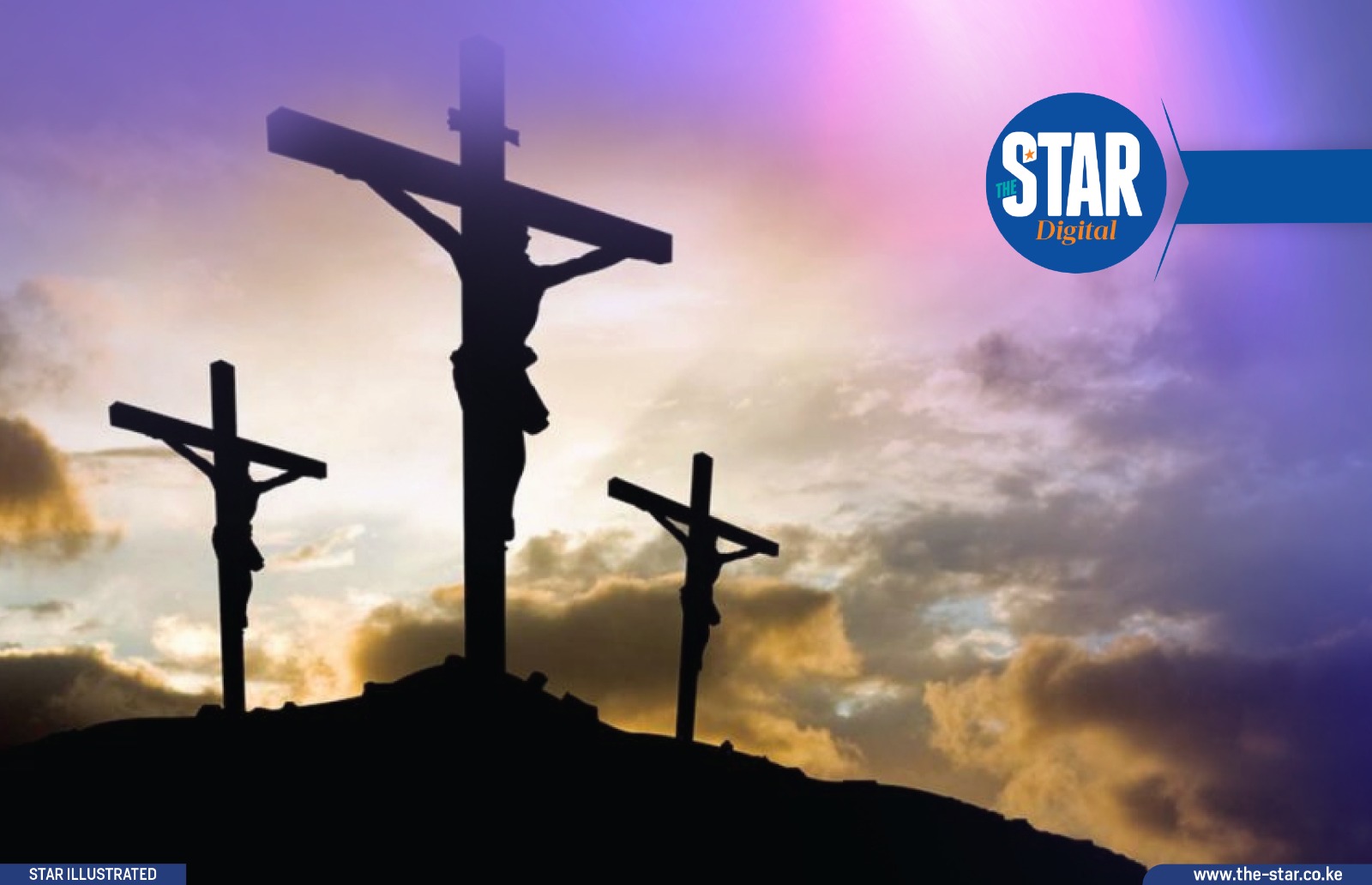
 The journey to Calvary begins with betrayal - not from distant enemies, but from within the inner circle /STAR ILLUSTRATED
Each year, as Christians commemorate the Passion - the suffering crucifixion, andresurrection of Jesus Christ - we are drawn into a story that transcends religion and speakspowerfully to the human condition.
It is a story of power and betrayal, of silence and courage, ofinjustice and hope. Yet beyond its spiritual depth, the Passion is also profoundly political. It isabout systems, leadership, public opinion and the moral choices that define societies.
In manyways, it mirrors Kenya’s own unfolding story of politics, citizenship, democracy andgovernance.
The journey to Calvary begins with betrayal - not from distant enemies, but from within theinner circle. Judas Iscariot, one of the trusted 12 apostles, exchanges loyalty for personal gain,reminding us that the greatest threats to any noble cause often emerge from those entrusted toprotect it.
Kenya’s political landscape is replete with such moments. Leaders ascend to power on thestrength of reformist rhetoric, only to become stewards of the very systems they oncecondemned.
Betrayal, in this sense, is not merely an act - it is a pattern, one that continues toundermine public trust and weaken democratic institutions.
At the centre of the Passion narrative stands Pontius Pilate, a leader caught between truth andpolitical survival. He recognises innocence, yet lacks the courage to defend it, ultimatelychoosing to wash his hands rather than risk his position.
His failure is not one of ignorance, butof moral weakness. This image resonates deeply within Kenya’s governance structures, in whichsilence and inaction often prevail in moments that demand bold leadership.
Institutions designedto uphold justice sometimes retreat into cautious neutrality, while leaders weigh public goodagainst personal or political cost. In such moments, the damage to democracy is not alwaysinflicted by overt wrongdoing, but by the quiet erosion of accountability.
The Passion also reveals the volatility of public opinion. The same crowd that once welcomedJesus with cries of Hosanna soon turns, shouting for his crucifixion. This shift is neither organicnor innocent; it is shaped by manipulation, misinformation and the calculated stirring ofemotion.
Public sentiment, when untethered from critical reflection, becomes a tool easilywielded by those seeking to consolidate power. A functioning democracy, however, depends notmerely on participation, but also on an informed and discerning citizenry.
At its core, the Passion is also a story of suffering and injustice. An innocent man is subjected toa flawed judicial process, condemned by a system more concerned with maintaining order thanpursuing truth. For many Kenyans, this is not an abstract concept.
It is reflected in lived realities - delayed justice, unequal access to opportunity and the daily burdens imposed by corruptionand inequality.
Even those closest to Jesus were not immune to failure. Peter the Apostle, steadfast in word,falters in action, denying association in a moment of fear. His denial speaks to the humaninstinct for self-preservation, a force that continues to shape behaviour in Kenya’s political andcivic spaces.
Fear - of losing influence, of facing repercussions, of standing alone - often silences voicesthat might otherwise challenge wrongdoing. Yet Peter’s story does not end in failure. It movestoward restoration, offering a reminder that integrity, once compromised, can still be reclaimedthrough reflection and resolve.
Amidst the turmoil of betrayal, injustice and denial, the Passion presents a radically differentmodel of leadership. Before his arrest, Jesus kneels to wash the feet of his disciples, redefiningpower as service rather than dominance.
This act stands in stark contrast to political cultures thatequate leadership with privilege and accumulation. In Kenya, where public office is sometimespursued as a means of personal advancement, the call to servant leadership remains both urgentand transformative. It challenges leaders to see authority not as an entitlement, but as aresponsibility to uplift and empower others.
Yet the Passion does not end in despair. The crucifixion, though brutal and final in appearance,gives way to the resurrection - a profound declaration that defeat is not the end of the story.
It ishere that the narrative shifts from tragedy to hope, from loss to renewal. For Kenya, this messagecarries deep significance. The challenges facing the nation - political polarisation, institutionalfragility and socioeconomic inequality - are real, but they are not insurmountable.
Renewal ispossible. A rebirth of values, a strengthening of institutions and a recommitment to civicresponsibility can chart a new path forward.
Ultimately, the Passion story is a call to conscience. It compels us to examine not only ourleaders, but also ourselves. It asks what kind of society we are choosing to build. Whether wewill continue cycles of betrayal and silence, or embrace a more demanding path defined by truth,courage, and service.
The story of Calvary did not end at the cross. It moved beyond it, offering the possibility oftransformation. Kenya’s story, too, remains unfinished. Its future will be shaped not merely bypolitical contests, but by the moral decisions made by its people.
And in that choice lies thepromise - or the postponement - of its own resurrection.





