In June 323 B.C., Alexander the Great lay dying in Babylon at age 32, having conquered more of the known world than any man before him.
His generals who were also the Diadochi, meaning the successors - Ptolemy, Antigonus, Seleucus, Cassander, Lysimachus, Perdiccas - all gathered around his deathbed and asked the question that every empire must eventually face.
Who comes after you?
Alexander gave the most catastrophic answer in the history of succession. He looked at his generals and said, “To the strongest”. Then he turned his face to the wall and died.
What followed was not a succession. It was a consumption. His Diadochi spent the next 40 years fighting each other and splitting the empire into bleeding fragments. Each general claimed to be the authentic custodian of Alexander’s legacy. Each invoked his name to justify eliminating the others.
Eventually, Ptolemy took Egypt, which is modern-day Libya. Seleucus took Persia, which is modern-day Iraq. Antigonus took Asia Minor, which is modern-day Turkey.
Cassander took Macedonia and Greece and Lysimachus took Thrace, which is modern-day Bulgaria. They built parallel courts, passed parallel decrees and held parallel ceremonies of legitimacy.
They each had genuine claims. They each had genuine followers. And in the process, they destroyed a piece of something that none of them, alone or together, could ever reassemble.
By the time the wars of the Diadochi ended, there was no empire left to inherit. The successors had not continued Alexander. They had consumed him.
Sound familiar?
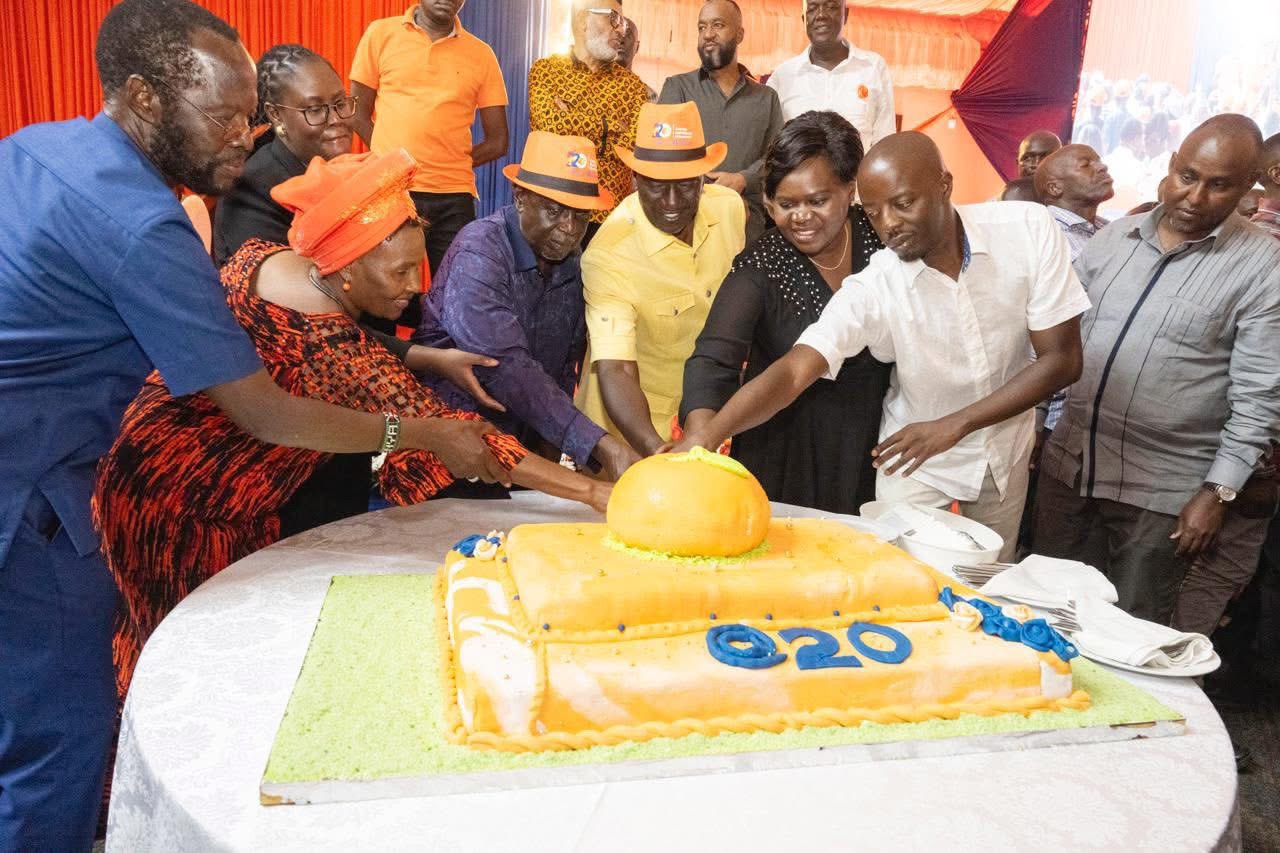
A couple of days ago at two venues roughly eight kilometres apart in Nairobi, Jamhuri grounds and Ufungamano House, the Orange Democratic Movement publicly displayed its own Diadochi moment.
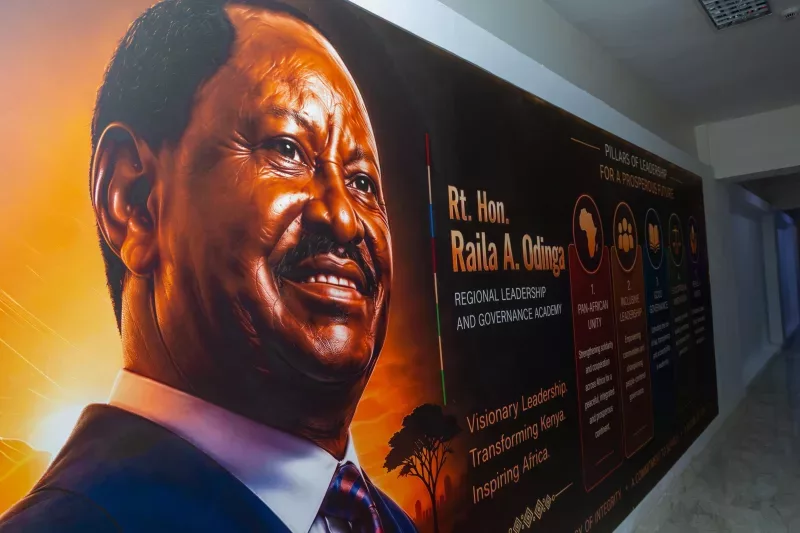
Raila Odinga, the founder and leader of ODM, died last year and the party entered the succession question without a clear transition protocol, without a designated heir, and without an agreed script for what happens when the founder is no longer there to hold the centre. Into that vacuum, two factions crystallised.
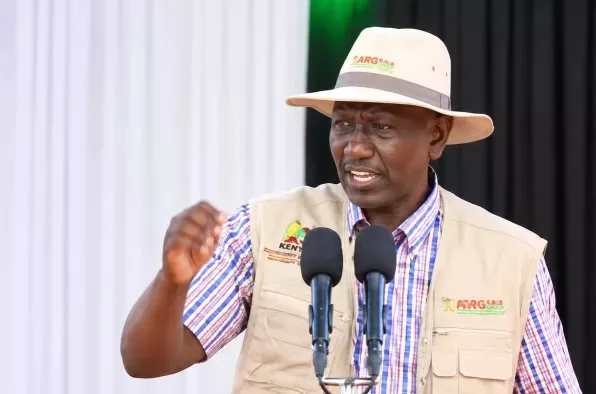
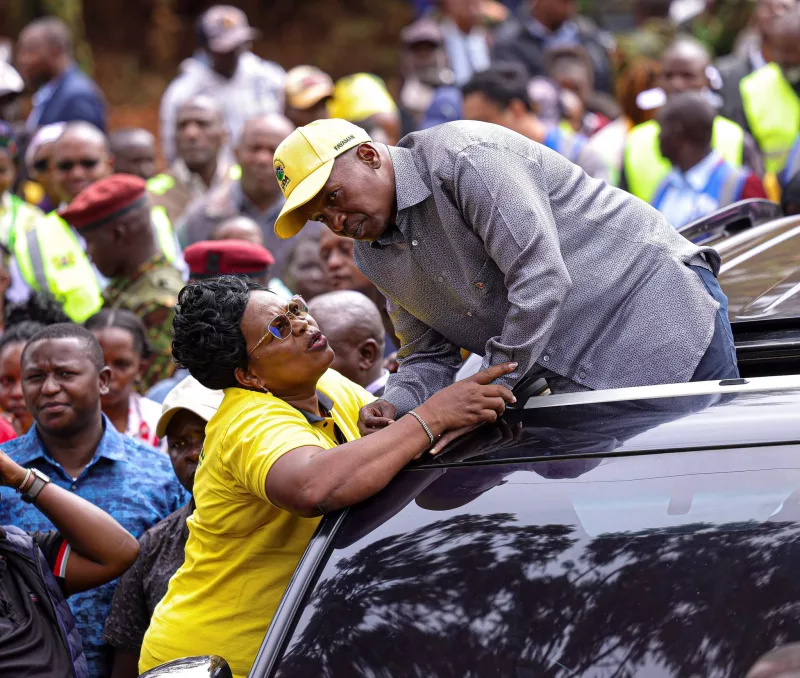
The Linda Ground faction,led by the Siaya senator who is also Raila’s elder brother, and backed by the governors of Homa Bay, Mombasa and Kisii, and the Linda Mwananchi faction, led by the party’s secretary-general, who is also Nairobi senator, and some notable MPs and senators.
The ODM Diadochi are now trying to answer the question of who comes after Raila. And the answers are incompatible.
On one hand, inside Jamhuri grounds, Senator Oburu Odinga was formally ratified as the ODM leader, Senator Godfrey Osotsi was purged from his deputy position and the delegates endorsed a resolution opening formal coalition talks with President Ruto’s UDA.
On the other hand, inside Ufungamano House, Senator Edwin Sifuna declared the Jamhuri proceedings illegitimate, and insisted that only he can lawfully convene an ODM National Delegates Conference, and MP Babu Owino said he would only respect Oburu as an elder but not as the ODM leader.
There are moments in the life of a political party when the quarrel on the surface is not the quarrel underneath. Men gather in conference halls, invoke constitutions, quote standing orders, call each other illegitimate and fight over stamps, seals, titles and delegates.
But none of those are ever the true dispute. The real struggle lies beneath the noise. It is about who gets to define what the party is, what it was for, and who now has the right to speak in its name.
This is where ODM now finds itself.
One faction says protect the party machinery, preserve order and respect structures. The other faction says protect the people, return the party to its insurgent soul, remember why ODM was birthed in the first place. On paper, this looks like a contest over internal democracy. In truth, it is a succession war disguised as procedure.
And succession wars are never polite.
Raila’s deathdid not simply leave a vacancy. It removed the one man who could hold together contradictions that would have torn a lesser party apart years ago. Raila was not merely a party leader. He was the party’s emotional architecture. He was not valuable because he removed contradiction.
He was valuable because he absorbed it. He was the bridge between the boardroom and the barricade, between governors in air-conditioned offices and unemployed youth in dust-coated sneakers, between the language of statecraft and the grammar of grievance.
So long as he was present, ODM could accommodate nearly everything, radicals and pragmatists, street politics and elite bargaining, ideology and patronage, wounded idealists and ambitious survivors. Raila made incoherence look like coalition. He was that rare founder who managed to persuade every faction, that in the final analysis, the party still somehow belonged to them.
Take away that centre, and what remains is memory, appetite and fear. Linda Ground is the language of establishment self-preservation. It is the vocabulary of chairpersons, NEC resolutions, authorised conventions and orderly transitions.
It argues, not without reason, that a political party cannot be run like a permanent riot. Structures matter. Organs matter. Decisions ratified through recognised channels matter. The logic is bureaucratic, but it is not foolish. Parties that cannot enforce order do not remain parties for very long. They become hashtags with letterheads. They either calcify or combust.
However, Linda Ground’s problem is that order without moral energy becomes embalming fluid. It preserves the body beautifully while life quietly exits. If all the faction can offer is discipline, negotiations and officialdom, then it risks turning ODM into a regional machine with nostalgic branding and no national fire. It may control the file, the office and the microphone, yet still lose the pulse. A party can be constitutionally tidy but politically dead.
But Linda Mwananchi is not wrong either, and that is what makes this fight dangerous. Linda Mwananchi’s rallying cry is moral urgency. It believes that it must return to its founding purpose as the voice of the voiceless, the movement that stands with the people against the state.
Its problem is the mirror opposite of Linda Ground’s. Soul without order burns bright and collapses fast. It can fill fields, trend online and electrify the disaffected, but unless it converts emotion into a durable structure, it remains permanently one rally away from irrelevance. Movements that despise procedure often discover too late that procedure was the only thing standing between them and fragmentation.
And a faction can speak in the name of wananchi and still be animated by the oldest elite instinct of all, which is the desire to control succession. Because every liberation party eventually develops a ruling instinct. It begins by speaking the language of pain, exclusion and justice.
Then, over time, success produces office, office produces comfort, comfort produces gatekeepers and gatekeepers begin to confuse the preservation of the institution with the purpose of the institution.
They start defending the house more passionately than the people for whom the house was built. The slogans remain radical, but the reflexes become managerial.
Begs the question, are both camps trapped by the weakness of their own strongest arguments? If ODM chooses Linda Ground alone, it may save the shell and lose the spirit. If it chooses Linda Mwananchi alone, it may preserve the spirit and lose the shell. In both cases, the result is eventual decline, just paced differently. One is consumed by frost. The other by fire.
So which faction is the strongest to inherit the empire?
I submit that the real ODM Diadochi wars are about these three things. Who controls the army, who controls the money and who controls the narrative of legitimacy? The army is the votes, specifically, the voting blocs that have given ODM its negotiating weight in every coalition since 2007.
Both factions claim to represent these voters. ODM without Raila is a party whose value in any coalition negotiation depends entirely on how many votes it can deliver. Oburu going to Ruto’s table with a split party delivers far fewer votes than Oburu going with a united one.
Sifuna going to whoever the opposition fields in 2027 with a rump of the original party delivers far fewer votes than a united ODM behind a single opposition candidate. ODM’s Diadochi know this. They are simultaneously weakening the asset they are each claiming to protect.
The money is the coalition’s value. Political parties receive public funding from the Political Parties Fund disbursed proportionally based on their numbers in Parliament.
A party that fractures, runs divided candidates in 2027, loses seats to independents, or watches its members defect to competing vehicles does not just lose political leverage.
It loses its cheque. The split is not only weakening ODM’s negotiating position at President William Ruto’s coalition table. It is threatening the party’s financial survival as an institution, the very institution both factions are claiming to protect.
And then there is the coalition value on top of that. ODM’s worth in any pre-election negotiation is directly proportional to its unity. Oburu going to Ruto’s table with a split party is going cap in hand.
Ruto is not rushing. His team is watching the split deepen with the quiet satisfaction of a man who does not need to do anything because his opponents are doing it for him.
Every day that ODM holds parallel conventions, files parallel petitionsand issues parallel declarations of legitimacy, is a day that its value as a coalition partner decreases.
Alexander’s Diadochi never understood this either. They were each so focused on defeating each other, that none of them noticed they were all becoming weaker relative to the enemies on their external borders.
On the narrative of legitimacy Linda Ground says ODM after Raila is a party that pursues power through coalition and accommodation. Raila himself modelled this when he entered the broad-based government.
Linda Mwananchi says ODM after Raila is a party that returns to its founding purpose as the voice of the dispossessed, the movement that stands between the people and the state. Both answers are sincerely held.
Both are drawn from genuine chapters of Raila’s own story. The genius of the man was that he embodied both simultaneously. That was not a contradiction in him. It was his singular political gift. His Diadochi, divided as they now are, each hold one half of it. Neither half, alone, is Raila.
Finally, my unsolicited advice is to Wanjiku. A divided ODM or any other political party is not an accident nor a love affair to be lent emotional loyalty. They are bargaining vehicles.
Their first function is to aggregate scattered public anger into negotiable power. Individually, wananchi suffer in fragments. One man is unemployed. Another is evicted. Another is buried in debt.
Another cannot access justice. On their own, these grievances remain private pain. A political party collates them into a public demand.
So resist the emotional trap of inheritance politics. Incumbents die. Parties split. This is normal. What should concern you is not the quarrel itself, but whether anyone is speaking the language of your private pain.
If they are only consumed by who is the rightful Diadochi, they are no longer fighting for you. They are fighting around you.
Alexander’s Diadochi spent 40 years consuming his empire in his name. ODM’s Diadochi have managed the same in five months.
The soldiers and ordinary people who built Alexander’s empire did not benefit from 40 years of succession war.
They got the conflict. The generals got the kingdoms. The template is the same. It has not changed in 2,000 years.