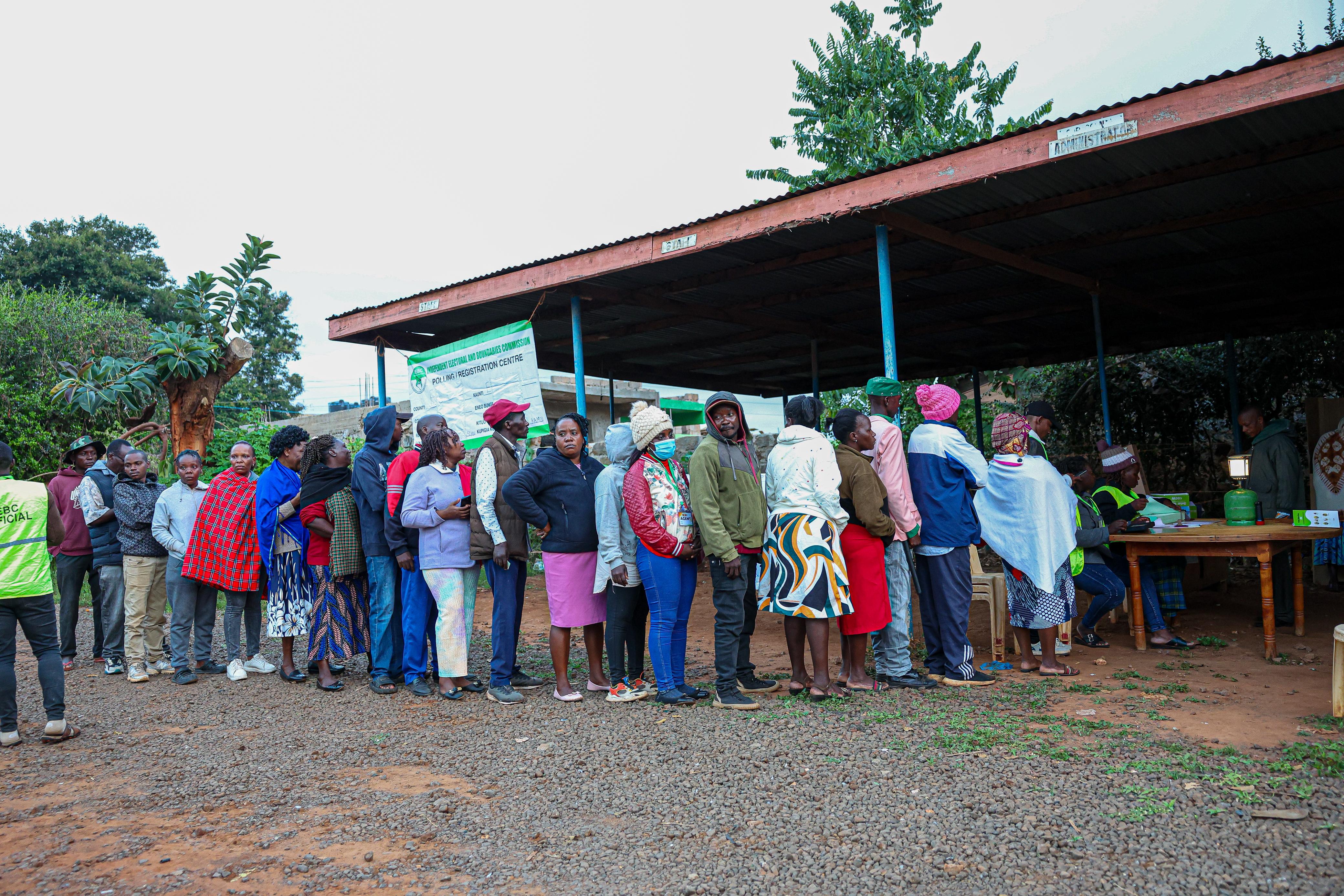
 As Kenya approaches another election in 2027, voters must resist the temptation to accept political definitions of wisdom at face value /FILE
It is a call repeated endlessly by politicians across ideological divides. Yet, beneath its moral appeal lies a contradiction that is rarely interrogated. Wisdom, as framed by politicians, is often defined not by objective standards of leadership, but by who stands to benefit from the voter’s choice.
Nowhere is this contradiction more visible than in Kenya.“Make a wise decision.”In democratic societies, elections are presented as the ultimate expression of freedom.
Citizens are encouraged to choose leaders without coercion, guided by conscience, reason and the national interest. During election seasons, one phrase dominates political rhetoric:
In theory, a wise electoral decision should be grounded in informed judgment. It should involve evaluating track records, leadership competence, integrity, policy coherence and the capacity to unite and govern effectively.
Wisdom, in this sense, is forward-looking and anchored in evidence rather than emotion.
In practice, however, political actors often weaponise the concept. Every election cycle in Kenya, politicians urge citizens to “vote wisely,” yet this appeal is rarely neutral.
The implied message is almost always the same: a wise decision is one that results in my victory. When politicians call for wisdom, they are seldom inviting voters to conduct independent analysis; rather, they are seeking validation of their own ambitions.
This makes “wisdom” an elastic term, stretched and reshaped to fit individual political interests.
In Kenya’s multiparty era, calls to remove the “current administration” through a “wise decision” have become a predictable feature of electoral politics.
Opposition figures routinely frame elections as moments of national rescue, urging Kenyans to make a wise choice by rejecting those in power. Yet history shows that this rhetoric is not new, nor is it exclusive to any political generation.
Every administration, regardless of how it came to power, eventually faces similar accusations of failure, betrayal, or incompetence. The same leaders who once urged voters to make a “wise decision” by electing them later find themselves on the receiving end of identical appeals.
This cyclical pattern raises a critical question: if voters have been making “wise decisions” repeatedly, why do the same governance challenges persist? The answer may lie not in the wisdom of voters, but in the shallow way political wisdom is defined and communicated.
The constitution guarantees political freedom, including the right to choose leaders without intimidation. However, freedom alone does not guarantee wise outcomes. In an environment saturated with propaganda, ethnic mobilisation, economic desperation and misinformation, voters are often pressured rather than persuaded.
Politicians understand this reality well. Appeals to “wise decisions” are frequently accompanied by fear-based narratives, warnings of economic collapse, loss of democracy, or social unrest should a particular side lose. In such conditions, wisdom becomes confused with survival, loyalty, or protest voting.
True democratic wisdom demands more than reacting to anger or disappointment with the status quo. It requires voters to ask uncomfortable questions: What evidence supports the promises being made? What values have these leaders demonstrated when previously entrusted with power? Are we voting against someone, or for a clearly articulated vision?
If Kenya is to mature as a democracy, the idea of a “wise decision” must be reclaimed from political manipulation. Wisdom cannot be outsourced to politicians, whose interests are inherently self-serving. It must reside with citizens, institutions and a robust civic culture that values critical thinking over slogans.
A wise electoral decision does not guarantee perfection, nor does it promise instant transformation. Rather, it reflects a deliberate choice made after weighing facts, history and long-term national interest. It acknowledges that leaders are human and fallible, but insists on accountability, consistency and ethical conduct.
The repeated call for Kenyans to “make a wise decision” is not, in itself the problem. The problem lies in the assumption that wisdom is singular, obvious and politically convenient. In reality, wisdom in a democracy is plural, contested and often uncomfortable.
As Kenya approaches another election in 2027, voters must resist the temptation to accept political definitions of wisdom at face value. True wisdom begins when citizens recognise that democracy does not merely give them the freedom to choose, it gives them the responsibility to think.
The writer is former managing editor at NTV