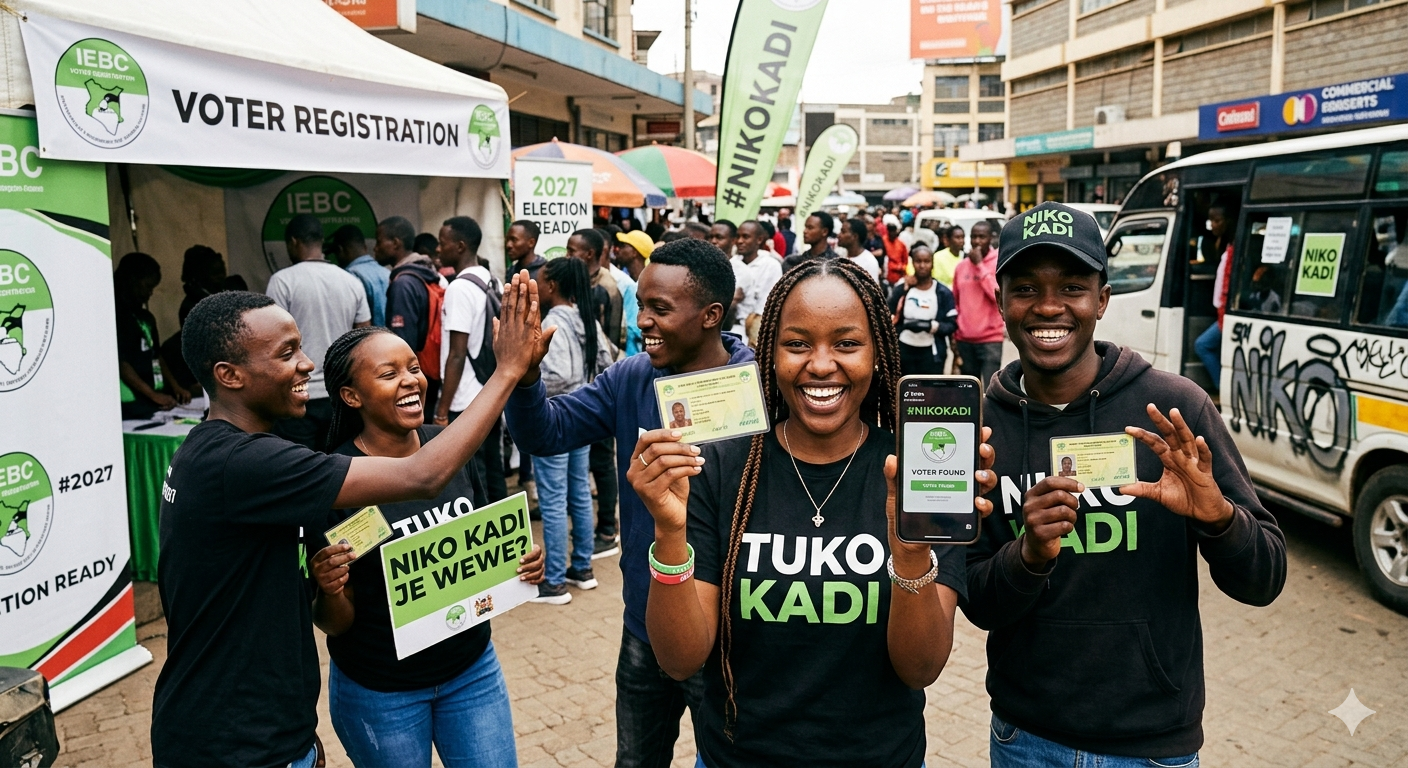
On Monday, the Independent Electoral and Boundaries Commission finally initiated a 30-day Enhanced Continuous Voter Registration drive.
This ambitious exercise targets 2.5 million new voters within a month, the IEBC website says.
To make this happen, the commission has deployed a small army of 12,000 temporary staff across county wards, universities and Huduma centres.
But the commission appears a little late to their own party, as another digital campaign driven by Gen Z has been gathering serious momentum.
Granted, for nearly two years, the electoral agency operated without a full quorum, crippled by funding shortages and a Treasury that seemed indifferent to the electoral clock.
Yet, it took a hashtag—#NikoKadi—and the relentless pressure of Gen Z activists to jolt the state into action.
This reversal in which the public is shepherding a constitutional body to perform its basic mandate shows citizens are outpacing the state in its constitutional functions.
When young Kenyans realised the state would not efficiently facilitate their participation, they built their own parallel system of civic education and peer pressure.
The initiative that crystallised in February has seen young activists such as Allan Ademba, joined by others such as Willie Oeba and more recently Senator Crystal Asige, engage in a grassroots initiative on social media urging peers to register as voters.
What began as a digital ripple became a tidal wave. By late March, the ‘Niko Kadi’ (Swahili for "I have the card") movement had saturated X, TikTok and university campuses, morphing from a playful trend into a civic accountability campaign.
And the movement is growing beyond generations, as the young people encourage the older gen to join in.
This proactive generation has seen close to 1,000 people registered a day. What's more impressive, is that they have managed all this without Treasury’s billions, which IEBC waited so long to secure.
While some leaders mocked them, insinuating that this ‘impatient’ generation cannot be counted on to stand in long queues, the story on the ground has been starkly different.
Gen Z are determined and their solidarity in thought and deed, coupled with their organic patriotism ¾ not taught through national creeds in classrooms as in generations past - has proved to be all the ‘funding’ they need.
Who's to say they aren't ready to hold office, seeing as they are leading the nation despite not holding positions?
This is clearly the reset this country needs and has been yearning for, with the rallying call being to rescue the country from a government that has performed dismally.
This phenomenon is not unique to Kenya. Across the continent and the Global South, digital-savvy youth are increasingly bypassing traditional political structures to enforce accountability.
Similar movements in Nigeria (#NotTooYoungToRun) and Uganda(#DefendTheConstitution) have shown that when institutions fail, the demographic dividend becomes a political weapon.
As if to confirm the poor performance, this organic surge seems to have forced the IEBC’s hand as the commission’s response suggests a reactive scramble.
Reports emerged of first-time applicants being turned away from registration centres in the preceding weeks due to facilities being short staffed.
The institutional paralysis is rooted in two chronic failures: funding and staffing. In February, IEBC chairman Erastus Ethekon met the COIN-10 oversight committee, pleading for "adequate and predictable funding across the entire electoral cycle".
He requested the IEBC fund be swiftly activated, as provided for under the IEBC Act, to grant the commission financial autonomy.
His appeal came with a steep price tag: the commission requires Sh6.9 billion for voter registration alone, alongside Sh12.4 billion for staff wages and Sh6.2 billion to replace aging Kiems kits.
The failure of the national administration to disburse these funds in a timely manner has had tangible consequences. For two years, the commission operated understaffed.
Only recently did the electoral commission begin interviewing for 10,780 registration clerks, 1,450 assistants and 290 ICT clerks — temporary staff needed for the very exercise that was at the time, weeks away.
This begs the question: why was recruitment left until the eleventh hour, forcing the commission to play catch-up to a citizen-led movement?
Beyond the shortage of clerks, a separate but intertwined crisis is unfolding at the National Registration Bureau.
Data as of March 18, reveals that a staggering 462,502 national ID cards remain uncollected across the country.
In Nakuru alone, 28,229 IDs are gathering dust, with the Huduma centre in the county holding 7,804 of them.
In Garissa, leaders reported that more than 2,700 applicants in Balambala had been waiting for nearly two years, with applications marked "pending" on official portals.
But it’s also true in Nairobi, where thousands of youth are yet to receive cards, despite applying at the start of the year.
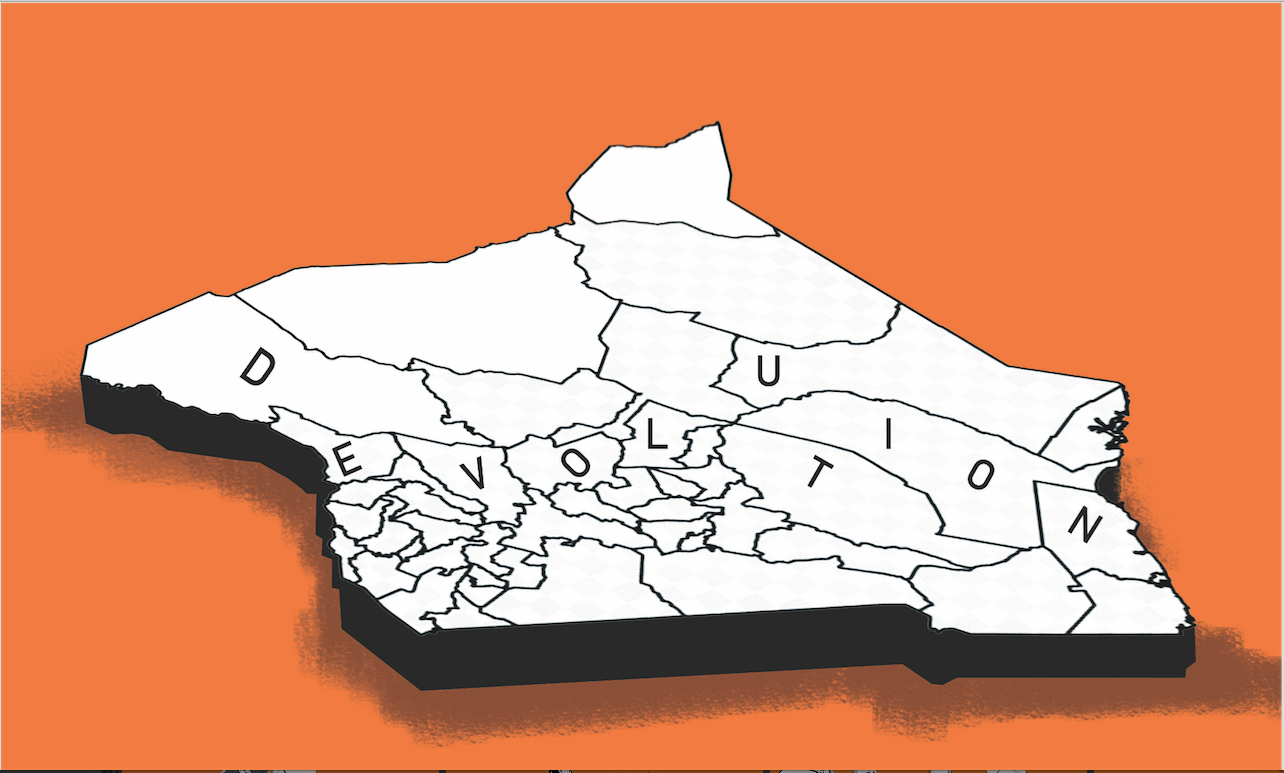
Without these IDs, young Kenyans cannot register to vote. This bureaucratic bottleneck —whether by design or otherwise — is contrary to the spirit of the constitution, which envisioned a devolved, responsive, and citizen-centric governance structure.
The constitution guarantees political rights under Article 38, ensuring that every citizen is free to make political choices and vote.
However, when the Treasury fails to fund voter registration and the executive branch’s agencies (like the National Registration Bureau) fail to process IDs, the state is erecting barriers to these rights.
Perhaps the administration should consider delivering the uncollected IDs to their owners through mobile units, especially in remote areas and fast-tracking issuance for those still holding waiting cards — unless they can use these to vote.
Additionally, the IEBC must adopt the recommendations from Garissa leaders to deploy solar-powered mobile units to reach pastoralist communities and ensure that the new clerks are adequately trained and deployed before the queues form.
But more importantly, the political class must respect the sanctity of the Niko Kadi movement and keep off.
Whether the institutions — from the Treasury to the IEBC to the Registration Bureau — can rise to meet that citizen energy will determine if 2027 is a year of genuine democratic renewal or another missed opportunity.