 Sub-Saharan Africa is heading into its main planting season, and the disruption to fertiliser exports via the Persian Gulf Shipping Lane poses what the WFP calls a “major risk” /FILE
For the smallholder farmers of Uasin Gishu in the Rift Valley, the war in the Middle East is not a distant headline. It is the quiet, creeping realisation that the fertiliser sacks they counted on for the coming planting season may not arrive.
It is the surge in diesel costs that makes tilling the land unaffordable. It is the gnawing uncertainty of whether a geopolitical fire burning thousands of kilometres away will determine if their families eat.
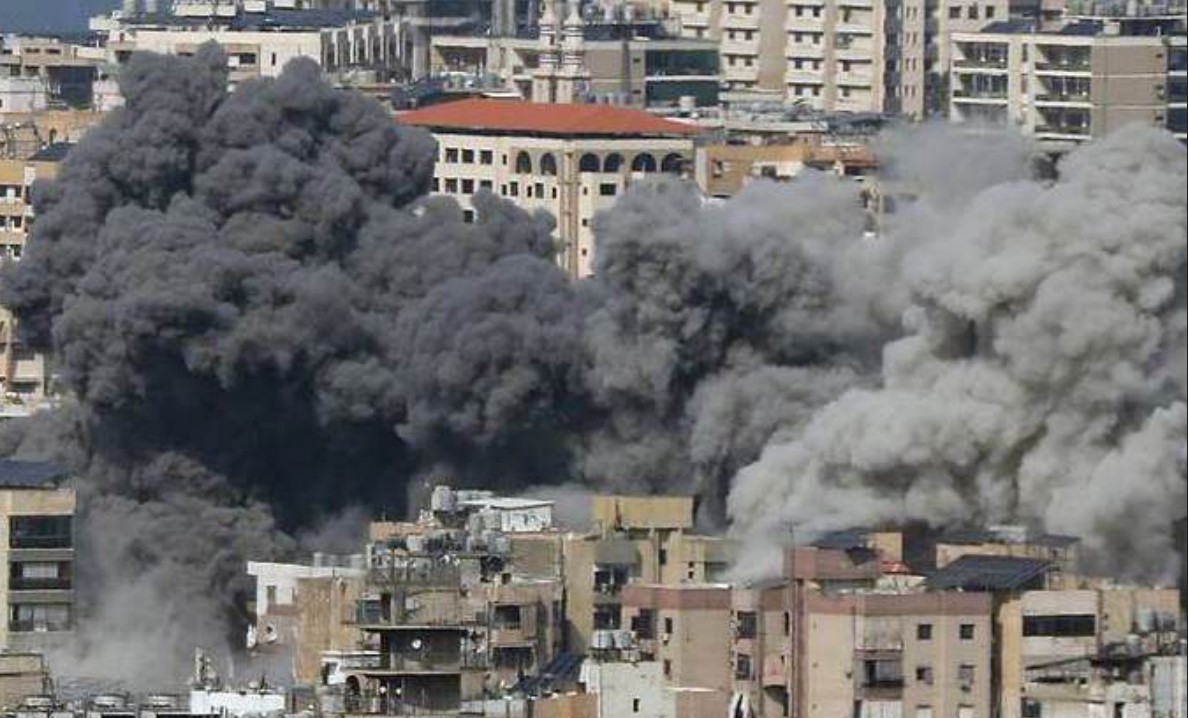
Four weeks into the escalating US-Israeli conflict with Iran, the ripple effects have crashed ashore in Eastern Africa with discomforting precision, transforming a confrontation over oil and territory in the Persian Gulf into a full-blown food security emergency for a region already grappling with alarming levels of hunger.
The crisis is exposing a painful truth: Eastern Africa’s food systems remain dangerously vulnerable to shocks it did not create.
The narrow Persian Gulf Shipping Lane, commonly referred to as the Strait of Hormuz, through which roughly 30 per cent of global fertiliser exports and a significant share of the world’s crude oil pass, has become the epicentre of this crisis.
“If the Strait of Hormuz were closed for a year, it would be catastrophic,” warned Svein Tore Holsether, chief executive of fertiliser giant Yara International.
His words have proven prophetic. Since the conflict began, Middle Eastern urea prices have soared past Sh91,091 per tonne, up from below Sh65,065, representing a 40 per cent surge in a matter of weeks.
For countries like Kenya, which sources about 40 per cent of its fertiliser from Gulf producers, this is not merely an economic inconvenience; it is a direct threat to national food output.
Analysts warn that farmers will be forced to cut application rates on maize, wheat and horticultural crops just as the planting season arrives, with lower yields inevitably translating into higher food prices and greater hunger.
Holsether’s broader caution, that “in a global auction for fertiliser, Europe will have stronger buying power than poorer parts of the world”, is already playing out, pushing the world’s most vulnerable further to the back of the queue.
Eastern Africa now finds itself at the intersection of three simultaneous and compounding shocks. The first is the fertiliser crunch itself, which has tightened global supply conditions and raised input costs beyond the reach of many smallholders.
The second is the volatility of energy prices. Brent crude briefly spiked above Sh15,615 a barrel following the outbreak of hostilities, making irrigation, mechanised farming and transport significantly more expensive.
The World Food Programme reports that its operating costs have surged, with shipping up 18 per cent and fuel bills climbing daily. The third shock is the tightening of maritime chokepoints.
The Bab el-Mandeb strait and the Red Sea corridor, vital arteries for grain shipments, are now seeing rising insurance premiums and vessel rerouting.
Early disruptions in 2026 have already delayed wheat shipments, pushing local staple food prices up by as much as 25 per cent in urban markets that depend on imported grain.
“The consequences are falling on the world’s most vulnerable people who are already living in dire conditions,” said Carl Skau, WFP deputy executive director. “They do not have the margins to cope with a new jump in living costs.”
The numbers bear this out with grim clarity. The Global Hunger Index 2025 already lists hunger as “alarming” in seven countries worldwide, five of them in Africa: Burundi, the Democratic Republic of the Congo, Madagascar, Somalia and South Sudan.
Now, the WFP warns that if the Middle East conflict continues through June and oil prices remain above Sh13,013 a barrel, an additional 45 million people globally could be pushed into acute hunger. “This would take global hunger levels to an all-time record, and it’s a terrible, terrible prospect,” Skau said.
Yet Eastern Africa’s predicament is no accident. The region imports the vast majority of its fertiliser and key staples such as wheat, while domestic production capacity remains underdeveloped.
Smallholder farmers apply less than 20kg of fertiliser per hectare on average, far below the global average of 140kg, meaning every price spike is magnified.
Compounding this are deep structural weaknesses: post-harvest losses for perishables exceed 30 per cent, undermining production gains, while remittances from Eastern Africans in West Asia, which account for up to 23 per cent of Somalia’s GDP, are at risk if Gulf labor markets contract.
A report by the UN’s Trade and Development Agency identified Sudan as the country most exposed to the crisis, given that 54 per cent of its seaborne fertiliser imports originate in the Gulf. Tanzania, Somalia, Kenya and Mozambique are also likely to be among the worst-affected.
Nor are these dynamics confined to Eastern Africa. In South Africa, the same forces are playing out with acute force.
According to agricultural economists at the National Agricultural Marketing Council, the country imports 80 per cent of its fertiliser requirements, with at least 25 per cent of its 2.5 million tonnes of fertiliser imports in 2025 coming from the Middle East.
Combined with soaring fuel costs and war-risk shipping fees, the nation’s food system is facing a triple blow that experts warn will drive food inflation and deepen food insecurity.
Beyond the immediate economic disruptions, the crisis is accelerating a profound geopolitical shift. As the conflict unfolds, the Red Sea and the Horn of Africa are being recast as central arenas of global strategic competition.
The same shipping lanes threatened by escalation around Iran pass through the Bab el-Mandeb Strait, the narrow gateway between the Red Sea and the Indian Ocean, placing the Horn of Africa directly along the fault line of a conflict that could reshape global trade routes and power balances.
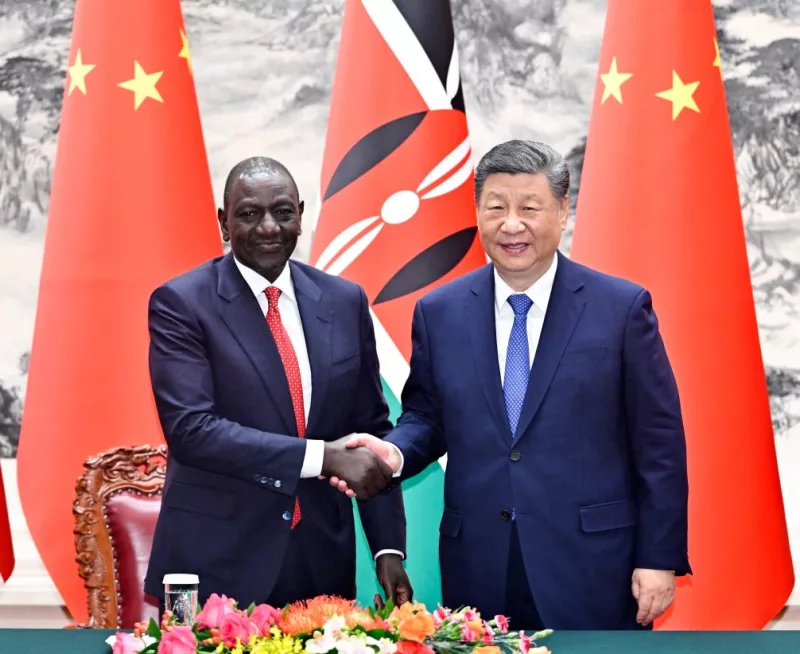
China, which absorbs roughly 80 to 90 per cent of Iran’s oil exports, remains a dominant infrastructure financier across the continent.
Turkey has significantly deepened its engagement, with Turkish Airlines now connecting dozens of African cities to Istanbul and Ankara becoming an increasingly visible security partner through drone sales and defense agreements.
Gulf states, particularly the United Arab Emirates, have invested billions in African ports, logistics networks and agricultural partnerships.
The Horn of Africa, already home to China’s first overseas military base in Djibouti as well as US, European and Turkish facilities, is once again becoming one of the world’s most contested geopolitical crossroads.
According to Shiri Fein-Grossman of Israel- Africa Relations Institute, “The Iran war is accelerating a structural shift already underway: Africa is becoming one of the central arenas of global strategic competition.”
For African governments, this presents both risks and opportunities, but for now, the immediate risk is to food security.
For governments across Eastern Africa, the crisis has sharpened a long-overdue question: how to break the cycle of external dependency. Analysts point to a suite of urgent interventions.
Foremost is reducing reliance on imported fertilisers and grains by scaling up local fertiliser blending and production capacity.
The $2.5 billion Dangote Fertiliser Plant in Nigeria, the world’s second largest urea plant, offers a model of what is possible, and the Dangote Group signed a deal last year to build a similar facility in Ethiopia.
Equally critical is cutting post-harvest losses. Investments in cold storage, rural aggregation centres and better logistics can increase effective food availability without expanding cultivated land, offering a cost-effective buffer against price volatility.
On the trade front, the African Continental Free Trade Area is being reframed as a food security tool rather than merely a commercial agreement. Intra-Eastern African trade currently accounts for only about 20 per cent of total trade; expanding regional grain and fertilizer corridors could reduce reliance on distant suppliers and stabilise supply chains.
Food systems analysts warn that without proactive reforms, external geopolitical shocks will continue to drive food insecurity, according to an expert advising regional agencies.
However, they note that strategic investments in infrastructure, technology and regional cooperation could turn these vulnerabilities into lasting resilience.
The window for action is narrow. Sub-Saharan Africa is heading into its main planting season, and the disruption to fertiliser exports via the Persian Gulf Shipping Lane poses what the WFP calls a “major risk” to countries such as Somalia and Kenya.
In Somalia, the WFP warns it already has “clear indications that we’re heading into a famine,” with two consecutive droughts compounding the conflict-driven supply crunch.
Yet the agency is struggling to assist even 700,000 people there, having cut life-saving rations in Sudan and scaled back malnutrition programmes in Afghanistan due to a 40 per cent drop in international funding. “We are basically stretched to the limit,” Skau said. “Hunger has never been as severe as now.”
As the war in West Asia grinds on, the choice for Eastern Africa grows starker. Without urgent reforms, the region will remain a passive recipient of external shocks, watching global prices dictate who eats and who goes hungry.
With bold, coordinated action, it can begin to insulate its people from crises that start far beyond its borders.
“The countries that are most vulnerable still pay the highest price,” Holsether said. That price, Eastern Africa’s leaders now know, is measured not only in dollars per tonne of urea, but in the daily survival of millions.