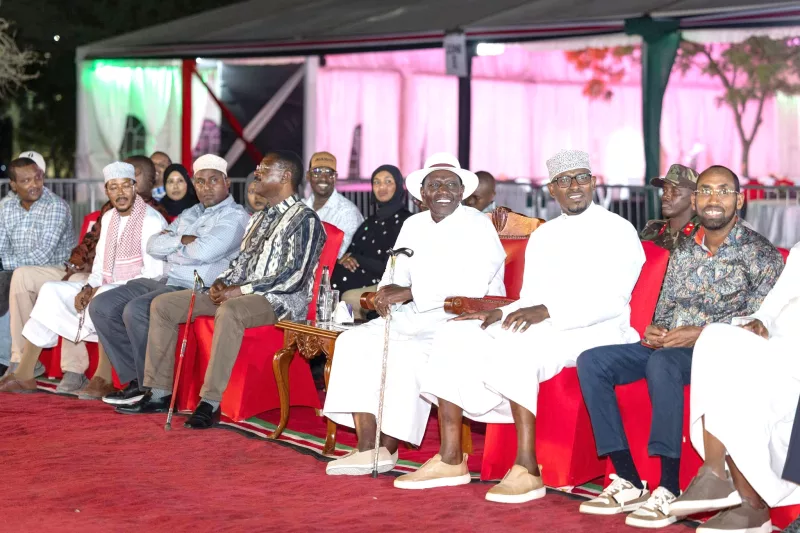
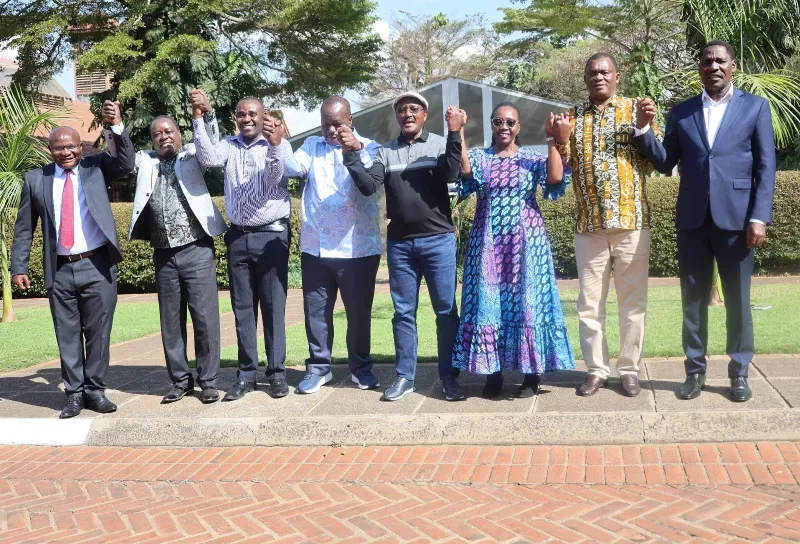
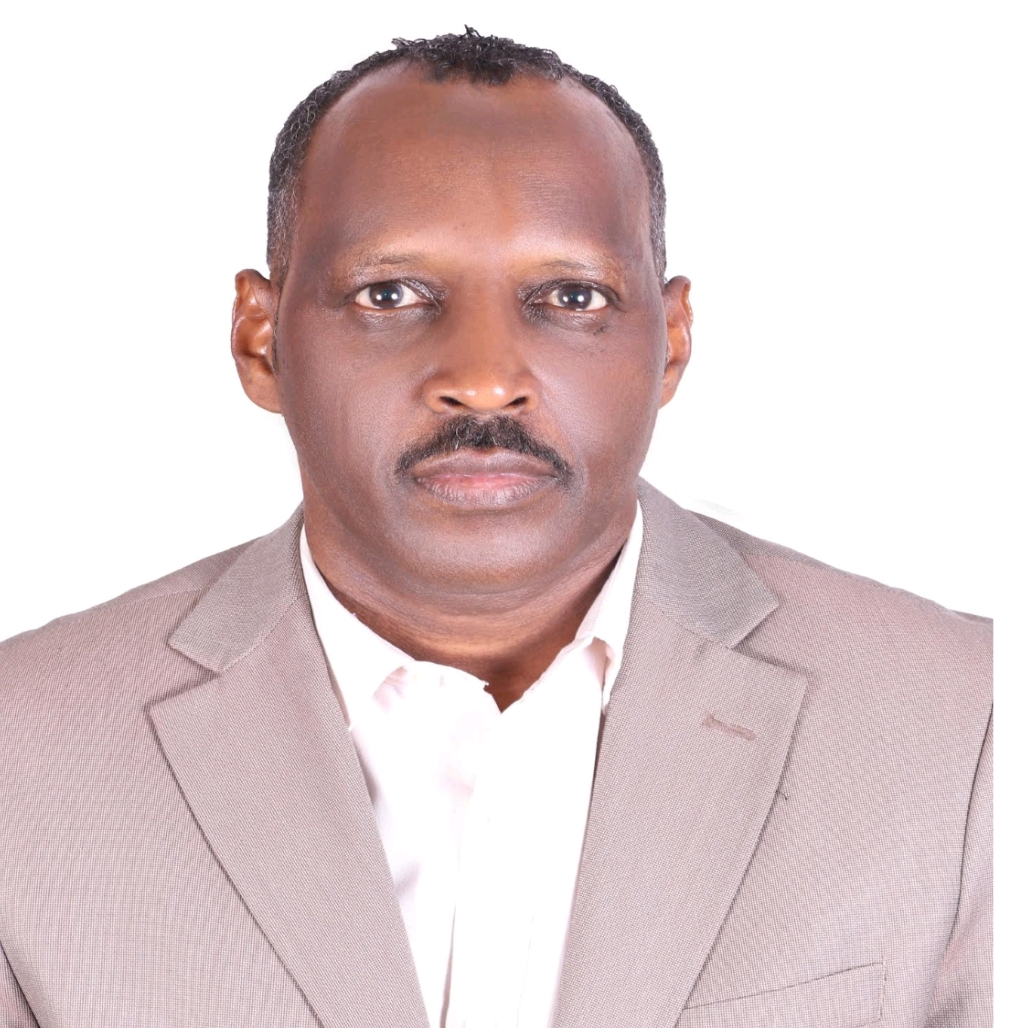
 Hon.Salah Maalim Alio-Chair Land Sector Forum(LsF) Frontier Counties and CECM Lands,Housing and Urban Development,County Government of Mandera./HANDOUT
In a country where opportunity is often shaped by geography and circumstance, the story of Mohamed Ibrahim Amin stands as a powerful reminder that determination, discipline, and vision can defy even the harshest beginnings.
From the arid plains of Wajir County to the commanding heights of Kenya’s criminal investigations system—and to the global stage of INTERPOL—Amin’s journey is not merely a personal triumph; it is a national inspiration.
Raised as a nomadic pastoralist in one of Kenya’s most marginalized regions, Amin’s early life was defined by mobility, resilience, and survival. In such environments, access to formal education is often limited and inconsistent.
Yet, he overcame these structural barriers with remarkable resolve, pursuing academic excellence and graduating with First Class Honours Security Management from Egerton University . This achievement alone marked him as a man intent on transcending the constraints of his environment.
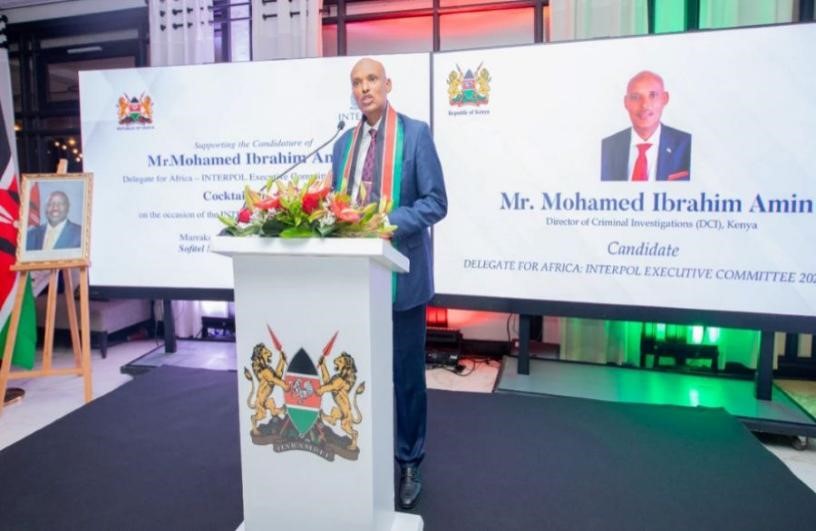 Kenya’s
Director of Criminal Investigations (DCI) Mohamed Amin is serving as Africa's delegate on the INTERPOL
Executive Committee./FILE
Kenya’s
Director of Criminal Investigations (DCI) Mohamed Amin is serving as Africa's delegate on the INTERPOL
Executive Committee./FILE
However, it is in public service that Amin has most profoundly distinguished himself. With over three decades in law enforcement, he has cultivated a reputation as a meticulous investigator, a disciplined officer, and a reform-oriented leader.
His appointment in December 2023 as Director of the Directorate of Criminal Investigations (DCI) signaled not only personal recognition but also a pivotal moment in the evolution of modern policing in Kenya.
At the helm of the DCI, Amin has advanced a deliberate shift toward intelligence-led investigations, institutional accountability, and professional transformation.
Rather than prioritizsng high-profile arrests or media attention, his leadership reflects a deeper institutional philosophy: that sustainable security is built on systems, capacity, and integrity.
This marks a significant departure from reactive policing models toward a more strategic, preventive framework—one that strengthens both effectiveness and public trust.
What further distinguishes him is his global outlook on security. His election to the Executive Committee of INTERPOL as Africa’s representative is a historic milestone for Kenya.
It affirms international confidence in his expertise and situates the country at the center of global security cooperation. At a time when crime has become increasingly transnational—spanning cybercrime, financial fraud, and organized criminal networks—such representation is not symbolic; it is strategically consequential.
He has approached this role with clarity of purpose. He has emphasized the importance of mobilizing resources, strengthening cross-border collaboration, and leveraging global expertise to enhance domestic policing capacity.
His leadership reflects an acute understanding that modern law enforcement cannot operate in isolation. By bridging national priorities with international frameworks, he is positioning Kenya’s investigative architecture to respond more effectively to emerging and complex threats.
His decorated career—marked by state honors such as CBS, EBS, and OGW—speaks to decades of disciplined service. Yet, beyond these accolades, his most enduring contribution may well be institutional. His focus has consistently been on building a DCI that is professional, accountable, and resilient—an institution capable of sustaining reform beyond individual leadership.
Notably, Amin’s personal philosophy underscores humility and long-term impact. In reflecting on his tenure, he has observed that his legacy should not be measured by headlines or arrest statistics, but by the strength and transformation of the institution he leads. This perspective is both rare and instructive in public service, where visibility often overshadows value.
At a time when public confidence in institutions can be fragile, Amin’s trajectory offers a compelling counter-narrative—one anchored in quiet competence, ethical leadership, and strategic foresight. His story challenges entrenched stereotypes about marginalisation and opportunity, demonstrating that leadership can emerge from even the most unlikely circumstances.
From herding livestock in Wajir County to shaping international policing policy, Mohamed Ibrahim Amin embodies the promise embedded within Kenya’s diverse social fabric. His journey is not only inspirational; it is instructive. It affirms that with discipline, vision, and integrity, barriers of geography and circumstance can indeed be overcome.
As Kenya confronts increasingly complex security challenges, the rise of leaders like Amin provides both reassurance and hope. It signals the possibility of a future where merit, professionalism, and ethical leadership define public service—and where institutions are strengthened not for the moment, but for generations to come.