Today, at the Port of Mombasa cranes hum at the crack of dawn as container ships from around the world unload goods that will soon travel inland on the Standard Gauge Railway, feeding factories, markets and millions of livelihoods across East Africa.
A decade ago, this scene was unthinkable. Congested berths, outdated equipment and logistics bottlenecks strangled trade on a continent where 80 per cent of commerce moves by sea.
Thanks to China’s partnership in port development, Africa is not merely catching up. It is positioning itself for genuine economic regeneration.
Far from a footnote in global headlines, these ports are the infrastructure backbone making industrialisation, job creation and regional integration not just possible, but inevitable.
Africa’s ports have long been its Achilles’ heel. Colonial-era facilities could not cope with 21st century volumes.
High costs, delays and inefficiency added billions to business expenses, pricing African goods out of global markets and stunting growth. Chinese firms stepped in where others only offered studies instead of shovels.
Since 2013, Beijing has committed roughly $50 billion to African port infrastructure, with state-owned enterprises being involved in construction of an estimated 78 ports across 32 countries; translating to one-third of the continent’s documented 231 commercial ports.
The scale of this partnership has however been mischaracterised by some media outlets and analysts as a calculated instrument of geopolitical influence by China to control trade chokepoints and secure Beijing’s dominance in the continent.
From Djibouti’s Doraleh to Tanzania’s Dar es Salaam expansions, from Sudan’s Port Sudan upgrades to Kenya’s Lamu under the Lapsset corridor, these projects deliver deep-water berths, modern terminals and integrated logistics that African leaders have actively courted.
Kenya offers the clearest success story. The SGR, built with Chinese financing and expertise, links Mombasa port directly to Nairobi and beyond.
Once freight crawled along potholed roads for days, now it moves reliably in hours. The results speak volumes. Last year alone, the Port of Mombasa handled 45.45 million tonnes of cargo, a 10.9 per cent jump; while transit volumes through Kenyan ports surged 19.5 per cent.
Similarly, the SGR revenues climbed 19 per cent to Sh21 billion, driven by higher cargo and passenger traffic. The project also created more than 46,000 direct jobs during construction and operations, with thousands more in linked industries.
Inland container depots like Naivasha have decongested the port, slashed logistics costs, and anchored special economic zones where local manufacturers now process goods for export rather than shipping raw materials.
This pattern repeats across the continent. In Tanzania, Bagamoyo and Dar es Salaam upgrades are unlocking value chains in agriculture and light manufacturing. Djibouti’s modernised facilities handle surging regional trade while generating revenues that service debt and fund public services.
These are not isolated wins. Ports act as multipliers: every dollar invested in such infrastructure generates up to Sh1,691 in broader trade revenue returns.
China-Africa trade reached a record $348 billion in 2025, up 17.7 per cent year-on-year, with Chinese exports to Africa growing 25.8 per cent.
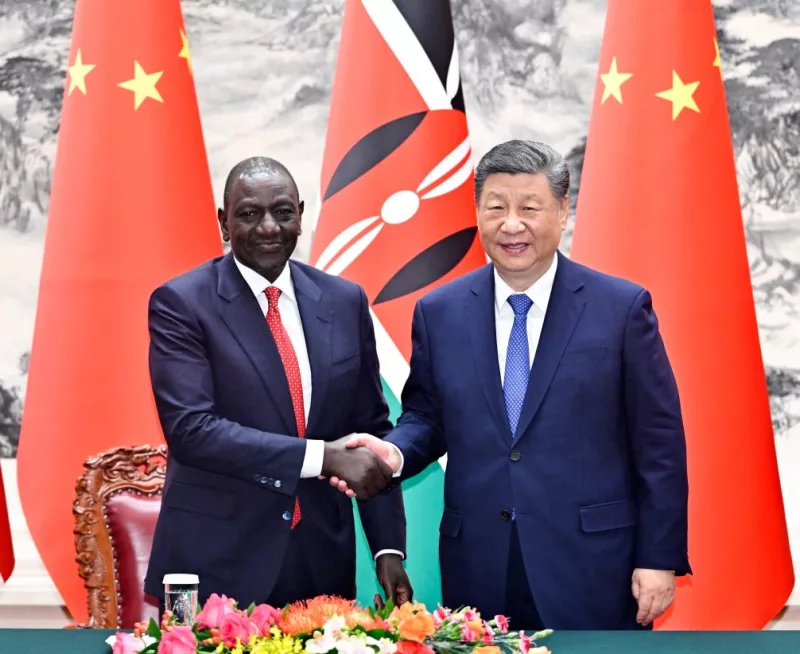
Starting May, Beijing’s zero-tariff policy grants duty-free access to the Chinese market for goods from 53 African nations; removing barriers that once kept African coffee, cocoa, textiles and processed minerals from competing.
Critics sometimes fixate on debt, but the data tells a different story. African governments negotiate terms, retain ownership of most assets and benefit from commercial contracts that pair financing with technology transfer and local content rules.
Restructurings have occurred where needed, and many projects now blend public-private partnerships to ensure bankability.
More importantly, the focus has shifted to outcomes marked by jobs, skills and productive capacity. Chinese-built Special Economic Zones, modelled on Shenzhen’s own transformative blueprint, cluster industries around ports, drawing investment, fostering linkages and accelerating the move from raw exports to value-added manufacturing.
Ethiopia’s industrial parks, tied to the Addis Ababa-Djibouti railway, exemplify how port-rail corridors create entire economic ecosystems. This partnership aligns seamlessly with the African Union’s Agenda 2063, the continent’s 50-year blueprint for an integrated, prosperous Africa.
Infrastructure and industrialisation are flagship priorities; China’s ports deliver precisely the connectivity, energy and logistics that turn those aspirations into reality.
AU leaders have repeatedly described Beijing as a strategic partner, in bridging gaps that Western finance often approached with conditions rather than cranes.
Africa’s economic renaissance was long promised but repeatedly deferred. China’s port partnerships provide the scale, speed and strategic alignment that match the continent’s urgency. In doing so, they prove that infrastructure is not charity. It is the foundation on which self-reliant prosperity is built.