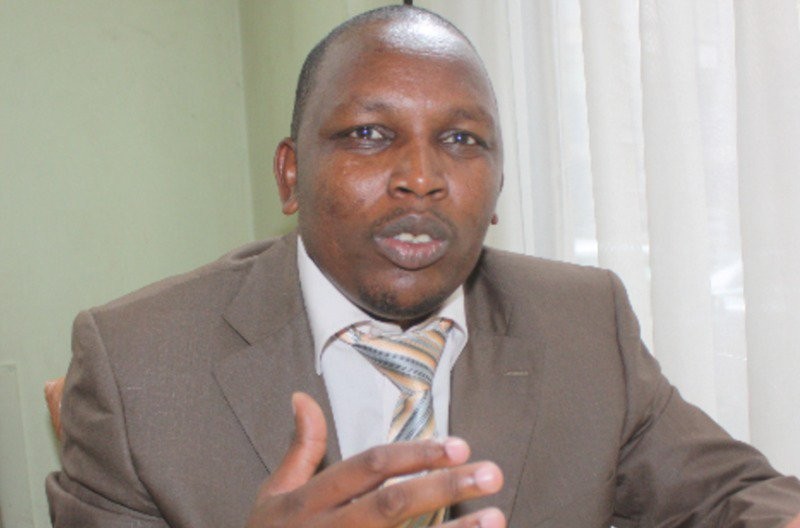
 Samburu Governor Lati Lelelit
Samburu Governor Lati Lelelit has claimed that he and several other governors possess evidence of alleged extortion by some members of the Senate.
He, however, said the material would only be presented during a closed-door meeting with Senate leadership.
Speaking during an interview with KTN on Tuesday, March 1, Lelelit said the Council of Governors (CoG) is not opposed to Senate oversight, but raised concern over what he described as serious allegations involving a section of lawmakers.
He said governors are willing to cooperate fully, but only after a structured engagement between the two institutions.
“If you have two bodies in Kenya that are conflicting, it is only fair that they get into a dispute resolution,” Lelelit said.
“We have evidence, and many governors have evidence, but we want to present it to the leadership of the Senate internally.”
The remarks come amid an ongoing standoff between the Senate and the Council of Governors, particularly over appearances before the Senate County Public Accounts Committee (CPAC).
While the CoG has previously taken a collective position on the matter, Lelelit said he remains open to attending Senate sessions, even as he aligns himself with the council’s resolutions.
He said the dispute is limited to a specific committee and does not reflect a broader rejection of Senate oversight.
“We have issues with one committee, just one. Every other committee is functioning, and governors are attending,” he said.
Lelelit said the decision to withhold the evidence from the public is intended to protect the integrity of institutions. He said making the allegations public prematurely could damage the reputation of the Senate as a whole.
“We don’t want to completely, just because of a few individuals, make the Senate look bad. The Senate of Kenya is an honourable House,” he said.
“That is why we want a sitting where we can share what we have, and the leadership can make a judgment.”
He dismissed claims that governors are using the dispute to evade accountability, saying oversight processes are ongoing through other channels.
He said accountability primarily stems from reports by the Auditor General, which are already in the public domain.
“The Auditor General’s report alone is enough for accountability. What we do in the Senate is simply to expand on that,” he said, adding that written submissions are legally recognised and form a key part of the accountability process.
On specific audit queries, including concerns over alleged financial irregularities in Samburu County, Lelelit said some figures circulating in the media had not been formally raised during Senate proceedings.
He added that any suspected misuse of public funds should be handled by the relevant investigative agencies.
“If there is anybody culpable, it is not for the governor to prosecute. Take those documents to the appropriate agencies and let them act,” he said.
Lelelit also defended his record of attendance before Senate committees, stating that he has only missed one session, for which he had formally requested rescheduling. He said he complied with a fine imposed thereafter, despite questioning the fairness of the process.
“We really want to resolve this so we can move forward and serve the people of Kenya,” he said.
Senators have denied the allegations, insisting that accountability and appearances before committees are non-negotiable.
They said the Senate’s oversight mandate is constitutional and cannot be curtailed. Speaker Kingi dismissed the governors’ attempt to suspend appearances before audit committees, warning that any move undermining scrutiny of county spending threatens accountability and devolution.
In a statement dated February 10, Kingi said he had taken note “with grave concern” of governors’ allegations of political witch-hunts, harassment, extortion, and intimidation.
“The Senate wishes to reiterate that its oversight role over county governments is firmly anchored in the Constitution,” he said, citing Article 96, which gives the House authority to oversee national revenue allocated to counties.
He added that the Senate “represents the counties and serves to protect the interests of the counties and their governments,” noting that scrutiny of public funds is central to that role.
The Senate Majority Leader said governors’ appearance before Senate committees is a constitutional obligation.
“It's not a privilege to be waived at will, particularly when there are serious accountability matters at stake across the country. We can discuss any matter as a going concern, never as a threat to non-appearance,” he said.
Following the incident, the Council of Governors strongly condemned what it described as a “shocking and unacceptable assault” on Lelelit Lati, outside the Senate precincts on April 1, 2026.
In a press statement released on April 2, 2026, the Council criticised what it described as the alleged actions of some Senators in attempting to compel Governor Lati to appear before the County Public Accounts Committee (CPAC), calling the conduct “inappropriate” and “contrary to parliamentary norms.”
The Council said the incident “not only undermines the dignity of the public office of the Governor as a Head of Government, but raises serious concerns about adherence to constitutional principles and the rule of law.”