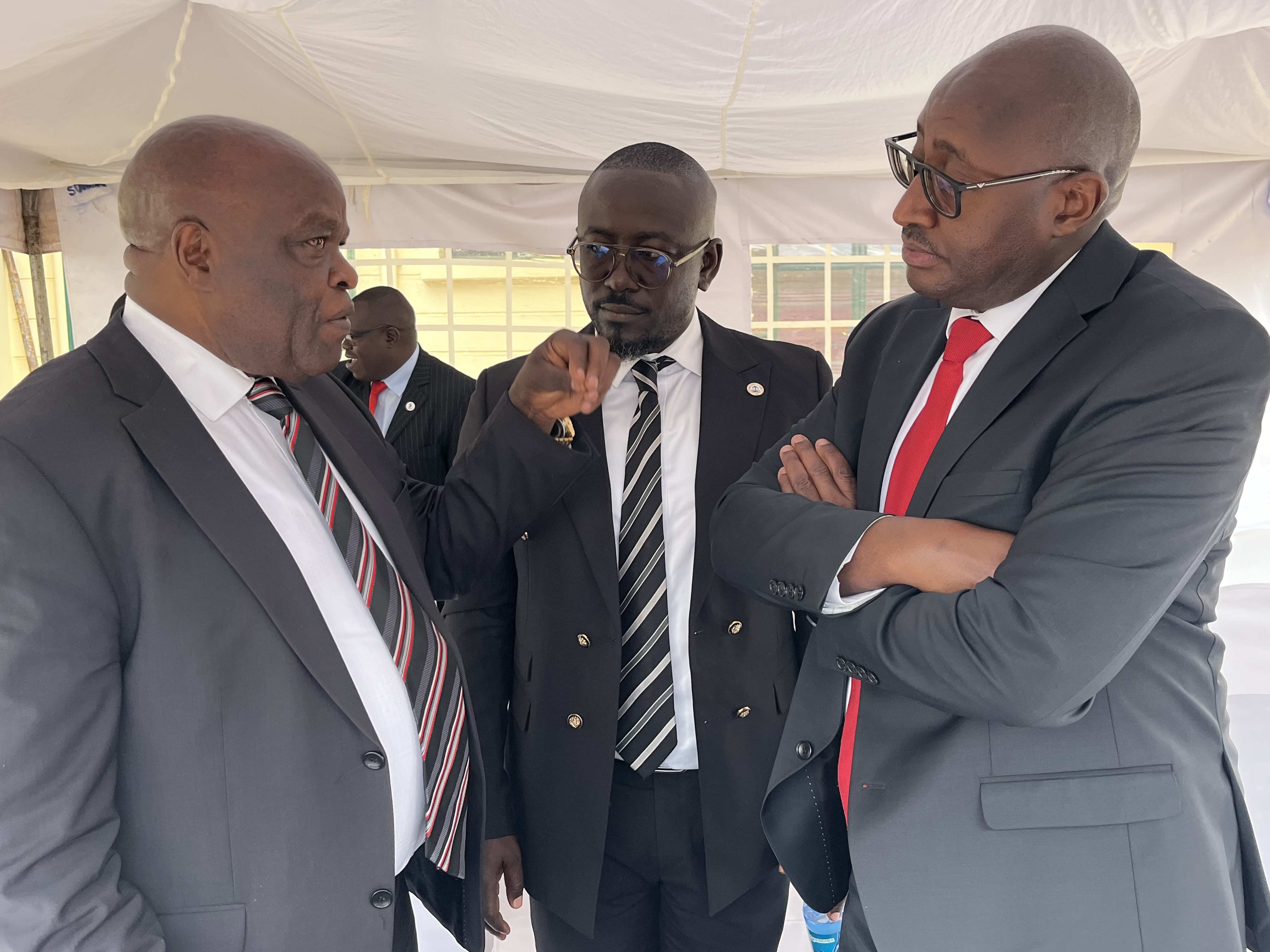
 Justice Reuben Nyakundi (L) with LSK North Rift Chairman Oscar Oduor (c) and Justice Anthony Ndungu during a handing over ceremony for the judges in Eldoret on March 30th 2026
Chief Justice Martha Koome has appointed Justice Anthony Ndungu to be the new presiding judge at the High Court in Eldoret, replacing Justice Reuben Nyakundi, who has been transferred to Vihiga.
Justice Nyakundi officially handed over to Ndungu during a ceremony at the High Court in Eldoret on Monday. The two judges were earlier hosted by Governor Jonathan Bii at his office.
They later addressed court users, including lawyers and magistrates, where Nyakundi reflected on his more than four years of service in the region, highlighting key achievements.
“Time has come to say goodbye. I thank everyone who has worked with me and supported us in delivering our mandate. I have achieved a lot in improving access to justice in this region, especially through the use of alternative dispute resolution mechanisms,” Nyakundi said.
Eldoret is one of the busiest court stations in the country, handling a high volume of succession cases that demand time, wisdom, and dedication.
Nyakundi recalled working long hours, at times exceeding 35 hours non-stop, leaving the office as late as 5am and returning by 8am.
“I thank God for the wisdom, health, and strength He has given me to achieve what I have to this day as I move to serve elsewhere,” he said.
Justice Ndungu expressed gratitude for his appointment, saying he was honoured by the trust placed in him to take up the leadership role.
He commended Nyakundi for laying a strong foundation upon which the new team will build.
Ndungu said his leadership will be guided by the Judiciary’s Sustaining Judiciary Transformation Blueprint (2023–2027), which aims to deepen access to justice, enhance efficiency, uphold integrity, and strengthen institutional capacity.
“This blueprint calls upon us to deepen access to justice, enhance efficiency, uphold integrity, and strengthen institutional capacity in service of the people of Kenya,” he said.
He outlined key priorities, including improving access to justice by strengthening service delivery, reducing barriers, and ensuring courts remain responsive and people-centred.
“We shall pay particular attention to vulnerable groups and ensure that justice is not only done but is accessible and seen to be done,” he added.
Ndungu also pledged to prioritise the reduction of case backlog through improved case management, use of technology, and enhanced judicial coordination.
“Justice delayed is justice denied. We shall strive to ensure timely resolution of disputes,” he said.
He emphasised the importance of integrity, accountability, and transparency in court operations, noting that public confidence in the Judiciary depends on high ethical standards.
Ndungu committed to promoting staff welfare and institutional cohesion, saying a motivated workforce is key to delivering on the Judiciary’s mandate.
He also highlighted the role of technology, including e-filing, virtual hearings, and digital case tracking, in improving efficiency.
He pledged to strengthen collaboration with stakeholders, including the bar and other justice sector players.
“Justice is a shared enterprise, and meaningful engagement will enhance both trust and effectiveness in service delivery,” he said.