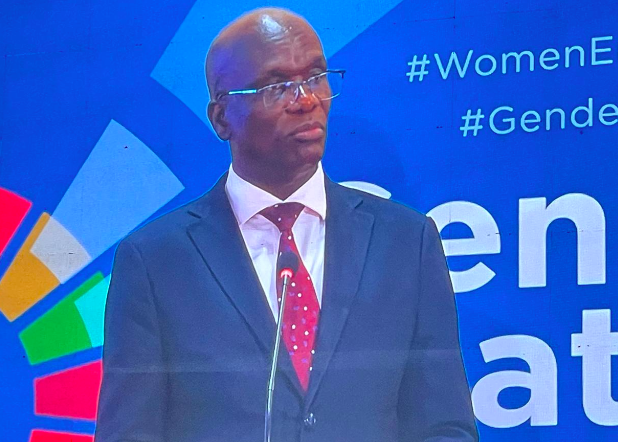
 Planning PS Boniface Makokha makes remarks during the launch of the third phase of the Women Count Programme/Gilbert Koech
The United Nations has praised Kenya for leading the way in using gender data to guide policies and decision-making.
Experts said the country has not only improved how it collects gender data but also how it uses it to shape real change. They spoke during the launch of the third phase of the Women Count Programme in Kenya.
UN Women deputy executive director Sarah Hendriks said Kenya’s efforts are already making a difference.
“We've seen that when a country like Kenya prioritises gender data, transformation follows and lives change,” she said.
The event, held under the theme 'Making Kenyan Women and Girls Count', marked the start of the programme’s third phase (2026–29). It brought together experts working to improve how gender data is produced, shared and used.
Over the past decade, Kenya has made significant progress in strengthening its gender data systems, improving institutions and supporting policies that promote equality and empower women.
Experts said the new phase will build on these gains by encouraging stronger partnerships between government, civil society, researchers and development partners.
It will also focus on investing in reliable and timely data to support better decisions.
Hendriks said Kenya is ahead of many countries, with more than 70 per cent of gender-related Sustainable Development Goal indicators now available—above the global average.
She said gender data goes beyond numbers, describing it as a tool for dignity, justice and equality.
“When women are counted, they are seen, valued and societies begin to change,” she said.
Treasury CS John Mbadi said the programme has helped reshape gender statistics in Kenya and across Africa. His remarks were delivered by Planning PS Boniface Makokha.
Mbadi said gender data plays a key role in planning, budgeting and accountability, and should be treated as essential in governance.
Gender CS Hanna Cheptumo, in a speech read by the director of Gender Josephine Obonyo, highlighted key achievements linked to better data.
These include the National Care Policy 2025 and improved responses to gender-based violence, informed by data from national surveys such as the Kenya Demographic and Health Survey.
Experts say Kenya’s progress shows how strong data can drive better policies and improve lives, especially for women and girls.