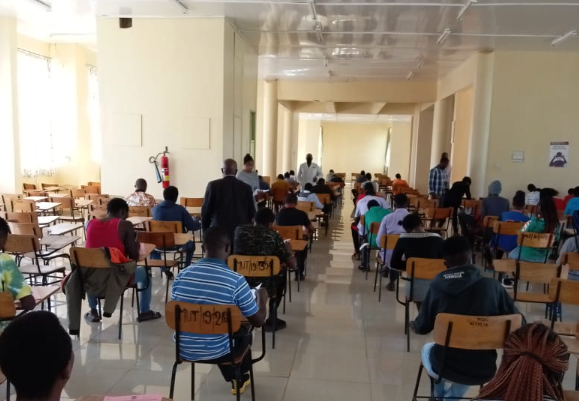
 The March/April 2026 series of Competency-Based Education and Training (CBET) summative assessments began on March 23 and will run until April 14.
The Technical and Vocational Education and Training Curriculum Development, Assessment and Certification Council (TVET CDACC) has raised the alarm over the circulation of fake assessment materials online, warning candidates and trainers against falling for what it terms a growing scam targeting the ongoing national exams.
In a public notice released on Wednesday, the council said it had detected materials purporting to be legitimate assessment tools and papers being sold across online platforms and other informal channels, stressing that they are fraudulent and not linked to its official processes.
The warning comes just days after the council rolled out the March/April 2026 series of Competency-Based Education and Training (CBET) summative assessments, which began on March 23 and will run until April 14.
“The council categorically states that such materials do not represent authentic TVET CDACC assessment tools/papers,” TVET CDACC CEO Prof Kisilu Kitainge said in a statement.
TVET CDACC is mandated under the TVET Act of 2013 to conduct CBET assessments across institutions nationwide.
According to the council, its systems are designed to safeguard the integrity of examinations from end to end.
Kitainge said all assessment tools are encrypted and transmitted only to registered centres through secure, verified channels.
“All TVET CDACC assessment tools are subject to rigorous end-to-end encryption and are transmitted exclusively to registered assessment centres through approved secure channels with a verification process,” he said, adding that contingency measures are in place in case of any breach.
“In the event of any suspected compromise, the council has protocols to immediately dispatch replacement tools, safeguarding the integrity of the assessment at all times.”
The council has now issued a strong caution to candidates, trainers and the general public against engaging with the fake materials in any form, warning that doing so amounts to a criminal offence.
“The council strongly cautions members of the public, trainers, candidates and trainees against purchasing, possessing, or disseminating any purported assessment materials from unauthorised sources. Such conduct constitutes fraud and is punishable under the Kenyan law.”
The council further distanced itself from any losses that may arise from such transactions, noting that enforcement action is already underway against those behind the scheme.
“The council is currently pursuing all necessary legal and administrative action against those involved in the distribution and sale of fake assessment tools," KItainge said.
The council urged the public to rely only on its verified communication channels for official information. It clarified that all legitimate updates are issued through its website and official social media pages, cautioning that any information from outside these platforms should be treated with suspicion and verified before use.
Members of the public have been encouraged to report any cases of touting or sale of fake assessment materials through official channels, with the council promising swift action.
The council reaffirmed its commitment to maintaining credibility in the assessment process, stating that it remains focused on delivering “credible and integrity-driven CBET Assessment to all trainees in Kenya.”