“They should have killed me, not my son.”
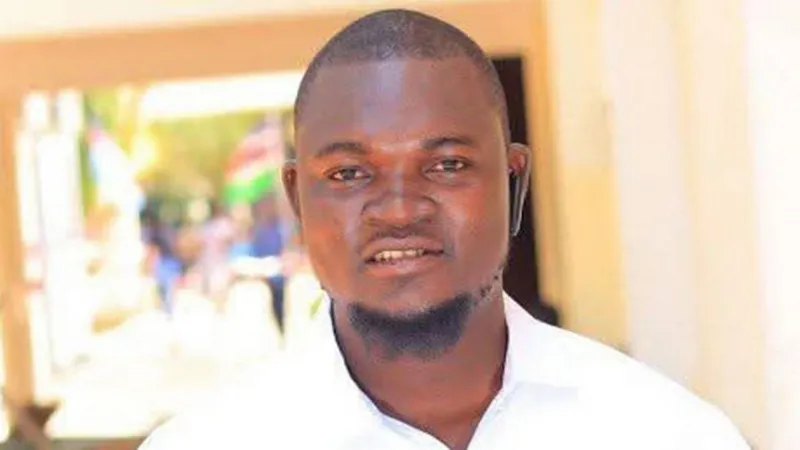
The words fall heavily, carrying the weight of a father’s grief that has not eased with time. For Meshack Ojwang, life has never been the same since his son, Albert Ojwang’, died in police custody on June 7, 2025
Albert was his only child his “pride, hope, and future”
“He was a teacher, a blogger, a husband, and a father. He was the reason I woke up every morning with purpose.”
When police took Albert away, the family waited, holding on to a fragile hope.
“I believed he would come home as always—tired, maybe bruised, but alive,” his father recalls quietly. “But he never did.”
Albert died inside a police cell at Central Police Station in Nairobi. His family says they were never told why he had been arrested—or how he died.
“All I know is that my son walked into that cell and never came out.”
His story is one among dozens captured in the Missing Voices Report launched on Tuesday , which documents police killings and enforced disappearances across Kenya.
The report recorded 125 cases of police killings in 2025, a 20 per cent increase from 104 cases in 2024. While enforced disappearances dropped sharply from 55 to six cases, the data shows a troubling pattern—spikes in killings during periods of public protest, particularly in June and July, which accounted for more than half of all cases.
Behind each number, families like the Ojwang's are left to navigate a quiet, enduring grief.
“Since that day, my world has been nothing but quiet pain,” Meshack says.
Inside their home, silence has replaced the rhythms of ordinary life.
“My wife hardly speaks anymore. She sits by the window, staring at the road, waiting for a voice that will never call out again.”
Grief lingers in the smallest details. Albert’s presence remains, frozen in time.
“His clothes still hang in the corner. His notebooks are still on the table. I can’t bring myself to move them. It feels like erasing him all over again.”
Each morning brings the same painful illusion.
“I imagine him walking through the door, asking if we’ve eaten, how we’re feeling, or whether there’s anything that needs fixing. But it’s only in my mind now.”
Albert had carried his family’s hopes with quiet determination.
“He used to say, ‘Baba, one day I’ll make things easier for you and Mama.’ And he did, in every way he could,” his father says. “He took care of us. He was our strength.”
Meshack had spent years working to educate him.
“When money was tight, I borrowed, sold what I could, and used my hands and back to raise his school fees. When he got into university, I paid for his parallel programme with pride.”
Albert became the first in the family to reach that level of education an achievement his father says he carried with humility.
“He never forgot where he came from.”
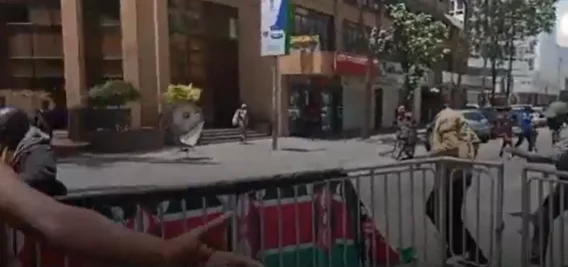
Albert’s death did not only shake his family; it sparked public anger across the country. Kenyans took to the streets to protest, demanding answers and accountability, turning his case into a rallying point for concerns over police conduct and justice.
“It was a blur police statements, postmortems, journalists at the gate, crowds of mourners,” Meshack recalls. “For a moment, it felt like the world saw our pain.”
“After a few weeks, the noise faded. The cameras left. The promises disappeared. And we were alone again left with nothing but our grief.”
Meshack said that people thought that the family had received millions of shillings.
“They look at us differently, whisper when we pass. But they don’t know the truth.” The support they received, he says, was limited and directed toward the future of Albert’s young son.
“We are grateful for every act of kindness, but none of it can bring Albert back. No cheque, no house, no words can replace a son.”
Albert’s death has left behind not just a grieving family, but unanswered questions.
“He was not a criminal. He was a teacher. He believed in justice, in speaking truth even when it was dangerous,” Meshack says. “He didn’t deserve to die behind those walls.”
What the family seeks now is not revenge, but accountability.
“I want justice, the truth. I want to know what really happened in that cell. Who saw him last? Who failed to protect him? Who will stand up and say, ‘We were wrong’?”
Even passing a police station is enough to reopen the wound. “The sight of those blue uniforms brings everything back the phone call, the disbelief, the body lying cold in that morgue.”
At night, under the quiet of the sky, a father still speaks to his son.
“Some nights, I sit outside and talk to him. I tell him how his mother is doing, how his little boy is growing. I tell him we miss him—every single day.”
International Justice Mission Kenya Country Director Vincent Chahale warned that the situation signals a grave concern, particularly as the country approaches the election period.
“I would urge the Judiciary to treat cases of police abuse of power as special cases so that they are fast-tracked, because if we do not see accountability of police officers, then we will see a rise in these violations,” he said.