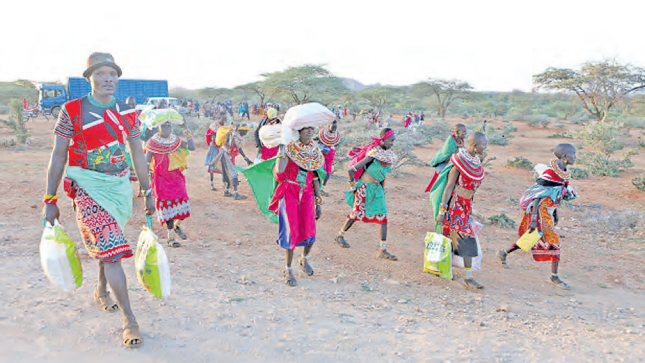
Kenya is reeling from a brutal climatic paradox. Barely months after a failed short rains season left over 3.7 million facing acute hunger, torrential floods have now submerged villages, sweeping away livestock, homes and the hope of agricultural recovery.
This climate whiplash has pushed the country to the brink of a severe food security crisis, with civil society groups arguing that it is less a natural disaster and more a failure of governance.
The Right to Food Coalition, a group of civil society organisations, smallholder producers, and human rights defenders, says the constitutional promise of freedom from hunger is being systematically broken.
"The current famine is not merely a natural disaster. It is a policy failure. Regrettably, it is a violation of human rights," the coalition said in a statement.
According to the 2025 Global Hunger Index, Kenya now ranks 103 out of 123 countries, with a score of 25.9 that denotes a ‘serious’ level of hunger.
The report placed Kenya among the world's hungriest countries, saying progress on food security has stalled since 2016.
The situation is dire in Mandera, Wajir and Kilifi counties, which are already in the 'alarm' phase of drought.
These arid lands are now facing another catastrophe as flash floods submerge irrigation schemes in areas like Baringo and Homa Bay.
The coalition says Kenya remains perilously dependent on imported staples, spending an estimated Sh500 billion annually on food imports such as wheat and rice— money that could be used to revolutionise local production.
Despite binding commitments like the Malabo and Kampala CAADP Declarations, which recommend allocating 10 per cent of the national budget to agriculture, the sector received just 3.2 per cent in the 2025/2026 financial year.
"High fuel costs and non-tariff barriers have made food a luxury, while the distribution of adulterated fertilisers in recent seasons has eroded the trust and productivity of our local farmers," the coalition noted.
It said neglected irrigation systems and a lack of dams mean that when heavy rains come, they destroy rather than nourish.
"When it rains, we lose crops and livestock to floods; when it doesn't, we lose them to extreme dehydration and hunger. The lack of investment in dams and other water storage infrastructure, proper canal maintenance and post-harvest storage means that even in 'good' years, nearly 30 to 40 per cent of our produce rots before it reaches the plate."
The coalition wants the government to move beyond reactive handouts and enact the National Disaster Risk Management Bill and a binding Right to Food Act.
This legislation would transform constitutional promises into enforceable legal obligations, the coalition said.
"The time for observations and reports has passed. Hunger is a political choice to violate human rights. We demand a food system that serves the people, not the markets," the coalition said.