For many young Kenyans, the internet is meant to be a safe space — a place to quietly seek answers about their health, identity and wellbeing. But for some, that digital refuge is increasingly becoming a source of fear.
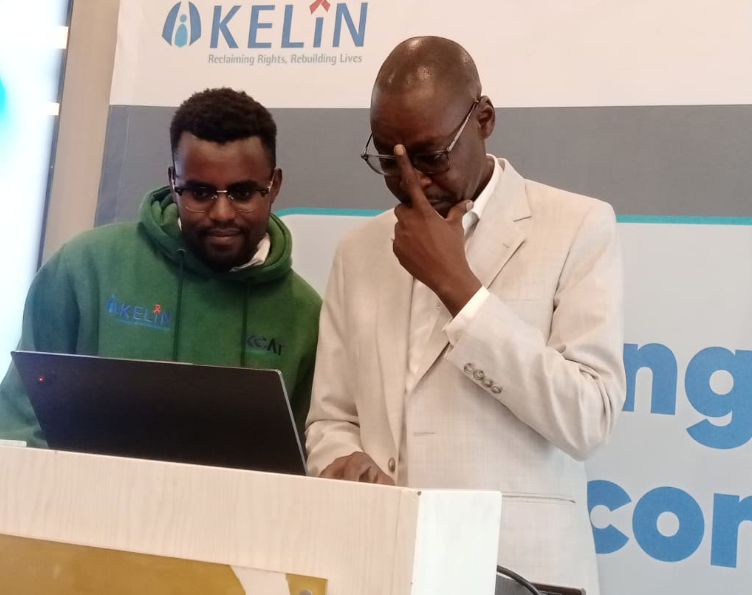
A new study by Kelin reveals the hidden struggles faced by young people living with HIV, young sex workers and LGBTQ individuals as they navigate online platforms in search of health information.
According to Digital Health and Rights Project researcher James Kiilu, what often begins as a simple search for information can quickly expose users to new forms of harm.
“Instead of finding help, many are met with violence based on their sexuality, gender or even occupation,” Kiilu says. “So what happens is you start to self-censor. You withdraw from online spaces.”
The study, conducted in Nairobi, Mombasa, Kitui and Migori, paints a troubling picture. It found that three out of four participants — 75 per cent — had either experienced or knew someone who had faced technology-facilitated abuse. This form of abuse, Kiilu notes, disproportionately affects women, transgender women and gay men.
“Gender and sexuality shape how people experience online spaces,” he says. “Those who are already vulnerable offline face even greater risks online.”
Beyond direct harassment, structural inequalities further expose vulnerable users to risk. For many young women, limited access to personal devices forces them to share phones with family members or partners, increasing exposure to privacy violations and surveillance.
“In shared spaces, your privacy is no longer yours,” Kiilu says. “People can easily discover your sexuality, your health concerns, or even who you are communicating with.”
Kiilu warns that the dangers do not end online. Abuse experienced on digital platforms is increasingly spilling into the real world, where harassment and stalking can escalate into physical violence.
“You find someone tracking your activity on platforms like Facebook, then following you physically,” he explains. “This is not just online violence; it is an extension of the violence these communities already face.”
The study suggests that digital harm is not separate from real-world harm, but a continuation of it. “It is the digitisation of existing violence,” Kiilu says. “The same discrimination people face offline is now happening in digital spaces.”
As a result, many young people are choosing silence over risk, cutting themselves off from potentially life-saving sexual and reproductive health information.
These risks mirror broader inequalities in access to safe and inclusive healthcare. Paul Malusi, Director of Health Financing at the Ministry of Health, acknowledges that discrimination within healthcare facilities remains a serious concern.
“We have a right to the highest attainable standard of health without discrimination,” he says. “Whether you can afford it or not, that right belongs to everyone.”
Yet reality tells a different story. Across the country, vulnerable populations — including the poor, persons with disabilities and those with neglected diseases — are often left behind. Malusi points to conditions such as elephantiasis, still affecting communities along the coast, where patients remain largely invisible within the health system.
“They are there, suffering, but often forgotten,” he says. “Nobody cares.”
The findings highlight an urgent need for safer, more inclusive digital environments, where seeking help does not come at the cost of safety. For now, however, for many vulnerable young Kenyans, logging on is no longer just about access — it is about survival.