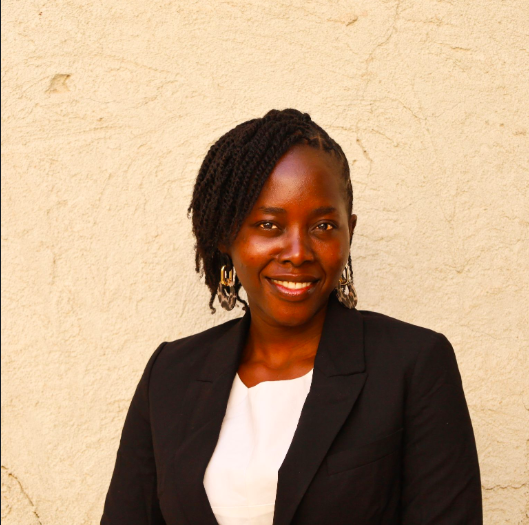
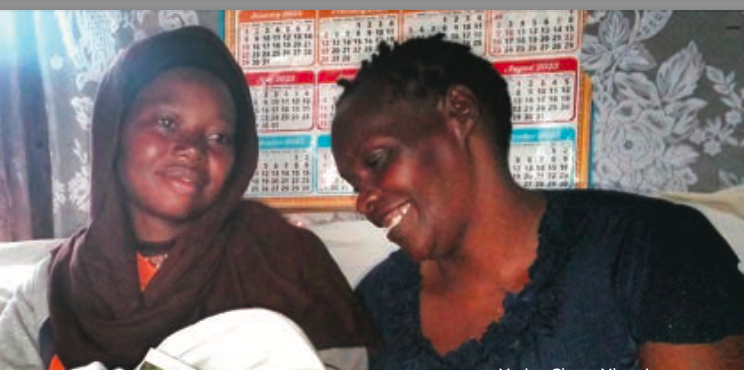
Marion Charo sits at the centre of a life abruptly altered by violence and loss. A mother of three, she is now raising her children alone after her husband, Issa Mburu, was shot dead on Saba Saba Day in 2025.
“He had left to work on Saba Saba Day but had to return after a demonstration blocked traffic to Kitengela, where he was going to work as a mason,” she recounts. “It was on his way back that he encountered the fatal incident outside a mosque at Embulbul.”
At the time, Marion was seven months pregnant.
Her story is part of a broader pattern documented in the Missing Voices Report launched on Tuesday. The report recorded 125 cases of police killings in 2025, up from 104 in 2024 representing a 20 per cent increase.
In contrast, enforced disappearances dropped sharply from 55 cases in 2024 to just six in 2025, an 89 per cent decrease.
June and July recorded the highest number of incidents, with 68 cases more than half (54 per cent) of all police killings that year occurring during the protest period.
Altogether, incidents of extrajudicial killings and enforced disappearances declined from 159 in 2024 to 131 in 2025, a 17.6 per cent drop.
However, the report notes a persistent trend: spikes in police killings during periods of public protest, mirroring patterns observed in 2023 and 2024 and raising ongoing concerns about the use of excessive force by law enforcement.
“Now I have three children,” Marion says. “Our youngest, Gaceri, is just one and a half months old. The older ones are in primary school. My husband was the family’s sole provider.”
Her husband’s death has upended their lives. Marion now lives with her in-laws, relying on their support as she struggles to provide for her children.
“I am facing financial difficulties, especially providing for my three children. I want to resume working so I do not have to rely solely on my parents-in-law,” she says.
Before her husband’s death, Marion earned a living baking and selling food within her neighbourhood. She hopes to rebuild that livelihood.
“I am skilled in baking cakes and previously sold food to neighbours. I am seeking assistance to raise capital to buy equipment like an oven and a mixer,” she explains. “With this, I can bake and sell to local shops and support my children.”
Despite the hardship, she expresses gratitude to those who have stood by her.
“I sincerely thank my neighbours, fellow Muslims, and my husband’s parents for the support they have given us since my husband’s passing.”
For Issa Mburu’s mother, the loss is both personal and devastatingly symbolic.
“Mburu was killed on Saba Saba Day. He was a mason who had secured a year-long contract in Mlolongo before his sudden death.”
She recalls their last conversation with painful clarity. “He told me he was glad to have secured the contract and that he would build a house for me,” she says.
But that future never came.
“On that day, he had left for work, but because of the demonstrations, he returned home. He was killed while heading to the mosque.”
“He was the primary breadwinner and the family’s support system. He paid his younger sibling’s school fees, who was planning to go to university,” Fenancia says.
She says that his death has left the family without any support whatsoever.
“The death has caused me so much distress that I am suffering from high blood pressure, and I have to take medication. I currently have no means to buy my medication.”
Her grief is also marked by anger and a sense of injustice.
“I was a mother of five, but now the government has killed one, leaving me with four children.”
Amnesty International Kenya said the findings point to deeper systemic concerns around civic space and accountability.
Section director Irungu Houghton said the organisation had continued to defend civic space by opposing restrictive public order measures and the misuse of cybercrime and security laws.
“We amplified the risks of digital surveillance and online repression and elevated Kenya’s role in resisting transnational repression, warning, stopping, and responding to unlawful extraditions and refoulement,” he said.
“We framed authoritarianism not as an abstract threat but as a governance failure that undermines human rights, the rule of law, national sovereignty, and business continuity.”
He added the organisation would deepen this work in 2026, partnering with Missing Voices and its members to pursue systemic accountability for protest-related killings and disappearances.
International Justice Mission Kenya Country Director Vincent Chahale warned that the situation signals a grave concern, particularly as the country approaches the election period.
“I would urge the Judiciary to treat cases of police abuse of power as special cases so that they are fast-tracked, because if we do not see accountability of police officers, then we will see a rise in these violations,” he said.
The report relies on a network of human rights monitors across Kenya to document cases of police killings and enforced disappearances, as well as to collect witness statements and supporting evidence.
In addition, the report draws on secondary data from open sources such as media outlets, human rights organisations and coalition partners.