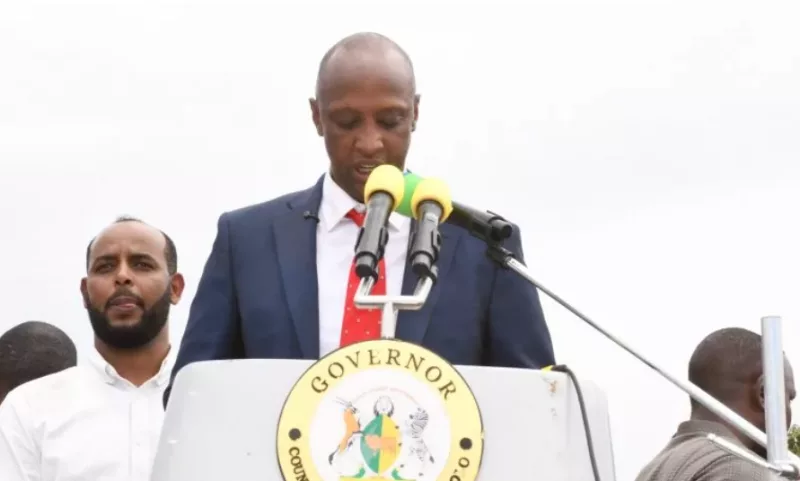
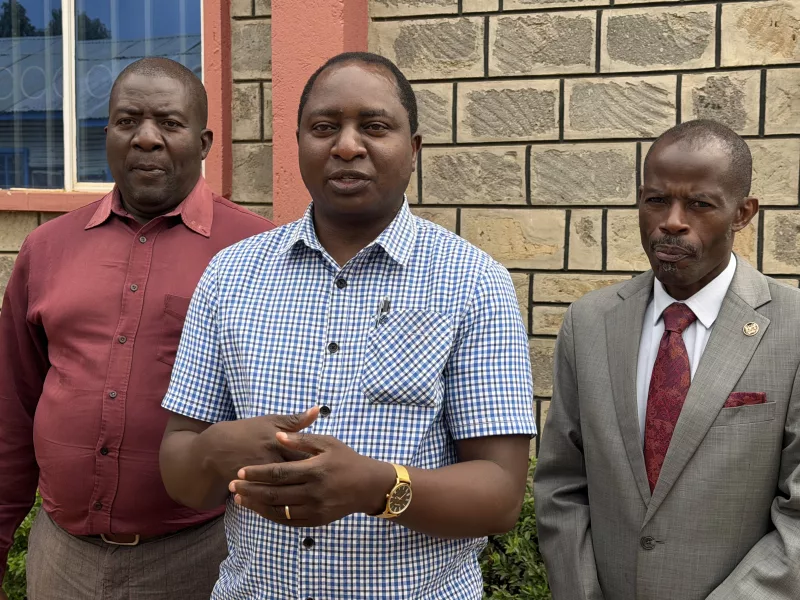
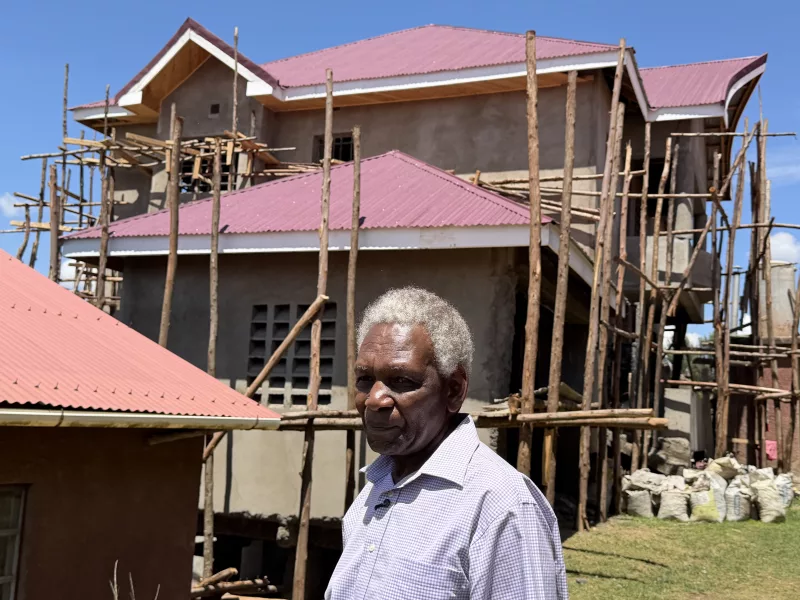
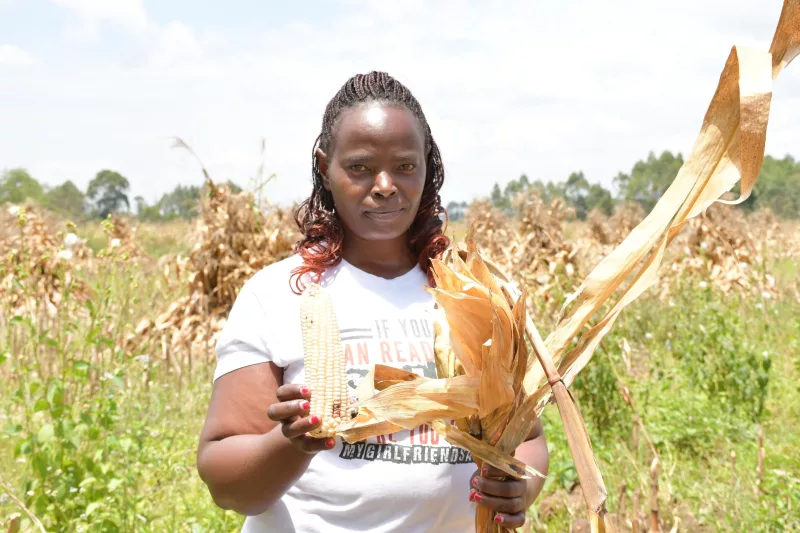
 KEMRI Director General Professor Elijah Songok (R) speaking in Elgeyo Marakwet county where he was hosted by Governor Wisley Rotich (L)
The Kenya Medical Research Institute has launched a new initiative to help develop use of herbal medicine in the country.
Kemri will partner with several counties to promote growing of trees and other plants which have been identified traditionally and scientifically as herbal medicine for some diseases.
Director general Prof Elijah Songok says they plan to integrate herbal medicine into Kenya’s healthcare system to support treatment of diseases.
“We will engage with counties to promote and support cultivation and commercialisation of medicinal trees with proven therapeutic value,” Songok said.
He was speaking in Elgeyo Marakwet county where a team from Kemri paid a courtesy call on Governor Wisley Rotich.
The county is among those identified for partnership with institute on development of herbal medicine.
Prof Songok said Kemri had already identified six tree species with confirmed efficacy in the treatment of various ailments, including cancer.
“The identified plants will be processed into pharmaceutical forms such as syrups, capsules and inhalers for official use in handling some of the diseases,” he said.
Songok noted that under the new programme Kemri would also bring on board farmers and traditional herbalists to grow selected medicinal tree species already validated through scientific research.
“The initiative will be funded by the National Treasury,” said Songok, adding that they were grateful to Parliament for recognising the importance of mainstreaming herbal medicine in disease treatment and management.
Kemri is replicating experiences in countries like India and China where patients have options to either use conventional or traditional therapies.
Use of herbal medicine is already common in the country but Songok said Kemri would go out to promote and develop the same.
Kemri will sign MoUs with participating county governments to support farmers in cultivating the medicinal trees as a sustainable economic venture.
“We will ensure farmers are fully involved in this initiative so that we achieve desired objectives,” Songok said.
Governor Rotich lauding both Kemri and the national government for recognising the role of traditional medicine practitioners.
“We welcome this initiative by Kemri for acknowledging our herbalists and identifying over 100 plant species in our county with medicinal value,” Rotich said.
He said the county would have a structured working engagement with Kemri and herbalist along with farmers on the new initiative.
The MoUs to be signed would provide frameworks that respect cultural practices while ensuring intellectual property rights are protected so that practitioners can benefit.
Rotich said some local herbalists had demonstrated success in treating chronic illnesses, including cancer, though many remain largely undocumented due to cultural sensitivities.