The political competition, previously characterised by a simple rivalry, is evolving into a complicated three-way conflict: Ruto focuses on development, Gachagua strengthens regional allegiance and Jubilee Party revives with former President Uhuru as quiet tactician.
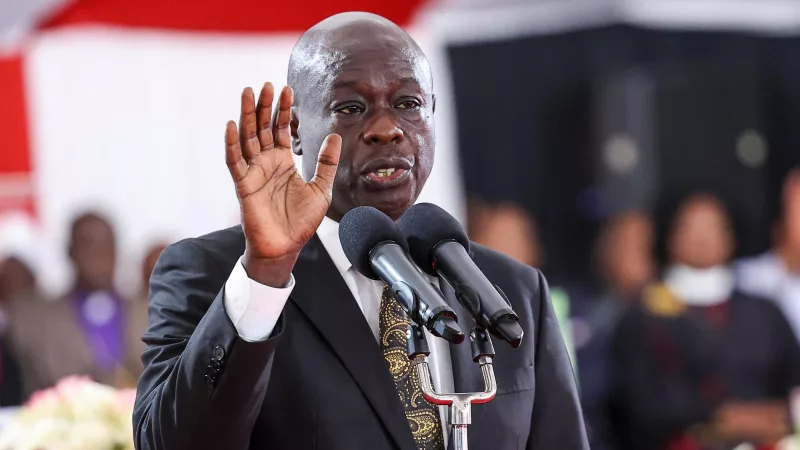
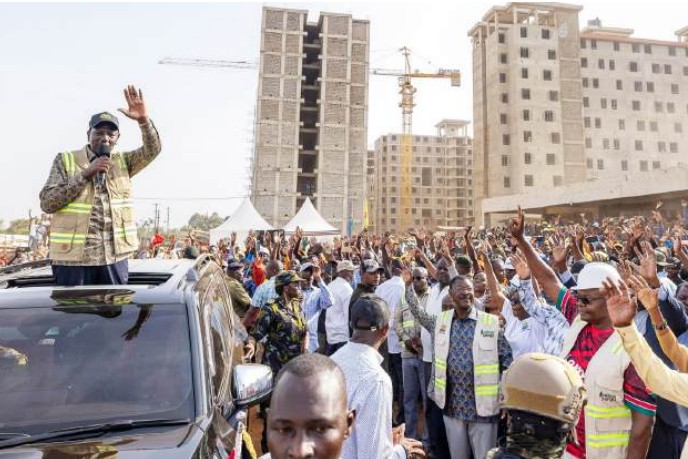
During a tour of Western Kenya on Tuesday, Ruto took an unusually personal swipe at his former DP Gachagua in Cheptais, Mt Elgon. He urged him and the opposition team to mind their own business.
“Kwanza mimi nauliza wengine waende gym… Wacheni kula chakula mingi… Tumbo karibu inapasuka…” Ruto said in Swahili.
The remarks were delivered as the two leaders escalated their exchange of words. Gachagua recently suggested the President’s weight loss reflected sleepless nights caused by opposition attacks on his administration.
Speaking on Monday in Githunguri, Gachagua mocked the President, attributing the rate at which he is losing weight to opposition pressure. He spoke during the service of Kiambu Senator Karungo Thangw’a.
“The good thing is that even with all that money, he does not sleep. You can see how much weight he has lost. He has billions but cannot rest,” Gachagua said.
He said the opposition had managed to get into the President’s psyche with its constant criticism of the Kenya Kwanza administration.
He pleaded with civil servants and public officers to continue leaking key information to the opposition team, saying disclosures would help them expose evil in society.
Gachagua has recently been using his Wamunyoro residence in Nyeri as his political command centre.
The impeached DP recently said he will not tire of criticising the government and urged voters to kick out Mt Kenya leaders associating with the head of state.
His allies agreed wherever they went. Nyandarua Senator John Methu accused the government of attempting to silence voices representing the region.
“There is a deliberate attempt to intimidate leaders who speak for Mt Kenya. But we will not be silenced,” Methu said, adding he will not end his fault-finding with Ruto.
Political analysts say the move by Ruto’s allies to face Gachagua head-on is a multifaced strategy to set the record straight, defend government development while campaigning for his reelection in 2027.
At the centre of Ruto’s strategy is his renewed focus on development and the consolidation of UDA as a national political force, allies said.
The President emphasised the need to strengthen the party’s grassroots structures when he addressed more than 17,000 grassroots leaders at Sagana State Lodge in January. Most were newly elected UDA officials.
“My plan is to strengthen our grassroots structures, expand voter turnout, and build UDA into a strong national party that will transform this country,” Ruto said. “Leaders must focus on delivering for the people rather than political distractions.”
Ruto has tasked Deputy President Kithure Kindiki with consolidating political gains in Mt Kenya. Kindiki has been holding meetings, including at his Karen residence, drumming up support for UDA and ensuring alignment amongst party officials.
The DP, a major critic of the former deputy president, recently warned him against destabilising the country. He said that while Gachagua was DP, he had ample time to deliver without distractions.
He recently urged Meru leaders and residents to respect Ruto, saying that continuously promoting the “one-term” narrative would not be tolerated.
Political analysts say UDA leaders have leant heavily on recent grassroots elections and by-election contests countrywide to demonstrate the party’s popularity.
Senior government allies have joined the offensive against Gachagua.
ICT Cabinet Secretary William Kabogo has repeatedly warned against the politics of division. He warned Gachagua of inciting people against the government, saying the region risks being left behind in development.
Similarly, National Assembly Majority leader Kimani Ichung’wah has often defended the President’s strategy of unity and growth, saying UDA remains in control of the political direction in Mt Kenya.
He cautioned residents against divisive statements and urged voters to focus on political development.
Other leaders such as Laikipia East MP Mwangi Kiunjuri, Sabina Chege (Murang’a), Elijah Kururia (Gatundu North), Gathoni Wamuchomba (Githunguri MP) and Kieni MP Njoroge Wainaina, among others, have embarked on regional tours to counter opposition messaging.
Observers said while Ruto’s camp consolidates grassroots support, Gachagua and his team have continued to galvanise the Mt Kenya base.
They said Gachagua’s strategy of consolidating regional aspirants and sometimes pulling them from other coalition parties is designed to strengthen his movement.
About two weeks ago, Gachagua held an exclusive meeting with former Jubilee MPs.
At his Wamunyoro residence, Gachagua recently hosted a number of leaders from Thika, Limuru, Kirinyaga, Mwea and Mukuruweini, among others, causing political buzz in opposition parties.
Former Nyeri MP Ngunjiri Wambugu, who broke ranks with Gachagua, wrote a letter to his party leader, Uhuru.
In a statement, Wambugu claimed that a number of Jubilee candidates who contested the 2022 polls have defected to Gachagua’s party. They include some from Kirinyaga Central, Limuru, Mwea, Mukuruweini, Othaya and Kieni.
He alleged their strategy aims to build a new political outfit by “cannibalising” Jubilee’s existing support base in the Mt Kenya region.
He said the recent defections raise concerns about whether Jubilee will eventually cede its planned electoral positions in the region to Gachagua’s party in the run-up to the 2027 General Election.
Speaking to Star on Tuesday, Wambugu explained the strategic intent behind Jubilee’s apparent silence.
He said Uhuru’s silence is doing more harm than good to Gachagua as he isn’t aware of the next political move.
“I think Uhuru’s silence is doing more harm to Gachagua than to UDA because it’s allowing the political space in Mt Kenya to settle naturally. Then we can build our parties and propose the right leaders without undue influence,’’ he said.
He said Gachagua has the right to ask people to vote for his party for all positions but maintained that the problem is doing so in the presence of like-minded opposition leaders from other parties.
In his social media, he recently questioned Gachagua’s motive, saying he is identifying Jubilee aspirants and pulling them into his camp.
“That is not coalition building — that is dismantling another party to strengthen your own,” he added.
Political analyst Andrew Maringa echoed Ngunjiri and said the political landscape in Mt Kenya is at a crossroads.
He said people should shun divisive politics and concentrate on developments, adding all the political players in the region are fighting over the country and dominance of the region ahead of 2027.
“These fights are all about political dominance,” Maringa said.
“The alliances formed now, such as Ruto’s national push, Gachagua’s regional consolidation and Jubilee’s revival will likely influence who controls Mt Kenya and, by extension, national politics.
While Ruto and Gachagua stand off, the Jubilee Party is quietly reclaiming its space in its former stronghold in preparations for 2027.
Analysts said Uhuru’s low-profile approach on reclaiming its strongholds has included careful guidance for party structures and grassroots organisation.
During a Murang’a aspirants meeting last year, Uhuru urged members to maintain discipline and avoid personal attacks.
He promised to traverse the Mt Kenya region to reach out to the people, saying the party will ensure that nominations will be free and fair.
The former President further said that no Jubilee candidate would be receive a direct party ticket, adding that all aspirants will be treated the same. He warned party members to maintain discipline and urged them to shun public insults.
“Let’s stop insults. Even if you don’t agree with me, simply listen and form your own opinions. Insults will not take us anywhere; respect lasts,” Uhuru said.
Since Uhuru’s public address, Jubilee has been quietly restructuring its leadership and revitalising party structures at both national and grassroots levels.
Recent moves include appointing Jeremiah Kioni as deputy party leader, replacing Moitalel Ole Kenta as secretary general, naming Vincent Kemosi as national chairman, Yassin Noor as organising secretary and Kembi Gitura as director of elections.
Jubilee officials, including Deputy Party leader Fred Matiang’i, have been actively meeting aspirants and delegates in counties such as Murang’a and Narok to rebuild the party’s base while maintaining discipline and promoting inclusive leadership.
Speaking in Narok this week, former CS Matiang’i said the party is working closely with coalition partners to liberate the country.
He opened the Jubilee office in Narok county, saying the party is intensifying efforts to rebuild grassroots networks.
“This morning, alongside fellow Jubilee leaders, I had the honour of officially opening our Narok county Jubilee office,” Matiang’i said. “Our journey to fix this country is anchored at the grassroots, where the true voice of the people lives. We are strengthening our structures, deepening our presence, and building a movement that reflects the hopes, aspirations, and dignity of every Kenyan.”
Thika parliamentary aspirant Ephraim Wainaina said political competition is high in Mt Kenya.
He said the region is no longer politically uniform as internal competition and shifting alliances will define the 2027 electoral outcome.
Wainaina called on the people to stand united and elect leaders based on their merit, saying voters should not tolerate mediocrity.
He said the combined effect of Uhuru, Gachagua and Ruto has turned Mt Kenya, instrumental in Ruto’s victory, into one of the country’s most competitive political arenas.
He said the next few months will define the trajectory of 2027, arguing that whoever consolidates the grassroots while maintaining credibility and discipline will have the upper hand.