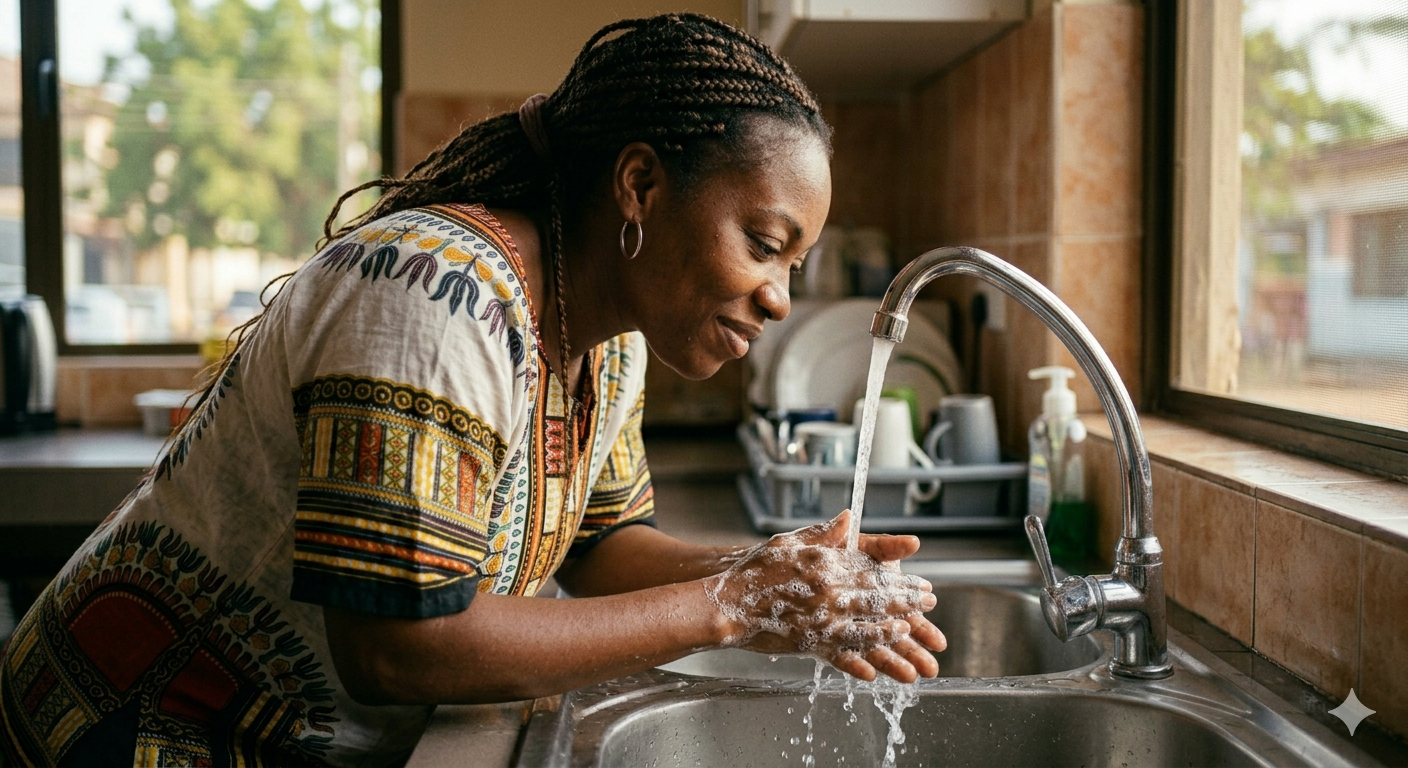
Over 2 billion people globally, particularly in Sub-Saharan Africa and including Kenya, still lack access to safe water, sanitation and hygiene, despite global commitments to improve water security.
According to the United Nations (UN) World Water Development Report 2026, 2.1 billion people globally still lack safely managed drinking water, 3.4 billion lack safely managed sanitation, and 1.7 billion do not have basic hygiene services at home
"In Sub-Saharan Africa, access to clean and safe water remains a significant challenge, with access to basic water services estimated at 58% in 2024, and access to basic sanitation estimated at 47 per cent," the UN says.
It adds, "Approximately 115 people in Africa die every hour from diseases linked to poor sanitation, poor hygiene and contaminated water. Africa has some of the world’s most water-scarce regions."
The global theme for World Water Day 2026 — “Water and Gender” with a campaign slogan Where Water Flows, Equality Grows” — emphasises the transformative role of water and sanitation in advancing gender equality
Despite decades of progress, the report states that inequalities continue to compromise global water security, disproportionally impacting women and girls, who, despite being the main collectors of water, continue to be excluded from water management and leadership roles.
The report examines how climate change, water scarcity and disasters are intensifying these inequalities and calls for stronger action to ensure equal rights, participation and opportunities in water management.
The United Nations World Water Development Report is released annually in the context of World Water Day, which is being marked globally today March 22, to highlight the importance of water and advocate for sustainable water management.
It raises awareness of the global water crisis and supports the achievement of Sustainable Development Goal 6: ensuring water and sanitation for all by 2030.
This year’s report, ‘Water for All People: Equal Rights and Opportunities, warns that 2.1 billion people still lack safely managed drinking water, with women and girls bearing the heaviest burden.
Women and girls are most often responsible for collecting and managing water for their households, exposing them to physical strain, lost education and livelihoods, health risks, and heightened vulnerability to gender-based violence — particularly where services are unsafe or unreliable.
Globally, women and girls spend a total of 250 million hours every day collecting water, time that could otherwise be spent on education, leisure, or income-generating activities. Girls under 15 (7%) are more likely than boys under 15 (4%) to fetch water.
Climate change, water scarcity and hydro-meteorological disasters are exacerbating existing gender inequalities, particularly in water-stressed and disaster-prone contexts.
Gender remains a key determinant of vulnerability, shaping exposure to risk as well as access to early-warning systems, recovery support and long-term livelihood security.
“Evidence shows that climate change disproportionately affects women: a 1°C rise in temperature reduces incomes in female-headed households by 34% more than in male-headed households, while women’s weekly labour hours increase by an average of 55 minutes relative to men.”
At the continental level, the African Union (AU) has declared 2026 as the Year of “Assuring Sustainable Water Availability and Safe Sanitation Systems to Achieve the Goals of Agenda 2063.”
The theme elevates water and sanitation to a continental political priority, recognising them as catalysts for economic transformation, climate resilience, public health, food security, and regional stability.
The theme was launched during the 39th Ordinary Session of the AU Assembly in Addis Ababa on 14 February 2026.
“Against this background, the African Union Commission, through the Department of Water and Sanitation, together with the African Ministers Council on Water (AMCOW), alongside its partners, will be commemorating the 2026 World Water Day,” the AU says of the event expected to take place tomorrow in Addis Ababa.
The event will elevate the campaign slogan, where water flow, equality grows, by discussing solutions capable of closing the gender gap in access to water.
The report also shows that in Sub-Saharan Africa, agriculture uses 79 per cent of freshwater withdrawals, yet only 58 per cent of the population has access to basic water and 47 per cent to basic sanitation.
Contaminated water contributes to about 115 deaths per hour across Africa, while inadequate access imposes a time burden equivalent to 77 million working days per year for women.
The UN report adds that socio-economic obstacles, traditional customs and inheritance laws that have traditionally favoured men often exacerbate gender disparities in access to water across Sub-Saharan Africa.
“This can lead to unequal gender participation and impacts from water-related development and climate challenges. Strengthening governance structures may help to achieve equitable access to water resources and WASH services, recognising the critical role women play in water management and decision-making processes and incorporating Indigenous knowledge.”