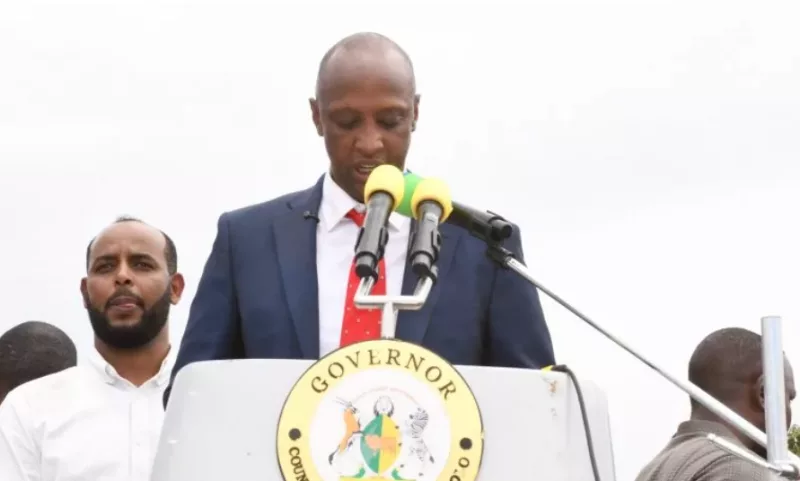
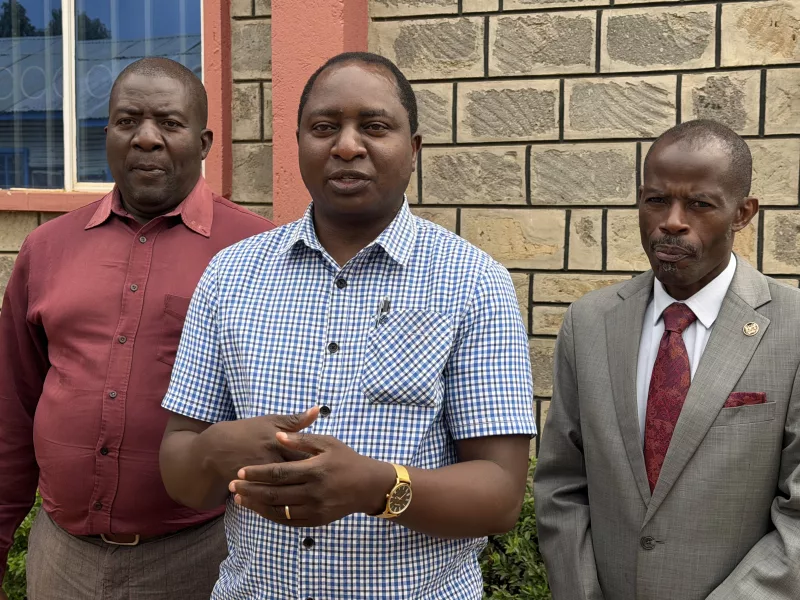
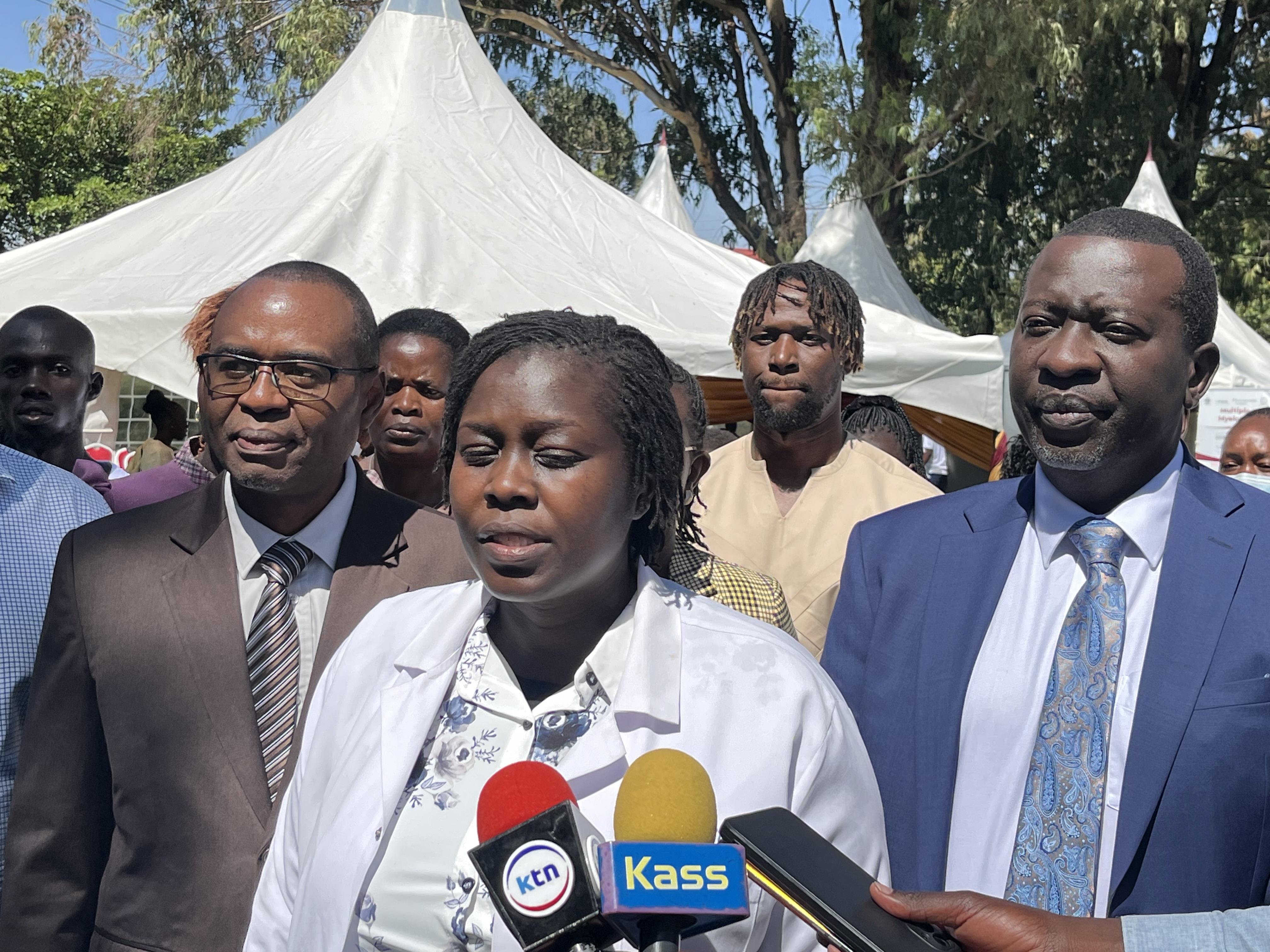
 Chairman of the institute Dr Timothy Olwenyi(r), Dr Beatrice Melly and senior director at MTRH Dr Andrew Wandera in Eldoret
The National Cancer Institute of Kenya is calling for increased focus on improving care for patients and the elimination of stigma, among other challenges.
NCI chairman Dr Timothy Olweny stated that the Institute is eager to play its role in leadership, oversight, and coordination of all efforts related to cancer treatment and control.
He emphasised that cancer has numerous ramifications, including psychosocial and economic impacts, hence the need for sustainable efforts to address the disease to achieve meaningful progress and impact in cancer care.
“We must consider how we will enhance diagnosis and all associated services to improve patient care and related programmes,” Olweny said. He stressed that patients must have access to quality care and that more resources should be allocated towards prevention rather than solely focusing on curative treatment.
Olwenyi also highlighted the importance of deliberate efforts to eliminate stigma and discrimination, particularly in the workplace, where individuals living with cancer are often denied opportunities they deserve, just like others.
The NCI chief pointed out that, beyond raising awareness among healthcare workers, initiatives on cancer must be integrated into the education system to ensure sustainable progress across all fronts.
“The key approach we must adopt is to improve patient care and enhance the experience of caregivers throughout the cancer journey,” he said. Olwenyi spoke in Eldoret during the launch of the Multiple Myeloma Association of Kenya (MMAK), which brings together patients, caregivers, medical experts, and other stakeholders.
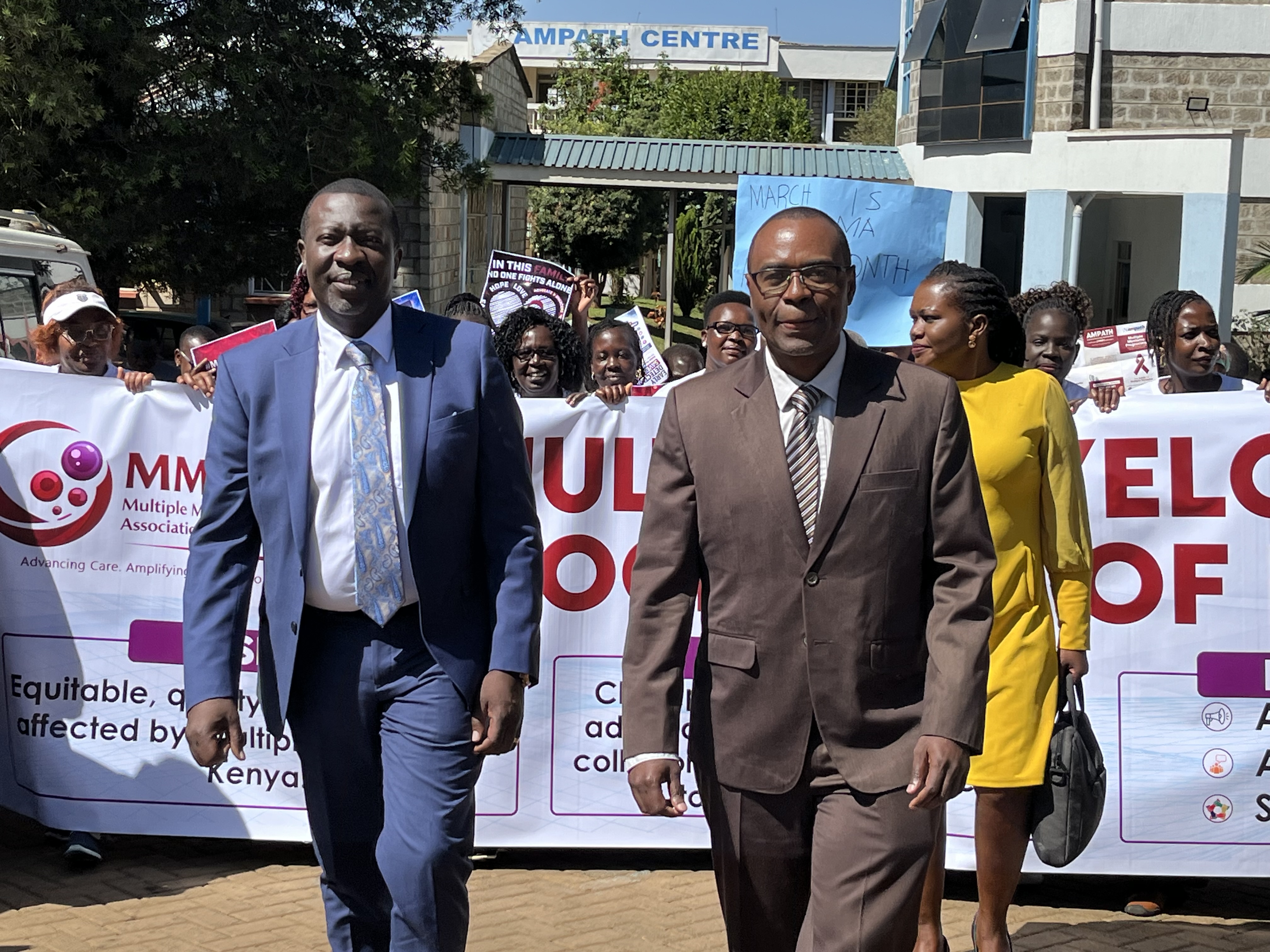 Chairman of the Institute Dr Timothy Olweny and Senior Director at MTRH Dr Andrew Wandera during the launch of the Multiple Myeloma Association of Kenya in Eldoret
“The formation of this association marks a significant turning point in the care of patients with Multiple Myeloma,” he added.He was accompanied by senior director at Moi Teaching and Referral Hospital, Dr Andrew Wandera, and Dr Beatrice Melly, a clinical haematologist at the hospital. Wandera emphasised the importance of patients as key stakeholders in ensuring quality care.
“Patients are experts in their own situations and contribute greatly to their care. When we involve them, the journey becomes easier, and the outcomes improve,” Wandera said.
He noted that MTRH currently manages approximately 250 patients with Multiple Myeloma, with around 70 new cases diagnosed annually. Multiple Myeloma is a blood cancer characterised by symptoms such as headaches and back pains.
Melly highlighted that the association is part of efforts to raise awareness about Multiple Myeloma. They have conducted extensive training for caregivers and health workers across more than 23 counties in western Kenya. She added that the association would strengthen advocacy efforts to ensure patients receive the best possible care.
Globally, she noted, March is recognised as Multiple Myeloma Action Month—a period when patients, advocates, and healthcare professionals worldwide unite to raise awareness, honour the resilience of those affected, and push for better access to treatment.
She explained that the theme for 2026, #MoreThanMyeloma, conveys a powerful message that a person is not defined by their diagnosis but by their identity, dreams, and humanity.
“It reminds us that behind every medical chart is a mother, father, farmer, teacher, or student—someone deserving dignity, support, and the opportunity to lead a full and meaningful life,” she said.