
Kenya has launched a high-stakes strategic roadmap to overhaul its science and innovation landscape, committing to a Sh500 billion investment over the next five years to transform into a knowledge-based economy
The transformation envisions an investment of approximately Sh500 billion over five years, implemented through a three-phased transition of Stabilisation, Structural Reform, and Transformation.
The development process of the Blueprint,
spanning from November 2025 to March 2026,
was led by the SDSRI, in collaboration with the
African Population and Health Research Center
(APHRC), as the implementing partner, and the
Foreign, Commonwealth and Development
Office (FCDO) as the funder.
The "Kenya Science, Research and Innovation (SRI) Synergy Blueprint," unveiled on Wednesday, aims to end the country’s heavy reliance on foreign donors and bridge the gap between laboratory research and the marketplace
Despite its global reputation as the "Silicon Savannah," Kenya currently depends on external funding for 74 per cent of its research
National expenditure on research and development has stagnated at a mere 0.78 per cent of GDP, missing the statutory target of 2 per cent.
Officials warn that while the nation possesses a vibrant entrepreneurial spirit, the current ecosystem is stifled by silos, overlapping mandates, and 'data invisibility.
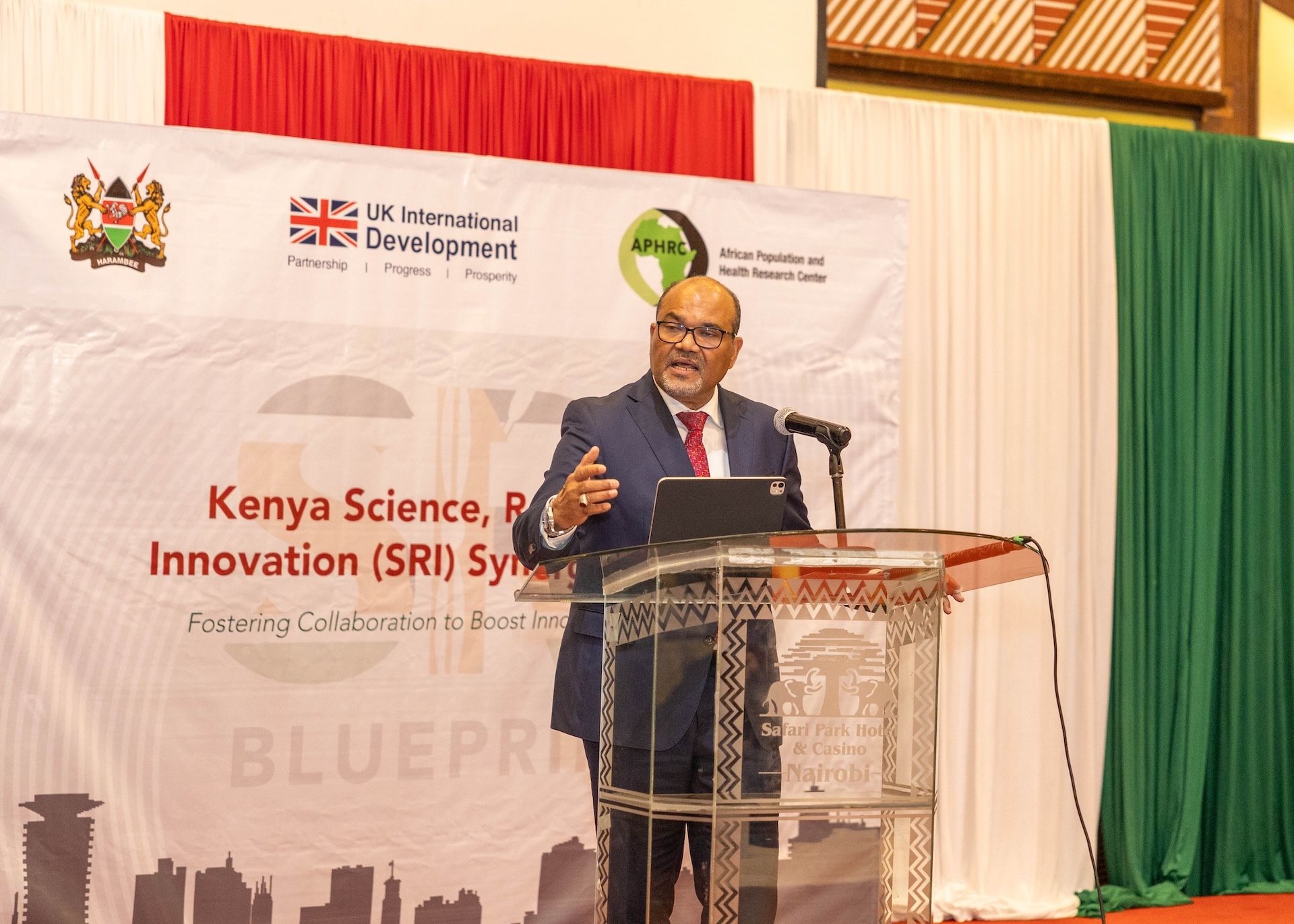
Prime Cabinet Secretary Musalia Mudavadi acknowledged that in the era of artificial intelligence, biotechnology, and advanced manufacturing, scientific, technological and innovative capabilities are no longer a peripheral aspiration but a fundamental determinant of national progress and development
He, however, noted that some challenges which need to be addressed remain.
“Research infrastructure has not been evenly distributed across the country. Institutional mandates have at times overlapped without generating the synergy that coordination ought to produce. External financing, while welcome, has gradually displaced the sovereign determination of our own research priorities," Mudavadi said.
"Too frequently, discoveries of genuine promise have remained within the walls of laboratories and academic institutions — never completing the journey into commercial products, industrial processes or scalable solutions that reach the citizens whose lives and livelihoods they were designed to improve," he added.
The blueprint introduces a bold, systemic overhaul built on five integrated pillars: policy coherence, strategic funding, human capital, industry-academia linkages, and digital infrastructure
To address a critical shortage of high-level experts, the government plans to scale doctoral production to over 100 PhDs per million population by 2030
According to the head of research and related capacity strengthening at APHRC, Dr Florah Karimi, Kenya is referred to as a Silicon Savanna and so is best placed to be the gateway for East Africa as a whole in terms of innovation and technology.
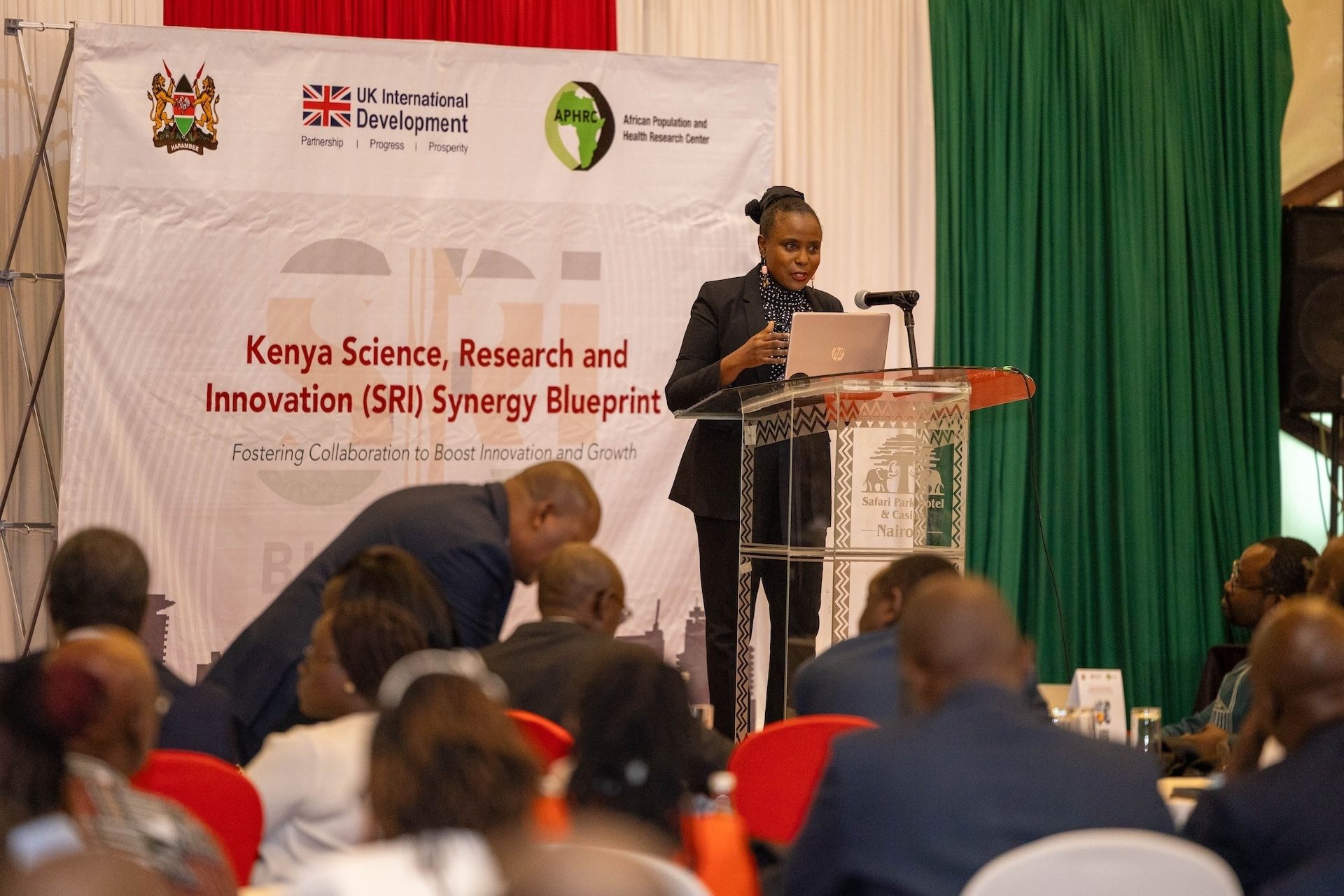
She said the plan seeks to ensure Kenya's research moves to the global competitive stage, while also addressing local problems.
"We have a disconnect in the industry, and there seems to be a level of research institutions and research that is being carried out in Kenya, not speaking to commercialisation or to the industry. There is also fragmentation in funding. There are many times when the funding does not speak to the other development funding, so there is a possibility that we are duplicating effort," she said.
On his part, the State Department for Science, Research and Innovation PS Shaukat Abdulrazak said innovation flourishes where collaboration exists, and emerges when researchers, institutions, industry and government work together to translate knowledge into solutions that improve lives and create opportunity.
“The blueprint provides a strategic framework for strengthening collaboration and coordination across Kenya’s science, research and innovation ecosystem — connecting institutions, aligning efforts and ensuring that knowledge generated in Kenya translates into solutions that serve Kenya.
“This can be addressing the challenges of food security, which range from low productivity to post-harvest loss; health challenges, which range from infectious diseases to those related to lifestyle; climate change, among others."
Currently, the country produces fewer than 1,000 PhDs annually, and only 66.6 per cent of university faculty hold doctoral qualifications
The blueprint identifies a persistent research-to-innovation gap where only 16.7 per cent of institutions have functional offices to help commercialise findings
The new strategy aims to triple annual innovation commercialisation and generate Sh5 billion in annual revenue through professionalised technology transfer offices
"There are more than 200 innovation hubs in the country, so there is a very good background. We are stepping into the future on solid ground," APHRC Executive Director Catherine Kyobutungi said.
Kyobutungi, however, acknowledged that most of the funding in the country goes to health research, yet a huge proportion of Kenyans are in the agricultural sector.
Kyobutungi further raised concern over a growing shortage of PhD holders, warning that the deficit is undermining academic and research capacity.
She said the country is currently at just 23 per cent of its target of producing 1,000 PhDs per one million people, pointing to what she termed as a “pipeline problem.”
"We have a pipeline problem. We have a PhD deficit, we are at 23 per cent of a target of having 1,000 PhDs per 1 million, and in some universities, 33 per cent of faculty who are supposed to have PhD according to established guidelines do not have them," she said.
Kyobutungi also highlighted a gender imbalance in advanced academic progression, noting that while there is a 50-50 gender balance at the master’s level, the number of women declines significantly at higher levels.
"Even within these few PhDs, we have a leakage of women at the master's level. We are at 50-50 gender balance. By the time we reach associate professorship level, we are down to 19 per cent, so our women are entering the pipeline, and then they are leaking out at a very high rate.
"So we have to ask ourselves, are we going to increase the number of PhDs that we want without focusing on women and how they get lost between master's and PhD?"
Infrastructure remains a major bottleneck. While universities host 70% of the country’s researchers, they control less than 2% of the value of national research equipment
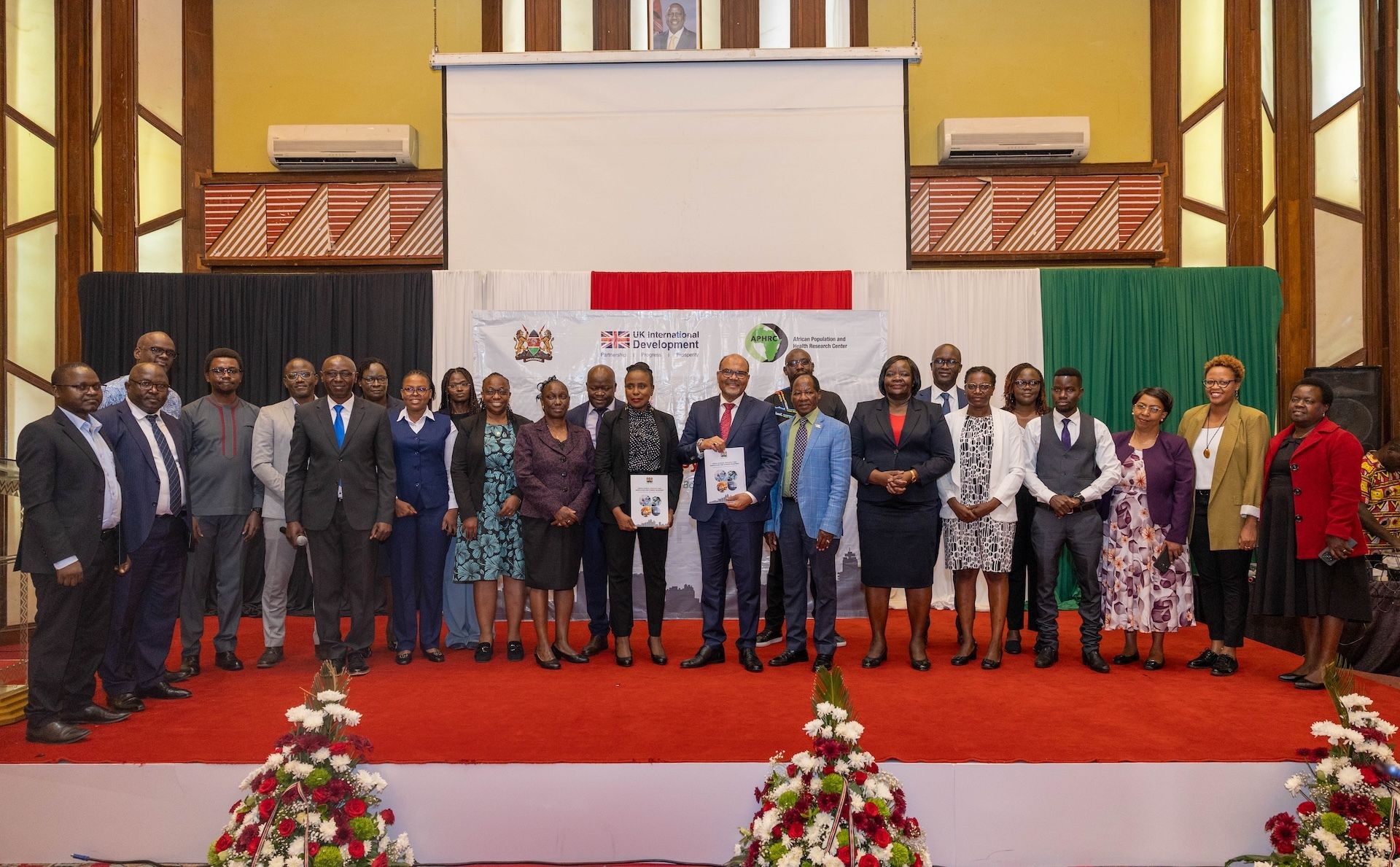
The blueprint proposes a shared research infrastructure system to ensure equitable access across all regions, moving away from assets owned by single institutions to nationally coordinated facilities
The implementation will unfold in three phases between 2026 and 2030, starting with a Stabilisation Phase to establish governance and followed by Structural Reform and full Transformation.
On their part, the British government has reiterated its commitment to supporting Kenya's research industry.
Deputy British High Commissioner Rosy Cave said science research and innovation hold immense potential to drive economic transformation and address pressing social and economic challenges from health and agriculture to industry and emerging technologies.
"We are at a tipping point globally. Rapid change is reshaping how we think about security, growth and resilience, migration, development and climate and the alliances that we build," she said, calling for partnerships that are agile, trusted and future-focused.
The government describes the Sh500 billion cost not as an expense, but as a strategic national repositioning toward productivity, competitiveness, and inclusive growth.
The blueprint was co-created by over 200 stakeholders in workshops held across Nairobi, Mombasa, Sagana, and Kisumu