The African continent is currently one of the world’s busiest construction sites. From sprawling railways and renewable energy plants to high-tech data centers, governments and private investors are pouring billions into the continent’s future. But these projects are about much more than concrete or contracts: they are about people, relationships, and the delicate balance between law, reputational risk, and community impact. They represent jobs, local growth, and a fundamental shift in how entire countries can live and work.
When we talk about a multi-billion-dollar energy project or a new transport corridor, it’s easy to get lost in technical specifics and financial models. But for the family living nearby, or the local business looking for supply opportunities, the project is not an abstract investment. It is a life-changing event.
The standard way of handling a large project is that investors look at financing, lawyers handle the contracts, engineers and contractors focus on the building, and community relations teams are often only brought in when issues arise.
This siloed approach can work, but it is not the key to a successful project in the long-term. A project may be fully compliant on paper, but if the community feels ignored or the local government’s priorities shift, that paperwork won’t prevent protests or delays.
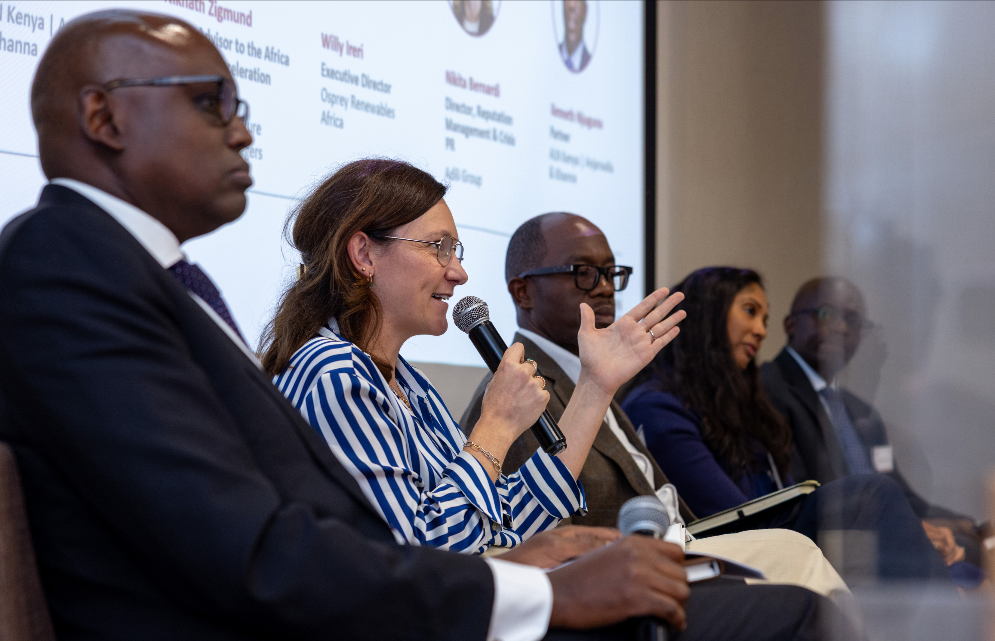
A shift is quietly redefining how successful projects are delivered. Recently, Adili Group and ALN Kenya co-hosted a forum titled “From Conflict to Collaboration: Navigating Government, Community and Reputational Risks in Large-Scale Projects” that explored these issues further.Working together, the firm contributes deep expertise in stakeholder management and risk advisory on one side, and ALN Kenya provides pan-African legal capabilities on the other, law and reputational risk can no longer be separated.
In Africa, a project that is legally sound but socially fragile is a liability, not an asset. Regulatory missteps rarely stay in the courtroom; they can easily become headlines. Community grievances don’t remain at the gate; as has happened to some high-profile Kenyan projects recently, they can escalate into multi-year, expensive, and reputation-ending lawsuits even if they are won. Integrating Law with reputational risk management from the onset is not just bundling services; it is synchronising perspectives. Legal teams understand realities on the ground, and engagement strategies are reinforced by sound regulatory and risk management logic.
This integration fundamentally changes the game. It allows project leaders to shift from reactive problem-solving to proactive collaboration. Instead of constantly reacting to problems, the focus is on putting safeguards in place to prevent problems from arising in the first place. When advisory teams work together on feasibility and structuring, regulatory pathways, reputational risk mitigation, and communication strategies all align.
The benefits are evident both on the balance sheet and in the community. Moving away from siloed approaches means anticipating challenges instead of reacting to crises. Friction points are identified before they escalate, saving time and money.
This shift also changes how we think about a social license. It is no longer a box-ticking exercise; it becomes a strategic investment in long-term trust and resilience. For investors, this is transformative. They are no longer assessing partial risk profiles. Instead, they gain a holistic, 360-degree view of legal compliance, reputational risk, and community alignment, which builds the confidence needed to sustain multi-decade projects in complex environments.
As Africa’s ambitions grow and capital is deployed more strategically across the continent, development projects face greater scrutiny. Investors now expect high standards of governance, transparency, and accountability to match the scale of opportunity. Increasingly, successful projects will continue to be those that align law, reputational risk, and community considerations from the very beginning, helping to ensure stability and long-term impact.
When legal experts, stakeholder strategists, and risk advisors operate as a single, coordinated unit, projects are better able to earn trust and maintain support over the long haul. Infrastructure is about more than concrete and contracts; it is about alignment between law and legitimacy, government and community, and ambition and accountability.
As Africa enters its next phase of development, the real test for any major venture will no longer be just whether it is bankable or feasible, but whether it is fully integrated across law, reputational risk, and community. In that integration lies the difference between a project that stalls in conflict and one that thrives in collaboration.
Nikita Bernardi is the Director, Reputation Management and Crisis PR at Adili Group