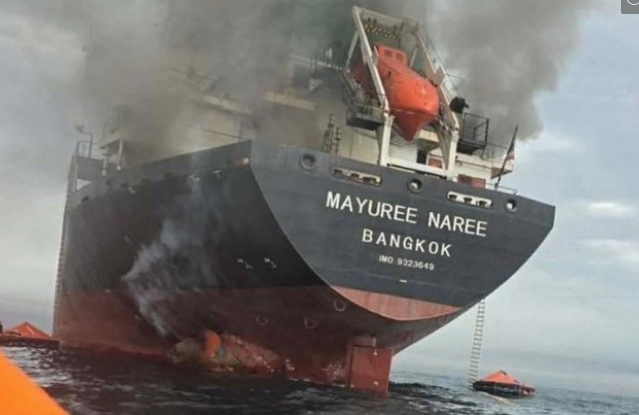
A United Nations (UN) agency has warned that Strait of Hormuz disruptions could worsen access to fertilisers for some of the poorest countries including Kenya.
The UN Trade and Development (Unctad) said the ongoing military escalation in the region has disrupted shipping flows through this narrow passage with food prices set to rise.
“Higher energy, fertiliser and transport costs – including freight rates, bunker fuel prices and insurance premiums – may increase food costs and intensify cost-of-living pressures, particularly for the most vulnerable,” the report says.
According to the report, Kenya is among top 10 countries that imported fertiliser from the Gulf region with 26 per cent being shipped through the route.
Sudan leads the list of countries that rely on the route with (54 per cent), followed by Tanzania (31 per cent), Somalia (30 per cent) and Mozambique (22 per cent).
Outside Africa, Sri Lanka sourced 36 per cent of its fertiliser imports by sea from the Persian Gulf in 2024, while Pakistan and Thailand each imported 27 per cent and New Zealand imported 26 per cent.
“The resulting ripple effects go far beyond the region, affecting energy markets, maritime transport and global supply chains,” the report “Strait of Hormuz Disruptions: Implications for Global Trade Development” released on Monday states.
Most (67 per cent) of fertiliser from the Gulf region transported by sea is urea, followed by diammonium phosphate, 20 per cent and ammonium dihydrogen phosphate, nine per cent.
More than 700,000 tea farmers are among those exposed to the risk with KTDA already warning that cost of fertiliser imports will shoot up if the crisis continues.
The Strait of Hormuz is a vital passage for global trade accounting for 38 per cent of the global crude oil, 29 per cent of Liquefied petroleum gas, 19 per cent of Liquefied natural gas and 13 per cent of chemicals, including fertilisers.
In 2024, total oil transported through the Strait was around 20 million barrels per day (bpd), or the equivalent of 25 per cent of global seaborne oil trade. Crude oil and condensate account for 14 million bpd and petroleum products for six million bpd.
The UN says similar repercussions were observed during recent global shocks, including the Covid-19 pandemic and at the beginning of the war in Ukraine, which showed how disruptions in energy, transport and agricultural inputs can propagate across interconnected markets.
The current shock comes when many developing economies struggle to service their debt, tightening fiscal space and limited capacity to absorb new price shocks.
The UN agency states that many developing countries already face high debt service burdens, limited fiscal space and constrained access to finance.
“In this context, rising energy, transport and food costs could strain public finances and increase pressure on household budgets, potentially heightening economic and social pressures and complicating progress toward sustainable development, particularly in economies heavily dependent on imported energy, fertilisers and staple foods.”
“While the overall global economic impacts will depend on the duration and scale of the disruption, the situation highlights the importance of continued monitoring, particularly implications for vulnerable economies.”