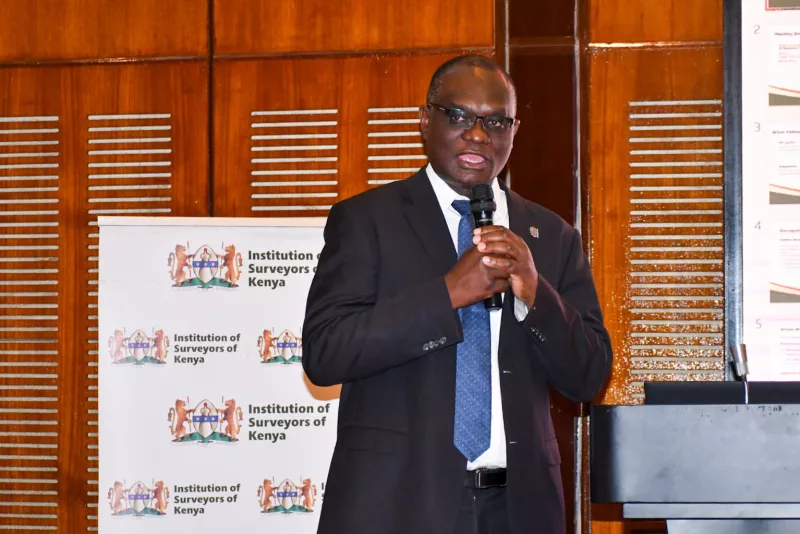
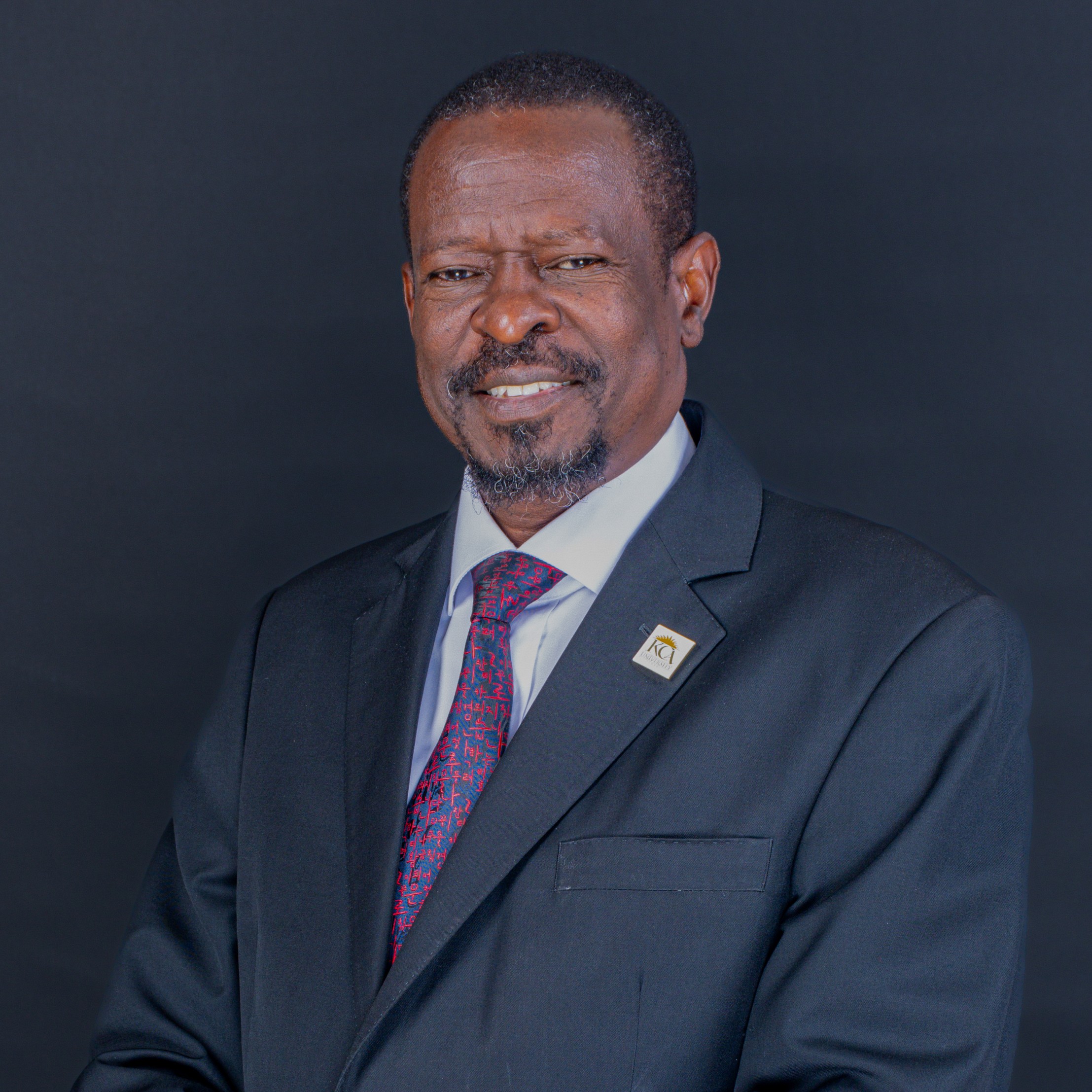
 Prof. Isaiah I.C. Wakindiki, PhD, EBS, Vice Chancellor and Chief Executive Officer at KCA University./COURTERSY
A Vision for Continental Transformation
When Prof. Isaiah I.C. Wakindiki, PhD, EBS, took on the role of Vice Chancellor and Chief Executive Officer at KCA University in 2021, he carried with him not just three decades of academic excellence, but a deeply held conviction that African universities must be architects of continental transformation. ]
Today, as he is reappointed for a further five-year term, that conviction has matured into a proven model for what higher education in Africa can become.
The Making of a Visionary
A Professor of Soil Science by training, Prof. Wakindiki brings an unlikely but powerful combination of scientific rigour and visionary leadership to institutional stewardship. His academic foundation is rooted in rigorous inquiry. He holds a PhD in Soil Science from Egerton University, a Master of Science in Soil Science, and a Bachelor of Science in Agriculture from the University of Nairobi, complemented by a Postgraduate Diploma in Higher Education and Training from the University of Fort Hare in South Africa. But his impact extends far beyond the laboratory. Over his career, he has authored and co-authored more than 100 publications in peer-reviewed journals and scholarly books, addressing everything from soil health and agricultural sustainability to academic research capacity and institutional innovation. He has mentored and supervised more than 50 postgraduate students at both Master's and doctoral levels, shaping the scholars and leaders who will drive Africa's future.

Yet perhaps his most significant contribution has been demonstrating that universities need not choose between academic excellence and applied impact. Through his leadership, Prof. Wakindiki has successfully secured more than 55 competitively funded research projects, consultancies, and grants. These initiatives have not been isolated academic exercises. They have strengthened research capacity across African institutions, fostered meaningful international collaboration, and produced evidence-based solutions to the continent's most pressing development challenges in agriculture, environment, and education. This is scholarship in the service of society, the kind of work that African universities must embrace to remain relevant and impactful.
Translating Vision Into Institutional Excellence
At KCA University, Prof. Wakindiki's leadership philosophy comes into sharp focus. His vision is is to build a future-ready institution that anticipates rather than reacts to the evolving demands of industry, technology, and society. But vision without implementation is merely aspiration. What distinguishes Prof. Wakindiki's approach is his commitment to translating that vision into concrete outcomes. He has anchored the university's mission on three pillars: quality teaching that prepares students for real-world impact, a strong research culture that drives innovation, and entrepreneurial thinking that equips graduates with agency and initiative. Under his stewardship, KCA University has positioned itself as a centre of applied excellence, producing graduates who are not just knowledgeable but equipped with practical entrepreneurial skills, critical thinking abilities, and an unwavering sense of social responsibility.
The Evidence of Transformation
The numbers tell a compelling story. During his tenure, KCAU has expanded its academic programme portfolio to respond to evolving market demands, reflecting a commitment to relevance and accessibility. The university has significantly strengthened its research output and innovation ecosystem, with measurable increases in publication quality and research partnerships. Through strategic investment, KCAU has enhanced the student experience by developing modern learning environments and world-class facilities that inspire excellence. The institution has substantially improved its financial health and long-term sustainability, ensuring that it can continue investing in people and infrastructure for years to come. And critically, KCAU has invested in state-of-the-art infrastructure, from cutting-edge learning laboratories to digital innovation hubs that position students and faculty at the frontier of technological change. These are not incremental improvements. They represent institutional transformation.
Leading African Higher Education
Prof. Wakindiki's influence extends far beyond any single campus. He is widely recognised as a thought leader shaping the future of African higher education at the continental level. As Vice President of the Association of African Universities (AAU), one of the oldest and most influential networks of higher education institutions across Africa, he plays a central role in advancing quality standards, fostering innovation, and building cooperation among universities across the continent. In this role, he has contributed to AAU initiatives that help African universities strengthen their capacity in areas including digital transformation, research excellence, and alignment with continental development priorities such as the African Union's Agenda 2063.
As the East African regional representative of the African Council for Distance Education (ACDE), Prof. Wakindiki has been instrumental in conversations about expanding educational access through digital and hybrid learning models, particularly critical in a region where geographic and economic barriers can limit opportunity. He also serves as Professor Extraordinaire at the University of South Africa (UNISA), where he supports ongoing academic collaboration and postgraduate supervision, extending his mentoring impact across borders. His membership in the Soil Science Society of South Africa and the South African Council for Natural Scientific Professions reflects his continued engagement with rigorous scientific standards and professional excellence. And through the Kenya Network of Entrepreneurial Institutions Leaders (KNEIL), he has helped shape the entrepreneurial university model in East Africa, ensuring that institutions like KCAU prepare students not just to find jobs, but to create them.
Recognition of a Life Dedicated to Excellence
In recognition of his outstanding leadership and contributions to education and national development, the President of the Republic of Kenya conferred upon Prof. Wakindiki the national honour of Elder of the Order of the Burning Spear (EBS). For him, it is an affirmation that his work has rippled far beyond academia, touching the very fabric of Kenya's development trajectory.
African Solutions for African Challenges
Yet what animates Prof. Wakindiki's work is not honour or recognition, though these are welcome affirmations. It is a fundamental belief that African universities are uniquely positioned to solve African problems. Too often, African scholars conduct research on Africa's challenges, only to see solutions imported from elsewhere, refined elsewhere, and implemented elsewhere. Prof. Wakindiki has dedicated his career to inverting that paradigm. He advocates for universities that are simultaneously globally competitive and locally rooted, that marry international best practices with a deep understanding of local contexts, and that position knowledge production as an instrument of continental agency rather than dependence.
A Philosophy in Action
This philosophy is reflected in his approach to digital transformation, which he sees not as an imposition of technology but as a tool for democratising access to quality education. It shapes his commitment to research excellence, which he frames not as academic prestige but as the foundation for evidence-based solutions to development challenges. It guides his emphasis on entrepreneurial thinking, which he believes unlocks human potential and drives inclusive economic growth. African universities must be centres of ethical leadership, producing graduates who understand that their education is a responsibility to their communities and continent.
Leadership for an Uncertain Future
As Prof. Wakindiki enters this new term, his reappointment signals something important to the African higher education sector. It signals that institutional leadership matters, and that visionary leaders who understand both the local and the global can catalyse extraordinary change. And it signals that African higher education is not in decline; it is in the midst of a profound reimagining.
He is not simply advancing the vision of African higher education. He is living it, demonstrating it, and inviting his peers, colleagues, and students to build it with him. That is work worth celebrating. And that is leadership worth following.