When markets ring a bell for gender equality, aligned with Sustainable Development Goal 5, they signal more than glitz and fanfare.
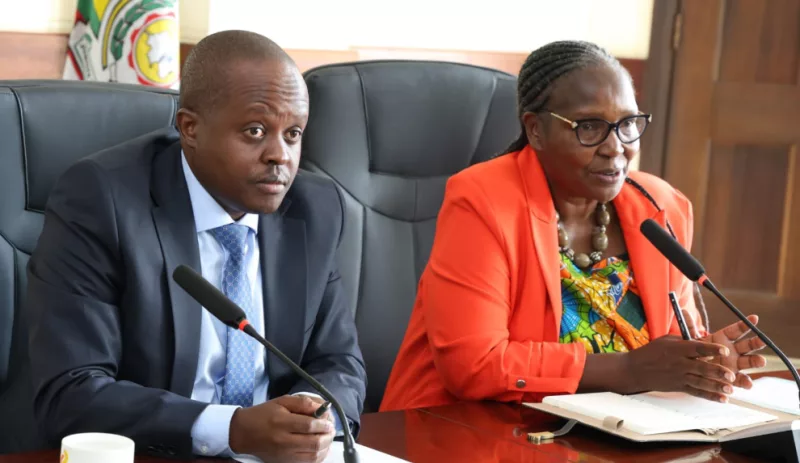
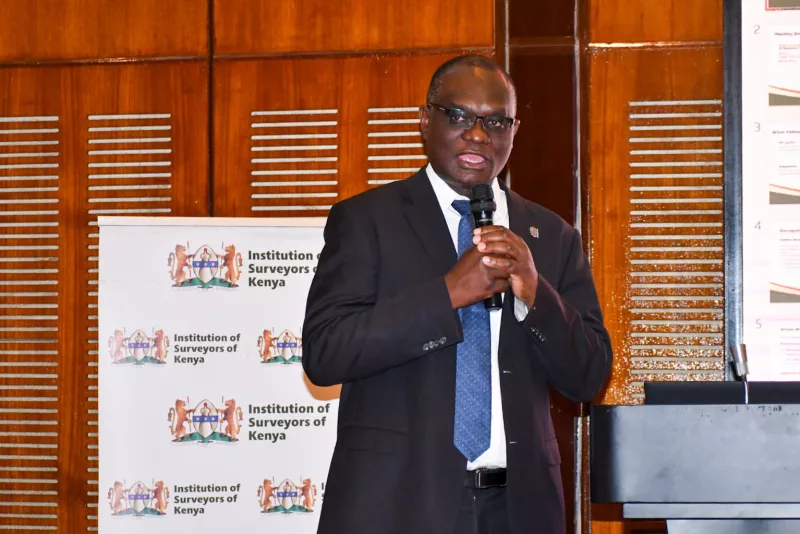
Our Ring the Bell for Gender Equality event with the Nairobi Securities Exchange, UN Women and International Finance Corporation (IFC) convened Kenya’s private sector to confront a fundamental truth: gender equity represents the single largest untapped economic opportunity in our economy.
Women constitute half our population, yet drive disproportionate poverty and lost productivity. Businesses that ignore this forfeit growth, talent and global competitiveness.
Kenya records progress that demands scrutiny. Among NSE-listed companies, women hold about 27 per cent of board seats, according to the 2024 gender audit by the National Gender and Equality Commission and the Nairobi Securities Exchange, yet only around 14 per cent of chief executives at those same companies are female. This achievement reflects sustained pressure from regulators and investors.
Yet these gains illuminate broader gaps. Recent labour market analysis shows that women earn 17.7 per cent less per hour than men for comparable work, with the gap widening to about 38 per cent in feminised sectors such as education.
They start roughly 40 per cent of small businesses but access only about a quarter of formal banking services, compared to close to half for male‑owned businesses, according to women’s economic empowerment studies.
Taken together, these gaps represent a staggering opportunity cost: the Institute of Economic Affairs estimates that if Kenyan women received equal economic compensation as men, the country’s gross domestic product could grow by over Sh603.9 billion in the formal sector alone.
The business case is no longer theoretical. In May 2025, McKinsey published its first study covering Kenya, Nigeria and India. In Kenya, women hold only 28 per cent of private sector C-suite roles, a marked drop from 40 per cent representation at entry level.
The “double dip” is visible: a broken rung to management, then a second barrier to senior leadership.
Meanwhile, Kenya’s women in senior management stand at 37.9 per cent across mid-market firms, slightly above the global average of 34 per cent.
This is not a ceiling to celebrate; it is a reminder that progress at the top still rests on fragile foundations of mentorship, sponsorship and fair performance evaluation.
The costs of inaction extend well beyond lost talent. In December 2025, IFC published an evidence-based estimate of gender based violence and harassment in Kenya’s private sector.
The findings are stark: Sh95.5 billion lost annually, equivalent to one per cent of gross domestic product, through absenteeism, reduced productivity while at work, turnover and legal exposure.
More than a third of employees surveyed had directly experienced workplace harassment. Over half had witnessed it. This goes beyond social welfare. It shows up in costs and losses that every board should be tracking.
On January 27, 2026, the Presidential Technical Working Group on Gender-Based Violence and Femicide delivered its long-awaited report to President William Ruto.
Chaired by former Deputy Chief Justice Nancy Baraza, it recommended declaring gender-based violence a national crisis, ring-fencing at least Sh50 billion in the 2026-27 national budget, establishing a national survivor fund and criminalising femicide as a standalone offence.
The work of courts reinforces this urgency. On February 19, 2026, the High Court in Kericho ruled that a tea factory director accused of sexual violence was constitutionally unfit to hold public office, a landmark judgment that signals accountability reaching Kenya’s supply chains.
Women tea pickers trading dignity for wages is not a Kericho problem alone. It is a governance failure that now carries legal consequences.
Kenya thrives as an innovator by nature. Yet venture capital tells a different story. In 2025, women‑only founded startups across Africa received just 0.9 per cent of total venture funding, $28.8 million out of $3.2 billion, according to investment tracking by Africa: The Big Deal, a specialist platform that monitors startup and venture capital flows across the continent.
Kenya, which led Africa in total startup funding in 2025 at about $1.04 billion, nevertheless reflects this continental pattern. The paradox is well documented in global entrepreneurship research: women‑led startups often demonstrate lower burn rates, stronger sustainability metrics and greater capital efficiency than male‑led counterparts. The numbers are not the issue. The way we see women‑led firms is.
The private sector that treats gender equity as a compliance question will remain trapped in this paradox. Leading firms are choosing differently.
NCBA Bank, a UN Global Compact participant, under its Affirmative Finance Action for Women in Africa partnership, unlocked over Sh17 billion in lending in 2025 through risk-sharing facilities, reaching more than 700 small businesses, including 2,200 opportunities for women.
Kenya also formally adopted the Women Entrepreneurs Finance Code in December 2025, committing financial institutions to gender responsive lending policies and transparent reporting on outcomes for women-led enterprises.
That is what genuine accountability looks like. Not quotas on a board agenda. Not a once-a-year ceremony. Specific targets, transparent reporting, structural pipelines, family responsive parental leave policies and mentorship that reaches the first rung, because that is where the funnel breaks.
For its part, Global Compact Network Kenya works with companies through programmes such as our Target Gender Equality accelerator and the Women’s Empowerment Principles, developed with UN Women, to support pay audits, safer workplaces, inclusive leadership pipelines and stronger opportunities for women-owned businesses across value chains.
Kenya ranked 98 out of 148 countries in the World Economic Forum’s Global Gender Gap Index 2025, dropping 23 places from the previous year. This drop is not inevitable. It reminds us that good intentions must be backed by daily practice. Our neighbours who are surging ahead have converted commitments into metrics.
Gender equity powers the next leap. The bell has rung. Kenya’s markets now face a choice. Invest in gender equity as a core business strategy, or accept competitive disadvantage. The opportunity belongs to those who execute with urgency and authenticity.
Executive director, Global Compact Network Kenya