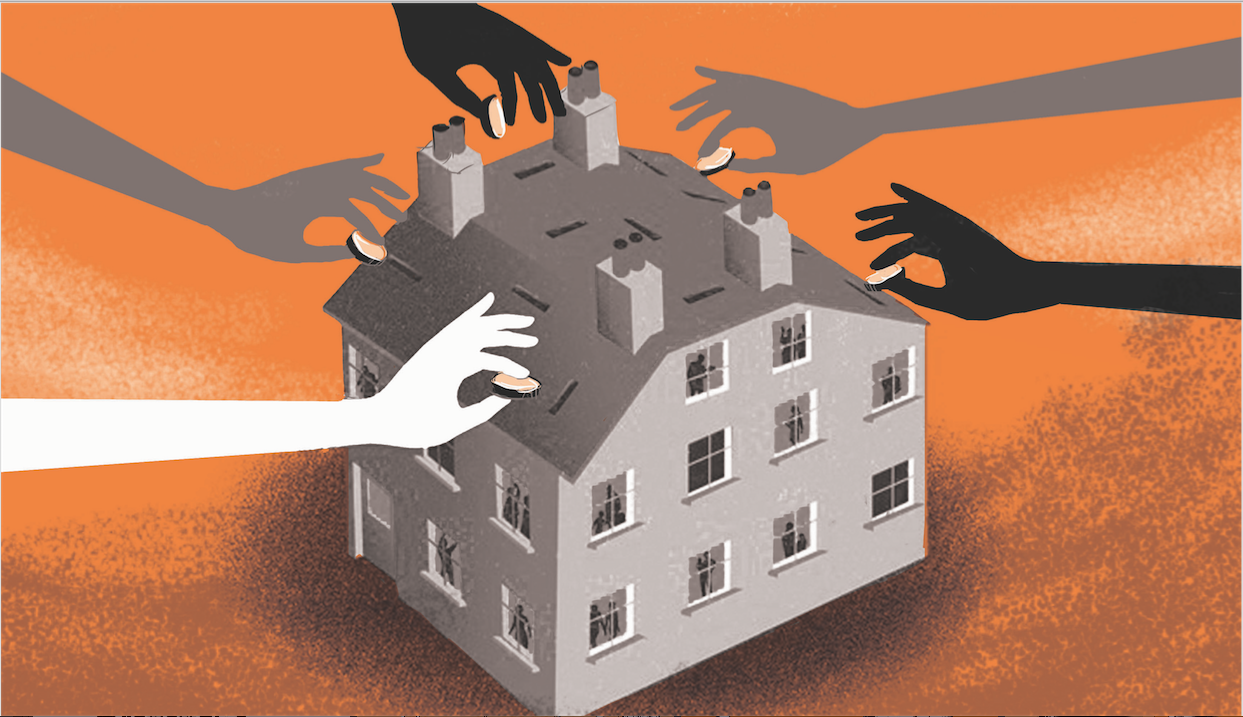
My assertion is based on compelling evidence from the high-profile asset recovery involving former Migori governor Okoth Obado. In a 2025 court-sanctioned settlement with the Ethics and Anti-Corruption Commission, properties and other assets linked to the case were valued at approximately Sh428 million.
Yet when five prime residential units in desirable Nairobi estates from the same portfolio went under the public hammer in October 2025, they realised only Sh69.7 million in total. The ratio is roughly 6.2 to 1.
All five properties sold above their independent reserve prices, with open bidding and full transparency. Still, the gap is impossible to ignore. What if this single episode is quietly telling us something much larger about how parts of Kenya’s property market actually work?
The auction rules themselves create a rare, unfiltered view. Bidders first had to lodge Sh500,000 by banker’s cheque.
The winner paid 10 per cent of the hammer price before the day ended, with the balance required within 60 days. No extended mortgage contingencies, no off-market arrangements, no untraceable cash. Only buyers with immediately verifiable, clean liquidity could compete.
Contrast that with the everyday private market, where sellers frequently report receiving full asking prices—often with minimal or no negotiation—from buyers who arrive ready to close within days. Could a meaningful portion of that demand be supported by funds whose origins are less easily scrutinised?
Court records in county corruption matters have shown public servants on modest official salaries acquiring substantial portfolios of land, apartments and houses.
When those same assets later reach forced-sale auctions under strict liquidity conditions, the prices achieved frequently sit well below prevailing private-market comparables. Is this pattern simply coincidence, or does it point to an illicit premium that has gradually lifted transaction values in certain estates?
Conversations among conveyancing lawyers and patterns observed in upmarket neighbourhoods reinforce the same observation. Properties move quickly when cash is immediately available, nudging neighbourhood asking prices upward with each successive deal.
Yet when identical units face genuine open-market pressure under clean-liquidity rules, the clearing price falls sharply. One cannot help but wonder: is the typical buyer—reliant on bank financing, documented income and months of due diligence—effectively competing in a market whose prices have been subsidised by faster, less transparent capital flows?
Of course, not every corner of the sector is equally affected. Many middle-income developments still appear driven by genuine urban growth, diaspora remittances and formal credit. Infrastructure projects and population pressures provide legitimate upward momentum. So the honest questions remain: how widespread is any distortion?
Is the six-fold gap seen in the Okoth Obado recovery an extreme outlier, or does it reflect a subtler multiplier—perhaps 20 to 50 per cent in the hottest Nairobi pockets—that compounds quietly over time?
The implications, if the distortion is real, touch everyday Kenyans deeply. Young professionals and middle-class families already find decent housing a stretch. Artificial inflation pushes them further out, widens inequality and can leave luxury estates with surprisingly high vacancy rates once speculative money slows.
Public resources suffer twice: first through the original diversion of funds, then through inflated valuations that complicate full recovery. No single auction can prove a nationwide factor of six.
Anecdotal reports from lawyers and market observers cannot quantify exactly how much of today’s price tags rests on questionable capital. But the Obado case invites a deeper inquiry: what would our property price indices show if every major transaction had to meet the same clean-liquidity standards as an EACC public auction? Would quoted values moderate? Would genuine supply respond? Would housing become noticeably more attainable for the millions who live and work here rather than park wealth?
Kenya’s real estate sector matters too much—contributing nearly nine per cent of GDP—to function as an opaque arena where hidden influences set the benchmarks.
Stronger beneficial-ownership disclosure, routine source-of-funds checks on large cash deals and regular publication of forced-sale versus private-sale comparables could start to illuminate the picture.
Until clearer data emerges, the six-fold puzzle from the Obado assets lingers: are we paying honest prices for bricks and mortar, or have we been unknowingly subsidising a parallel economy that only a few participants fully understand?
The gavel has fallen once. The market would do well to listen to the echo.
Social impact adviser, social consciousness theorist, trainer and speaker, agronomist consultant for golf courses and sportsfields and author of 'The Gigantomachy of Samaismela' and 'The Trouble with Kenya: McKenzian Blueprint'