 School feeding must be treated not merely as a social intervention, but as a core pillar of education policy /FILE
Across Africa, millions of children wake up each morning eager to learn, but arrive in classrooms carrying an invisible burden: hunger. It is a quiet crisis that undermines education systems, weakens economies, and limits the potential of an entire generation.
Kenya is not immune to this challenge. More than 42 million Kenyans cannot afford a healthy diet, and children from low-income families are the most affected. When a child goes to school hungry, learning becomes secondary to survival. Teachers see it every day: the loss of concentration, the fatigue, the absenteeism. The classroom becomes a place of struggle rather than opportunity.
This is why school feeding must be treated not merely as a social intervention, but as a core pillar of education policy.
In Mombasa county, we made a deliberate decision to confront this issue head-on. We began by asking a simple but powerful question: how many children are struggling in school not because they lack intelligence or ambition, but because they lack a meal?
The answer was sobering.
Like many urban counties, Mombasa faces high levels of poverty and food insecurity. Many families work hard to provide for their children but still struggle to ensure consistent nutrition. The result is a cycle where hunger undermines learning, poor learning outcomes reduce future opportunities, and poverty persists across generations.
Breaking that cycle requires bold thinking.
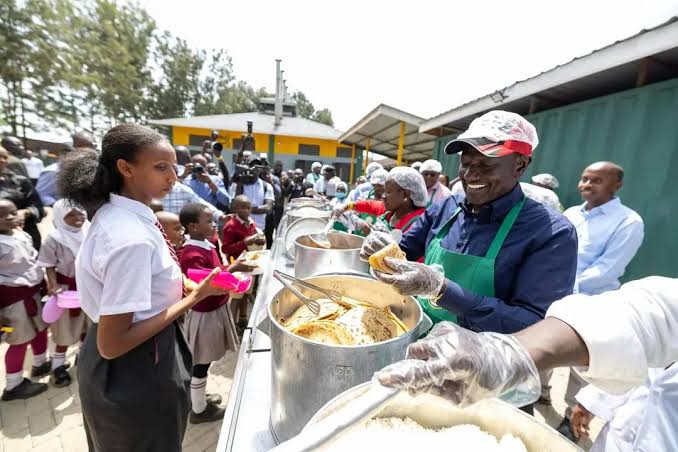
Our approach in Mombasa has been to integrate nutrition directly into the education system. Working with partners such as Food4Education, we began by ensuring that learners in Early Childhood Development Education centres receive consistent, nutritious meals.
This intervention focuses on the earliest and most critical stage of learning, when cognitive development is most sensitive to nutrition.
But we did not stop there.
We recognised that the burden of feeding children continues throughout their education journey, and that in many cases food costs are embedded within school fees. If we could address that cost directly, we could reduce the overall financial barrier to education.
That is precisely what we did.
Through a structured school feeding programme across our public day secondary schools, we have reduced the average annual cost of attending day secondary school in Mombasa from aboutSh22,500 to Sh10,500. When this is combined with Constituency Development Fund bursaries, many families are now paying as little as Sh1,500 per term.
For thousands of parents, this has been transformative.
Education is the most powerful equaliser in society. But it can only play that role if it is genuinely accessible. When the cost of schooling becomes prohibitive, children from the most vulnerable households are often the first to fall through the cracks.
School feeding programmes address two challenges at once. They improve nutrition and health outcomes for children, while also increasing school enrollment and attendance. Evidence from across Africa consistently shows that when meals are provided in schools, attendance rises and dropout rates fall.
In Mombasa we have already begun to see these benefits.
Schools participating in feeding programmes report stronger attendance and greater classroom engagement. Teachers observe that children are more attentive and energetic. Parents report reduced pressure on household food budgets.
Beyond education, school feeding also stimulates local economies. The procurement of food supplies supports farmers, transporters and small businesses within the food value chain. Kitchens, logistics systems and meal preparation create dignified jobs for communities.
In other words, every meal served in a school is also an investment in the broader economy.
As the deputy party leader of ODM, I believe this issue must now move beyond county initiatives and become a national policy priority.
Kenya has made significant strides in expanding access to education through free primary and subsidized secondary schooling. The next frontier must be ensuring that every child in our schools is adequately nourished.
A national school feeding framework, supported by both national and county governments, could transform educational outcomes across the country. It would protect children from hunger, strengthen learning outcomes, and create a more productive future workforce.
The return on investment would be enormous.
The World Bank estimates that learning losses linked to poor nutrition and low school participation could cost developing countries trillions in lost productivity over time. Investing in school meals today is therefore not just a moral decision—it is an economic one.
For Kenya to fully realise its demographic dividend, we must invest in the health, nutrition, and education of our young people.
The lesson from Mombasa is simple: when we feed our children, we feed their potential.
And when we feed their potential, we strengthen the future of our nation.
The writer is the governor of Mombasa and ODM deputy leader