 Preventing future tragedies will require a shift toward proactive, climate-resilient planning /FILE
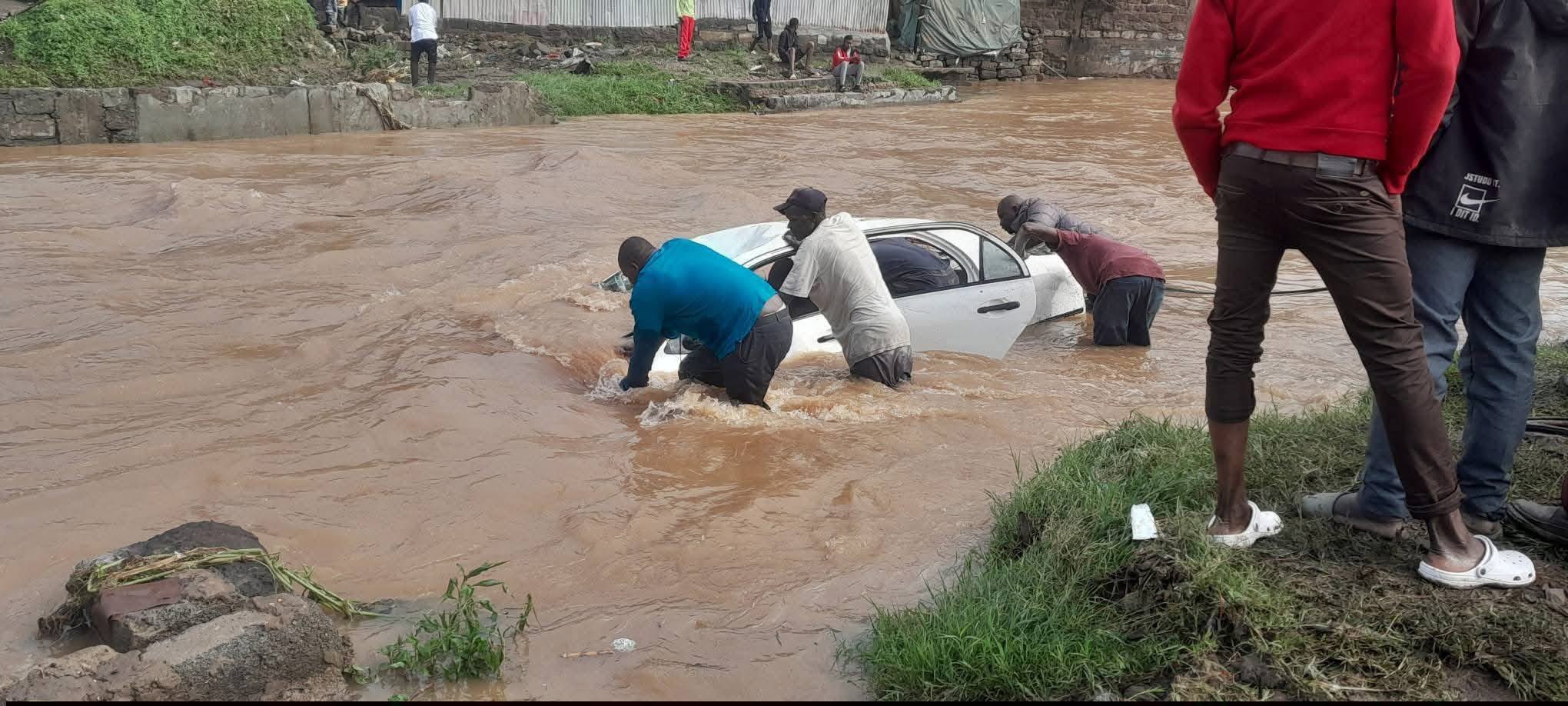
 More than 20 people were confirmed dead after devastating flash floods swept through Nairobi on Friday night. Families are mourning loved ones and authorities warn the toll could rise.
Across the city, the destruction left behind tells a grim story: vehicles carried away by rushing storm water, buildings partially submergedand major roads paralysed by floodwaters.
Nairobians shared heartbreaking video clips and pictures of the
devastation in real time and one couldn’t help but feel helpless at the
destruction.
For a city widely regarded as East Africa’s hub for finance, diplomacy and technology, such scenes should be deeply troubling. Yet, flooding in Nairobi has become almost predictable whenever heavy rains fall.
This recurring crisis is getting worse as time goes on and should alarm not only government authorities but also urban planners, developers and residents. It is a clear sign that the city’s flood risk is not being managed adequately.
From a hydrological perspective, flooding occurs when rainfall intensity exceeds the soil’s ability to absorb water or when storm water drainage systems cannot carry away large volumes of runoff quickly enough.
In highly urbanised environments like Nairobi, this problem is magnified because most surfaces such as roads, pavements and rooftops are impermeable.
Instead of soaking into the ground, rainwater rapidly flows across these surfaces, overwhelming drainage systems and accumulating in low-lying areas.
The floods currently affecting the city are driven by a combination of natural and human factors. Nairobi is experiencing both fluvial flooding, which occurs when rivers overflow their banks and pluvial flooding, which happens when rainfall accumulates on urban surfaces faster than it can drain away.
One major driver of this trend is the increasing intensity of rainfall linked to climate variability and long-term climate change. Across East Africa, extreme rainfall events are becoming more frequent.
These intense storms can easily overwhelm urban drainage networks, especially where infrastructure is outdated, poorly maintained, or obstructed by waste.
In Nairobi, the outdated, limited capacity and deteriorating condition of many stormwater drainage systems significantly reduces their ability to safely convey water during heavy rainfall. Climate change is compounding this problem by increasing rainfall variability and the likelihood of intense downpours.
Rapid and largely unplanned urbanisation has further worsened the situation. As the city expands to accommodate a growing population, settlements and infrastructure are increasingly encroaching into wetlands, riparian corridors and other flood-prone areas.
These natural landscapes once served as vital hydrological buffers, storing excess water and slowing flood flows. When they are replaced with buildings and paved surfaces, that protective function disappears, inevitably making floods more severe and more frequent.
To effectively tackle this challenge, Nairobi must shift toward flood risk management (FRM)rather than relying on reactive responses after floods occur. FRM is a systematic process that involves data collection, risk analysis and the implementation of measures to reduce or adapt to flood risks.
A critical element of this approach is the FRA, which evaluates potential flooding hazards before infrastructure is built. These assessments guide land-use planning, drainage design and the use of hydrological modelling to predict how rainfall and run-off will behave during extreme weather events.
Unfortunately, many major infrastructure developments in Nairobi have been implemented without comprehensive flood risk assessments. A notable example is the Nairobi Expressway, which experienced flooding in 2024. Ideally, the infrastructure of this scale should incorporate integrated stormwater management systems capable of handling run-off generated from the road surface.
Instead, additional drainage pipes were later introduced to collect run-off and discharge it into the existing drainage network along Uhuru Highway and Mombasa Road. This helps explain the large volumes of water recently witnessed around the Uhuru-Haile Selassie roundabout.
From a hydrological standpoint, this raises an important concern: when additional run-off from major infrastructure exceeds the design capacity of existing drainage systems, downstream flooding risks inevitably increase.
Another major challenge is that much of Nairobi’s drainage infrastructure was designed decades ago under very different climatic and urban development conditions. These systems are increasingly unable to cope with the rainfall intensity and run-off volumes experienced today.
Going forward, FRA must become a mandatory component of all urban infrastructure projects. At the same time, Nairobi should adopt Sustainable Urban Drainage Systems and Nature-based Solutions that manage rainwater where it falls, rather than simply directing it downstream.
These approaches include green infrastructure such as bioswales, infiltration trenches, detention ponds and retention basins that temporarily store storm water and reduce run-off. Even smaller interventions can make a difference. Tree pits designed with underground storage tanks of about 1,000 litres, for example, can function as micro stormwater reservoirs in densely paved urban environments.
Kenya already has policy frameworks aimed at disaster risk reduction, but a critical gap remains in integrating flood risk management directly into urban planning and infrastructure development.
Ultimately, Nairobi’s flooding problem is not caused by rainfall alone. It is the result of climate pressures, unplanned urban expansion, ageing drainage infrastructure, inadequate flood mitigation strategies and blocked drainage channels.
Preventing future
tragedies will require a shift toward proactive, climate-resilient planning. FRAs must become a
mandatory requirement for all major developments, supported by stronger
enforcement of land-use regulations and greater investment in sustainable
stormwater systems.
If Nairobi fails to act now, the city risks reliving the same devastating scenes every rainy season - but with greater human and economic losses.
Dr Lokidor, PhD, is a flood hydrologist specialising in urban flood risk assessment, climate impacts on water systems, and sustainable storm water management