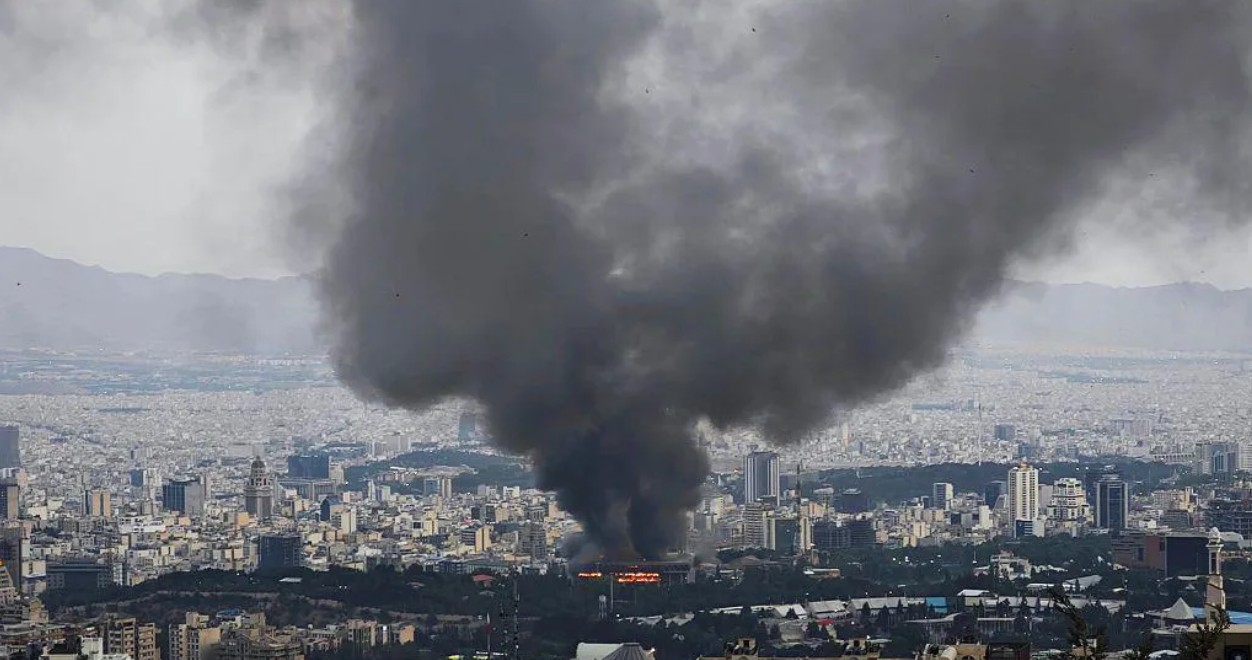
As tensions intensify between the United States, Israel and Iran, the aftershocks are spreading far beyond the Middle East.
For Eastern Africa, particularly the Horn of Africa and the Western Indian Ocean, the unfolding confrontation is not a distant geopolitical drama but an immediate and evolving strategic challenge.
Maritime security, economic stability and fragile regional security architectures now face mounting pressure from forces largely outside the region’s control.
The urgency lies in the fact that Eastern Africa is being drawn into a geopolitical environment increasingly defined by volatility, uncertainty, complexity and ambiguity.
In such circumstances, the insights of the Prussian military strategist Carl von Clausewitz remain highly relevant. In his seminal work On War, Clausewitz warned that conflict rarely unfolds in predictable ways. Instead, it operates within what he famously called the “fog of war”, a condition in which information is incomplete, events unfold unpredictably and decision-makers must act under uncertainty.
Compounding this fog is what Clausewitz described as “friction”, the accumulation of small but disruptive obstacles that derail plans and complicate strategy.
Today, Eastern Africa finds itself navigating precisely such a fog as the US-Israel-Iran confrontation threatens to spill across regions and sectors.
The most immediate manifestation of this strategic uncertainty lies along the Red Sea and the Bab el-Mandeb Strait, connecting the Red Sea to the Gulf of Aden, one of the world’s most critical maritime corridors.
This narrow waterway connects shipping routes between Europe, Asia and the Middle East and sits directly adjacent to the Horn of Africa. As tensions between Washington, Tel Aviv and Tehran escalate, the risk of disruptions along this corridor is growing.
Iran-aligned actors, particularly the Houthisin Yemen, have already demonstrated the capability to target commercial vessels and strategic infrastructure.
If attacks intensify, shipping companies may be forced to reroute vessels around the Cape of Good Hope, a significantly longer and more expensive journey that disrupts global supply chains and delays delivery schedules.
For Eastern African economies that depend heavily on maritime imports, the consequences would be immediate and severe. Shipping costs would rise, insurance premiums would surge and the prices of essential commodities, particularly fuel and food, would escalate sharply.
In Clausewitzian terms, such disruptions represent the friction of modern geopolitics: unpredictable events that complicate economic planning and magnify the difficulty of maintaining stability in times of crisis.
However, the visible tensions along maritime routes represent only one dimension of the emerging threat landscape. Beneath the surface lies a more opaque and potentially dangerous layer of covert operations and proxy warfare. Clausewitz observed that much of what determines the outcome of conflict often remains hidden from direct observation.
This insight resonates strongly in the present crisis. Iran has historically maintained networks across parts of Africa and has previously been linked to attempted attacks targeting Western and Israeli interests on the continent.
Should the confrontation intensify, Eastern Africa could become an arena for retaliatory operations targeting diplomatic missions, tourist centres, or commercial infrastructure.
At the same time, extremist groups operating within the region could seek to exploit the geopolitical turbulence. Militant organisations such as al-Shabaab may benefit indirectly through expanded smuggling routes, technological transfers, or shifting alliances created by the broader confrontation.
In an already fragile security environment — particularly in Somalia — such developments could complicate counter-terrorism efforts and undermine regional stability.
The economic consequences of the conflict may prove equally destabilising. Eastern African economies remain heavily dependent on imported fuel and global supply chains that pass through the Red Sea corridor.
Even limited disruptions along this route can produce cascading economic effects.Higher transportation costs quickly translate into inflation, eroding household purchasing power and placing additional strain on governments already managing debt and fiscal pressure.
Clausewitz described friction as the accumulation of countless small difficulties that together make even simple tasks extraordinarily challenging.
In today’s context, inflation, shipping delays, supply shortages and market volatility represent precisely such accumulative pressures. Individually, each challenge may appear manageable; collectively, they can strain economic resilience and slow growth across the region.
Another significant vulnerability lies in Eastern Africa’s dependence on remittances from migrant workers in the Gulf.
Hundreds of thousands of workers from Kenya, Ethiopia, Uganda and other countries are employed in Gulf economies and send billions of dollars home annually. These remittances support household consumption, education and local investment.
If the escalating confrontation destabilises Gulf economies or disrupts labour markets, remittance flows could decline sharply. For many families across Eastern Africa, remittances are not merely supplemental income but a vital economic lifeline.
Compounding these risks is the already crowded geopolitical landscape of the Horn of Africa. The region is currently grappling with multiple overlapping crises: the civil war in Sudan, tensions surrounding Ethiopia’s Grand Ethiopian Renaissance Dam, Somalia’s struggle against violent extremism and growing competition among external powers. The emerging confrontation involving the United States, Israel and Iran risks adding another layer to this already complex environment.
Several Gulf states — including Saudi Arabia, the United Arab Emirates, Qatar and Turkey — maintain substantial political, economic and military interests in the Horn of Africa.
Their responses to developments in the Middle East could reshape regional alliances and influence local conflicts in ways that remain difficult to predict. This uncertainty reflects the essence of Clausewitz’s fog of war: leaders must make strategic decisions without full knowledge of how competing actors will behave or how multiple crises might intersect.
The strategic ambiguity surrounding foreign military presence in the region further complicates the situation. The Horn of Africa hosts a significant concentration of foreign military installations, particularly in Djibouti, where several global powers maintain bases.
Additional security partnerships and military arrangements are also emerging along the Red Sea corridor. While these facilities are designed to enhance security and strategic reach, they may also introduce new vulnerabilities during periods of heightened geopolitical confrontation.
For Eastern African governments, the central strategic question is therefore clear: how can the region navigate this geopolitical fog without becoming entangled in a conflict originating far beyond its borders? The answer lies in strategic restraint, regional cooperation and economic resilience.
Diplomatically, governments across the region must maintain careful strategic balance. Avoiding premature alignment with competing external powers will be essential while preserving channels of engagement with all actors.
Regional institutions such as the African Union and the Intergovernmental Authority on Development can play a crucial role in articulating collective positions and coordinating responses to emerging security risks.
Security cooperation will also be vital. Enhanced intelligence sharing, stronger maritime surveillance and coordinated counter-terrorism initiatives can help prevent extremist groups or proxy networks from exploiting the geopolitical turmoil.
At the same time, economic resilience must become a central policy priority. Diversifying trade routes, strengthening regional commerce under the African Continental Free Trade Area and safeguarding diaspora remittance flows could help cushion the region against external shocks.
The Horn of Africa has long been shaped by external geopolitical rivalries. From Cold War competition to contemporary struggles among global and regional powers, the region has frequently found itself caught between competing interests. The escalating US-Israel-Iran confrontation risks repeating that pattern.
Yet Clausewitz’s enduring insight remains instructive: while the fog of war cannot be eliminated, wise leadership can navigate it through prudence, adaptability, and strategic clarity. For Eastern African leaders, the imperative is clear.
The region must resist being drawn into another cycle of proxy competition and instead focus on safeguarding sovereignty, stability and economic resilience. Navigating the fog of global geopolitics will require discipline, foresight, and unity to ensure the region remains secure, stable and strategically autonomous.
Dr Asembo is executive director, the Global Centre for Policy and Strategy, a Nairobi-based think tank