For much of Africa, climate change is no longer a projected risk. It is a present-day economic force, shaping productivity, public finances, infrastructure resilience, and household stability. Failed harvests, disrupted schooling, rising food prices, and damaged transport networks are not isolated events; they are systemic signals.
What makes this moment particularly consequential is the divergence between global investment priorities and global needs.
Capital is flowing rapidly into artificial intelligence and frontier technologies that promise efficiency and growth, while climate adaptation — arguably the most urgent investment requirement of this decade — remains structurally underfunded, especially in the Global South.
This is not a failure of innovation. It is a failure of strategic alignment.
Africa continues to be framed primarily through vulnerability. That framing obscures a more fundamental reality: the continent is one of the world’s most important custodians of ecological systems that underpin global economic stability.
Its forests, rangelands, river basins, and biodiversity regulate climate, support food systems, and buffer shocks well beyond national borders.
The challenge is not a lack of assets. It is that these assets are poorly recognised in economic and financial decision-making.
Nature is still treated as a constraint rather than productive infrastructure. Adaptation is still approached as a cost rather than an investment. Resilience is still delivered through fragmented projects rather than being embedded in national development strategies. Under these conditions, neither capital nor innovation can scale to the level required.
Undeniably, artificial intelligence will shape the next phase of global economic organisation. The relevant question is not whether it will be deployed, but whether it will reinforce existing imbalances or help correct them.
In conservation and climate adaptation, AI’s most significant contribution lies in decision intelligence: the capacity to convert complex, dynamic environmental data into timely, actionable choices for governments, communities, and markets.
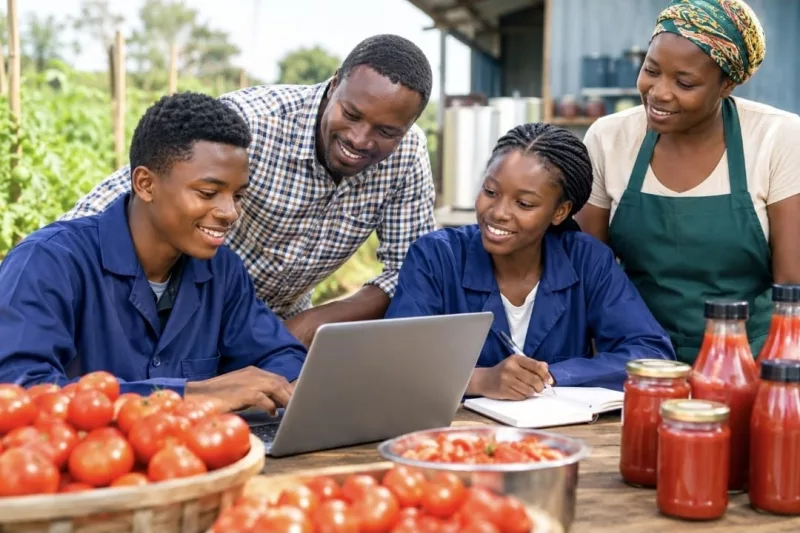
Across Africa, smallholder farmers, pastoralists, and local authorities already operate in high-risk environments where decisions carry immediate economic consequences.
AI-enabled climate forecasting, land-use analysis, and market intelligence can materially improve those decisions, provided these tools are designed to support human judgment rather than displace it.
The same applies to conservation systems. Predictive analysis can strengthen early warning capabilities, guide land-use planning, reduce human-wildlife conflict, and improve the management of protected and productive landscapes. When aligned with local institutions, these tools shift conservation from reactive enforcement to proactive risk management.
For a small conservation geography team, AI is a force multiplier. It expands the ability to code, analyse, and design sophisticated spatial products, making high-quality work such as satellite-based land-use change analysis far more achievable.
It also serves as a genuine brainstorming partner, speeding up project design and helping turn complex spatial analysis into dashboards, tools, and interfaces that non-GIS audiences can actually use. In practical terms, AI amplifies existing capacity, allowing the same team and budget to deliver more rigorous and more impactful conservation science.
AWF is already seeing this in products such as the Amboseli Geospatial Hub, a decision-support platform helping county government navigate one of East Africa’s more complex conservation planning challenges: rapid population growth, competing livelihoods, water security, and wildlife corridor expansion all at once.
With strong county implementation, it could become a template for replication in other planning processes in Kenya and beyond.
The same applies to the Kidepo Regenerative Agriculture Dashboard, a four-page tool that summarises the participation, spatial distribution, and performance of more than 2,100 farmers enrolled in Uganda’s Regenerative Fund for Nature programme using AWF-led field surveys. Its value lies not only in the analysis but in making spatial work legible to programme managers, funders, and partners, while also providing a baseline that can be adapted for future surveys and other landscapes.
One of the persistent barriers to scaling climate resilience is that natural capital remains largely invisible to formal economic systems.
Ministries of finance, insurers, and institutional investors respond to what can be measured, verified, and priced. Ecosystem services, water regulation, soil stability, and carbon storage rarely meet those thresholds, despite their foundational economic role.
This is where AI can play a catalytic function.
By improving data integration, monitoring, and verification, AI can help translate ecological performance into metrics that financial systems recognise. When environmental resilience becomes legible to balance sheets, it becomes investable. This shift is essential if adaptation is to move beyond episodic donor funding toward sustained, long-term capital deployment.
Adaptation finance remains one of the most acute bottlenecks in global climate action. Annual needs are measured in the hundreds of billions of dollars, yet flows remain fragmented and risk-averse.
AI can help reduce this friction by lowering transaction costs, improving project aggregation, and strengthening transparency around outcomes.
These capabilities are particularly relevant for mobilising domestic capital in Africa, where pension funds, banks, and sovereign institutions collectively manage trillions of dollars but lack sufficiently de-risked pathways into resilience investments.
The objective is not to create new financial instruments for their own sake, but to enable credible, investment-grade pipelines that connect capital to resilience at scale.
Too often, adaptation is framed in terms of coping. That framing is strategically inadequate.
The real opportunity lies in competitiveness: climate-resilient agriculture linked to regional markets; decentralised energy systems that power small and medium-sized enterprises; and landscapes that support both biodiversity and productive economies.
Africa’s development trajectory is already more distributed and entrepreneurial than legacy industrial models. When properly aligned, AI can reinforce this trajectory by improving logistics, energy reliability, and market access.
The result is not incremental efficiency, but the emergence of new economic sectors — from restoration and sustainable tourism to climate-smart manufacturing.
If artificial intelligence is to contribute meaningfully to conservation and development in Africa, three conditions must hold.
First, technology must respond to clearly defined economic and ecological challenges, not abstract possibilities.
Second, durable impact depends on alignment with African public institutions, markets, and governance systems.
Third, resilience cannot be achieved through pilots alone; it requires policy coherence, regional coordination, and long-term capital.
We are entering a period of global reset. Climate risk is now influencing sovereign creditworthiness. Supply chains are being reorganised. Traditional development finance is under strain.
In this context, Africa is not a peripheral concern. It sits at the intersection of natural capital, demographic momentum, and economic transformation.
The next global development model will not be built on technology alone. It will be built on the effective integration of ecological systems, human capability, and institutional strength.
Artificial intelligence can accelerate that integration, but only if it is deployed as a public good, not a speculative asset.
The test of success will not be technological sophistication, but whether the world’s most climate-exposed regions emerge more productive, more stable, and better positioned to shape their own economic futures.
That is the strategic question this decade demands we answer.
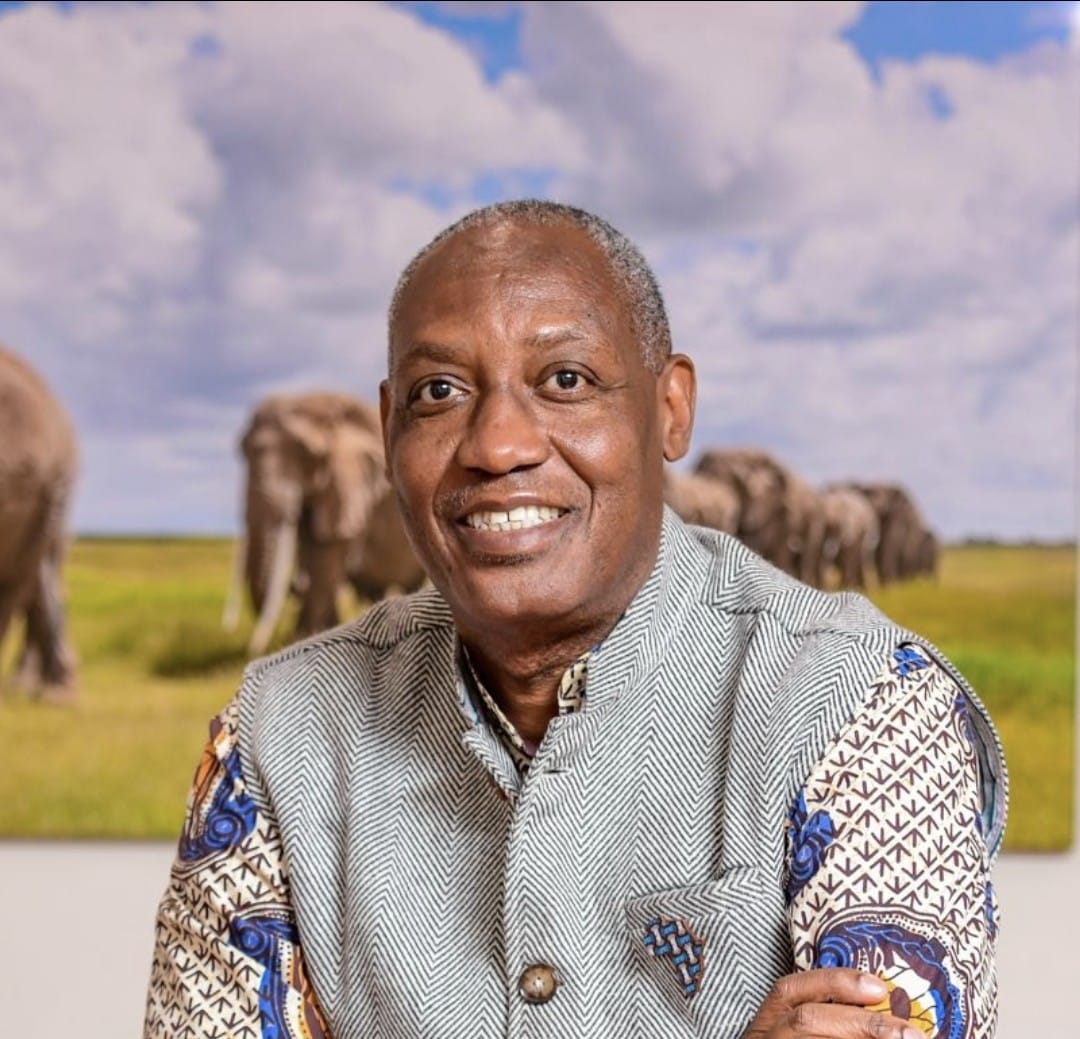
Kaddu Sebunya is Chief Executive Officer of the African Wildlife Foundation.