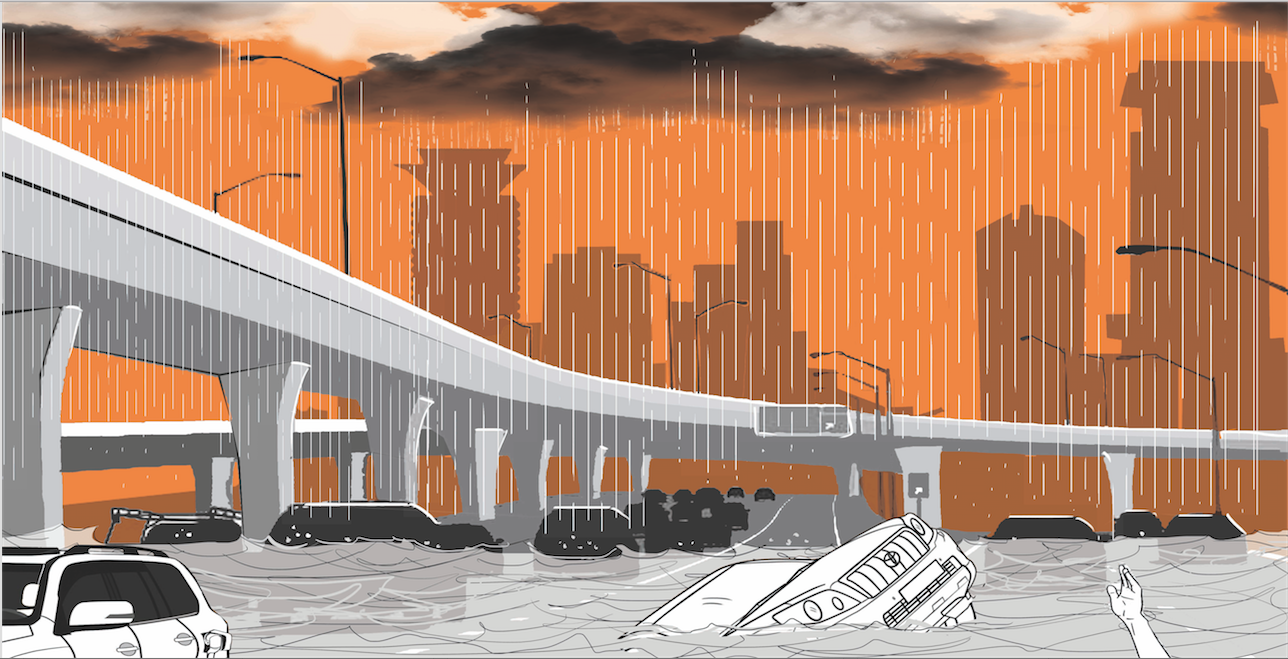
The Kenya Meteorological Department's warning on March 8 was eerily familiar.
As heavy rains drenched Nairobi, the forecast warned of saturated soils and unavoidable flooding. By Sunday evening, 43 lives had been lost and hundreds of homes destroyed—a tragedy that forces us to face the question that has haunted this city for generations.
Why does Nairobi keep flooding, and what will it take to solve this crisis finally?
To understand our present, we must look back to 1906, when British Commissioner Sir James Sadler described the site chosen for the colonial capital as "a depression with a very thin layer of soil… water-logged most of the year."
Engineers recognised the limitations, yet the railway's economic importance drove rapid expansion. Nairobi grew on terrain designed to retain water rather than drain it. That historical reality need not be our permanent fate.
Behind the statistics lie painful stories. The government confirmed 23 bodies retrieved from rivers in Starehe and Kamukunji subcounties.
Victims drowned in Kibra. Approximately 3,500 households were affected across Nairobi, with over 700 homes damaged or destroyed.
More than 800 households were displaced. Emergency responders from the Kenya Red Cross worked tirelessly, deploying rescue boats and evacuation teams.
The cooperation agreement between the national government and Nairobi city county under the Nairobi Rivers Regeneration Programme represents the most ambitious attempt in decades to address our city's structural vulnerabilities.
In February 2026, President Wiliam Ruto presided over the signing of an Sh80 billion cooperation framework.
The plan includes Sh9 billion for two parallel 27-kilometre trunk sewer lines along the Nairobi River corridor, expanded wastewater treatment, large-scale waste removal and restoration of riparian buffers.
Forty-four pedestrian bridges will be constructed to allow rivers to flow freely during heavy rains, while Sh1 billion has been allocated specifically for drainage improvements. Over 45,000 young people are already benefiting from regeneration and clean-up programmes.
Yet even this ambitious programme must navigate implementation challenges. Funding must be consistently disbursed. Land acquisition for new infrastructure will encounter resistance.
Most critically, the agreement requires sustained collaboration between national and county governments—relationships historically marked by turf wars and mutual suspicion. Without continued political will, these plans risk becoming unfulfilled promises.
The private sector players must also take responsibility by ensuring new developments consider drainage, respecting riverbanks, managing waste collectively and supporting the recycling of plastics.
Floods harm roads, investments and the economy, so coordinated action among businesses, government and communities is essential for lasting change.
But infrastructure and corporate commitment alone cannot secure Nairobi's future without public participation. Residents must stop using drainage channels as garbage dumps.
Construction along riparian corridors must cease. Every neighbourhood association that organises cleanups, every household that disposes of waste responsibly and every citizen who respects river boundaries contribute to a collective solution.
The Nairobi Rivers Regeneration Programme offers a vision of what our city can become. Imagine rivers clean enough for recreation. Neighbourhoods safe from flooding during heavy rains.
Green corridors providing both ecological function and public space. A city that has finally learned to work with its natural environment rather than against it.
That future is not a distant dream. It is an achievable goal, supported by concrete plans, committed leadership and emerging opportunities for partnership across every sector of society.
The challenges accumulated over 120 years will not disappear overnight, but for the first time in generations, we have a clear path forward and the collective will to walk it.
While nature will always test a city built near rivers and wetlands, the resilience of that city ultimately depends on choices made by its leaders, its businesses, and its citizens.
Nairobi's regeneration is a shared civic responsibility—a collective journey we can now walk together with confidence, purpose, and hope.
Strategic adviser and expert in leadership and governance