It was a crisp morning on March 10, 2026, when a motorist cruising along James Gichuru Road in Nairobi received an unexpected digital slap on the wrist.
Captured by one of the newly installed smart cameras, the driver’s Toyota SUV was clocked at 68 km/h in a 50 km/h zone.
The infraction, documented in Ticket #10412 issued at 7:26 a.m., came with a hefty KSh10,000 fine. The accompanying photo evidence, showing the vehicle mid-motion on a busy stretch, served as a stark reminder that Kenya’s roads are now under the watchful eye of Big Brother.
Social Media Buzz: Drivers Vent Frustrations
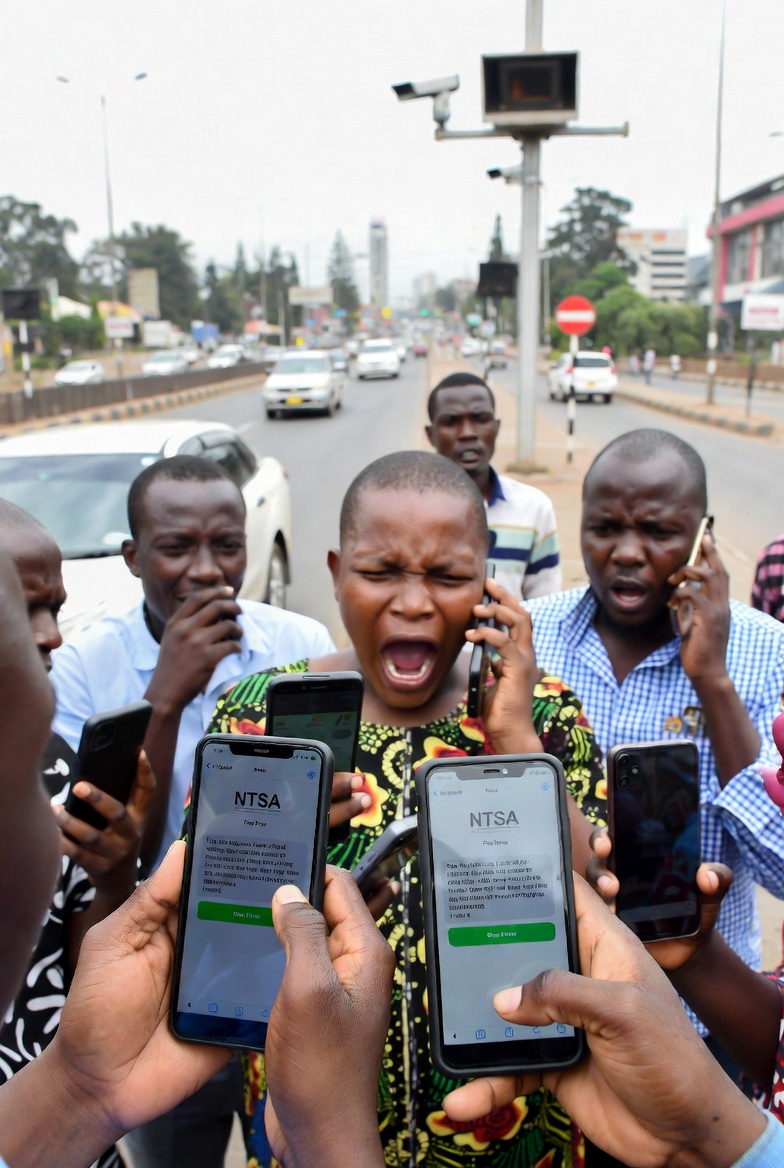
This incident is just one of many as Kenyans adjust to the rollout of the National Transport and Safety Authority’s (NTSA) Instant Fines Traffic Management System.
Across social media, drivers have been sharing stories ranging from frustrating to downright surreal.
One X user recounted how their routine commute went awry after receiving an SMS alert for overlapping lanes, forcing them to pull over and ponder the KSh5,000 penalty while stuck in traffic.
Another viral post told the story of a matatu driver caught overtaking recklessly. Sent for a mandatory retest by NTSA, the driver failed spectacularly—echoing broader concerns as reports emerged that nearly all public service vehicle operators flagged so far have failed their exams.
“It’s scary how many unqualified people are behind the wheel,” the post read, gaining thousands of likes and shares.
Instant Fines in Action: From Seatbelts to Family Trips
Elsewhere, a long-haul trucker described the shock of an instant fine for failing to wear a seatbelt, captured during a brief moment adjusting his load on the Thika Superhighway.
“I was just sorting my cargo and boom—SMS from NTSA. Paid up immediately to avoid the account lock,” he shared.
Commuters in Nairobi have reported similarly startling experiences. One mother of three recounted a KSh3,000 fine for failing to yield at a junction during a family road trip, turning what was meant to be a relaxing outing into a lesson in digital accountability.
A student on a motorbike told of being fined KSh1,500 for a minor speeding burst near Kenyatta University, describing the shock of receiving an SMS while parked at a roadside café.
Another driver, a boda boda operator in Machakos, lamented a KSh2,000 penalty for briefly riding without a helmet when rushing to drop a passenger, arguing that the system didn’t account for context or emergencies.
The NTSA’s Big Move Toward Automated Enforcement
The NTSA’s Instant Fines system represents a major shift in Kenya’s approach to road safety. Launched on March 9, 2026, the system uses advanced cameras to detect violations and automatically send SMS notifications to offenders, who must pay within seven days via approved channels, including KCB branches.
Part of the Traffic (Minor Offences) Rules of 2016, the initiative aims to reduce corruption by minimising human intervention and enhancing transparency.
Fines range from KSh500 for minor infractions such as obstructing pedestrians to KSh10,000 for serious violations like speeding or driving without proper identification plates. Unpaid penalties accrue interest and block access to NTSA services, including licence renewals.
Expansion Plans and Legal Controversies
The rollout, ordered by President William Ruto, plans to expand beyond Nairobi with 1,000 cameras nationwide under a Sh42 billion public-private partnership.
Yet the system has not been without controversy. On the day of launch, motorist Kennedy Maingi Mutwiri filed a petition at the High Court, arguing that automated fines violate constitutional rights to fair administrative action and trial under Articles 47 and 50.
The court declined to issue interim orders, instead scheduling a mention for April 9, 2026.
Critics, including several vocal voices on X, argue the system disproportionately affects lower-income drivers and lacks legal clarity, while supporters hail it as a step towards safer roads, drawing inspiration from Japan’s automated enforcement programmes.
The Debate Continues: Safety or Wallet Drain?
As more Kenyans share their encounters—from failed retests to sudden SMS penalties—the debate continues: will this tech-driven enforcement finally curb chaos on Kenyan roads, or simply add to commuter woes?