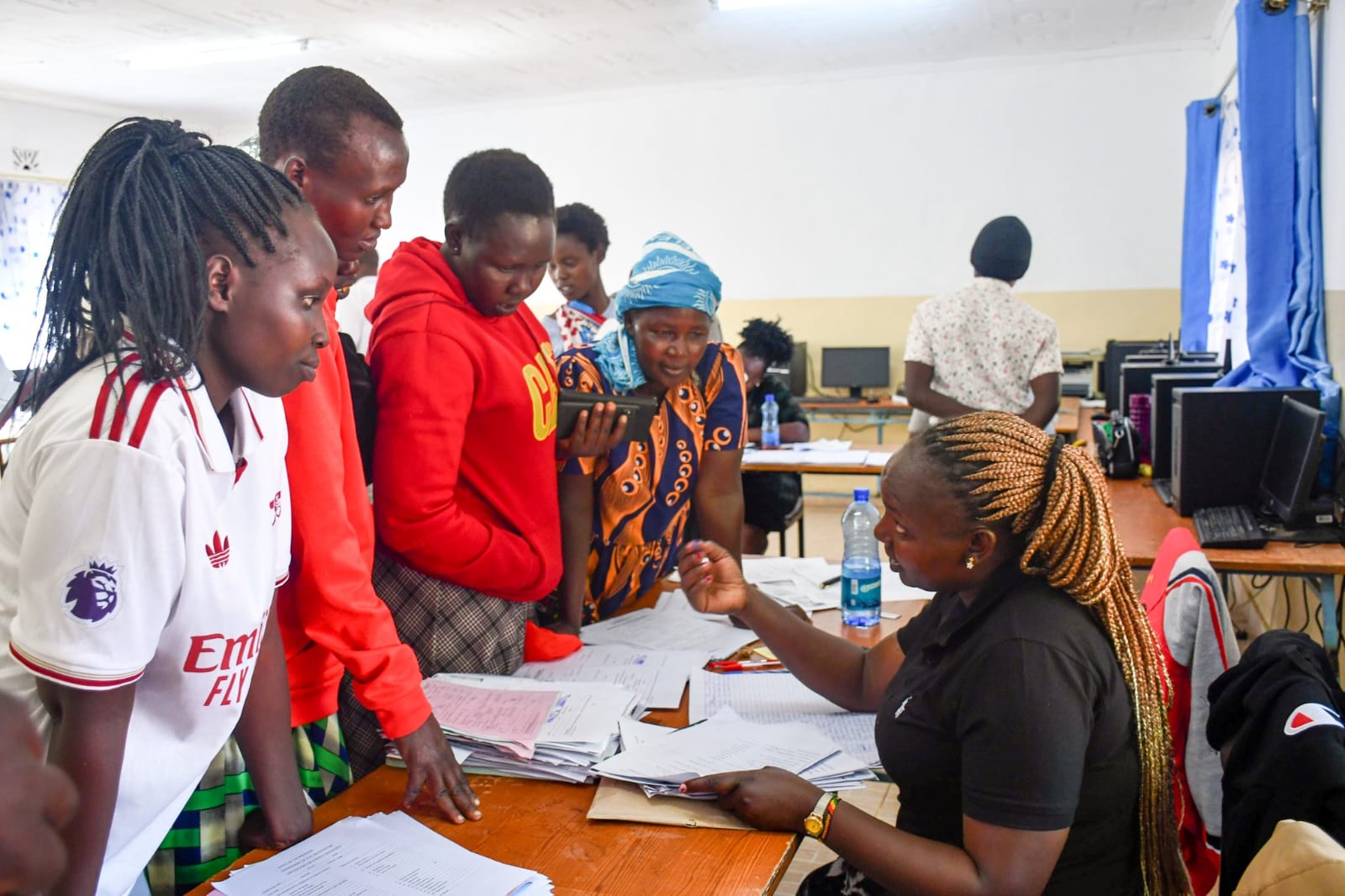
More than 100,000 persons applied for national ID registration during 10-day exercise conducted in North Rift, the State Department for Immigration and Citizen Services has said.
The government rolled out the Usajili Mashinani mobile registration exercise, a 10-day Rapid Results Initiative aimed at expanding access to national identification services for Kenyans in remote and previously underserved areas.
The exercise conducted in Turkana, West Pokot, Elgeyo Marakwet counties, saw 100,195 Kenyans apply for ID cards.
“This milestone reflects the government’s commitment to inclusive service delivery and ensuring every eligible Kenyan has access to official identification," PS Belio Kipsang said.
To support the exercise, the State Department has strengthened operational capacity by procuring 400 Live Capture Units, with an additional 200 units expected to be acquired before the end of the financial year.
The government has also enhanced mobility for registration teams through the acquisition of 56 vehicles, enabling officers to reach remote locations and ensure that every ward has a designated registration point during the exercise.
“Additionally, engagements with the National Treasury are underway to facilitate the successful implementation of the exercise, including securing the necessary financing and operational support required to sustain and expand the initiative,” Kipsang said.
The PS said the strong uptake witnessed so far underscores the importance of this intervention and highlights the need for the Rapid Results Initiative (RRI) to continue so that no eligible Kenyan is left behind in accessing national identification services.
The exercise is currently ongoing in Baringo and Narok counties, where residents are now benefiting from the mobile registration services, with the state saying this further demonstrating the government’s commitment to strengthening access to identification services across the country.
The initiative brings registration services closer to communities by establishing registration points at the ward level, ensuring that citizens who have historically faced barriers such as distance, difficult terrain, and limited access to registration centres can easily acquire national identification documents.
The Kipsang-led department has earmarked at least 15 pastoralist and marginalised counties targeting at least 100,000 new ID applicants per each of the counties. This will translate to 1.5 million Kenyans obtaining crucial documents in the regions.