
Ahmed Sadik, a governance expert and author of 'Effect of Asset Identification and Tracing in the Fight Against Corruption'.
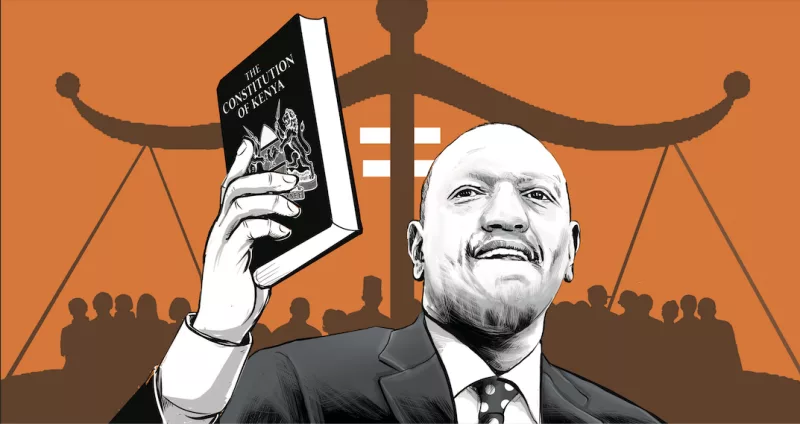
Kenya’s Constitution envisioned a public service anchored in integrity, accountability and service to citizens. Yet more than a decade after the promulgation of the Constitution of Kenya 2010, public confidence in many government institutions remains fragile.
Recurring allegations of corruption scandals, procurement irregularities and misuse of public resources continue to test the promise that Chapter Six on leadership and integrity sought to guarantee. Public office is not a privilege for personal advancement.
It is a trust bestowed by citizens who expect fairness, transparency and responsible stewardship of national resources. Every public officer, whether serving in the national government or within county administrations, exercises authority on behalf of millions of Kenyans whose lives are shaped by decisions made in public institutions. When that trust is broken, the consequences extend far beyond individual wrongdoing.
Ethical lapses weaken the social contract between citizens and the state, undermine confidence in public institutions and slow the country’s development agenda. For this reason, ethical leadership and accountability must remain at the heart of Kenya’s public service.
The ethical expectations placed upon public officers begin with integrity. Integrity requires honesty in decision-making, transparency in the use of public resources and fairness in service delivery. Public officers must avoid conflicts of interest and must never use their positions to secure personal gain for themselves, their families or their associates.
The moment public office becomes a platform for private enrichment, public trust begins to erode. Accountability is equally central. Public officers are custodians of public resources, and their actions must withstand public scrutiny. Decisions on procurement, recruitment, budgeting and policy implementation must be guided by the law and the principles of good governance.
Accurate record-keeping, openness to oversight and a willingness to explain decisions are essential components of responsible leadership. Professionalism also plays a critical role in effective public service. Public officers are expected to perform their duties competently, efficiently and impartially. Service delivery should never be influenced by tribal considerations, political pressure or personal relationships.
When citizens are treated fairly regardless of background or status, confidence in government institutions grows and national cohesion is strengthened. Equally important is the responsible handling of information. Public officers frequently work with sensitive data relating to government operations, national security and citizens’ personal information.
Safeguarding such information is not merely an administrative requirement; it is an ethical obligation necessary to maintain institutional credibility and protect the public interest. Ethical leadership also requires courage. Public officers sometimes encounter pressure to compromise professional standards or participate in questionable decisions.
In such moments, integrity demands the courage to decline unlawful directives, report misconduct and safeguard public resources. Strengthening whistleblower protection and institutional safeguards is therefore critical to building a culture where integrity is rewarded rather than punished.
Ethical governance cannot be sustained through enforcement alone. Oversight institutions such as the Ethics and Anti-Corruption Commission continue to play an important role in promoting accountability through investigations, public education and advisory services.
However, lasting change ultimately depends on the individual commitment of public officers to uphold the values expected of their offices. Kenya’s development aspirations depend significantly on the integrity of its public institutions. When ethical leadership prevails, public resources are used effectively, investor confidence grows, service delivery improves and citizens regain trust in government.
Conversely, when integrity is compromised, corruption flourishes, inequality deepens and development progress slows. As former chairperson of the Ethics and Anti-Corruption Commission, Mumo Matemu once observed: “Integrity is not a slogan to be recited in public forums; it is a personal commitment that must guide every decision a public officer makes, even when no one is watching.”
That observation remains a powerful reminder that while laws, policies and oversight frameworks provide necessary guardrails, the true foundation of ethical governance lies in the choices individuals make every day in public office.
Kenya’s public servants must therefore choose accountability over convenience, transparency over secrecy and service over self-interest. Only then can public service truly reflect the ideals envisioned in the Constitution.
Ahmed Sadik is a governance expert and author of Effect of Asset Identification and Tracing in the Fight Against Corruption; he writes regularly on integrity issues, institutional accountability and public sector reforms