Kenya’s manufacturing sector has called for urgent regulatory reforms to curb rising compliance costs and the duplication of levies that are undermining local industries’ competitiveness.
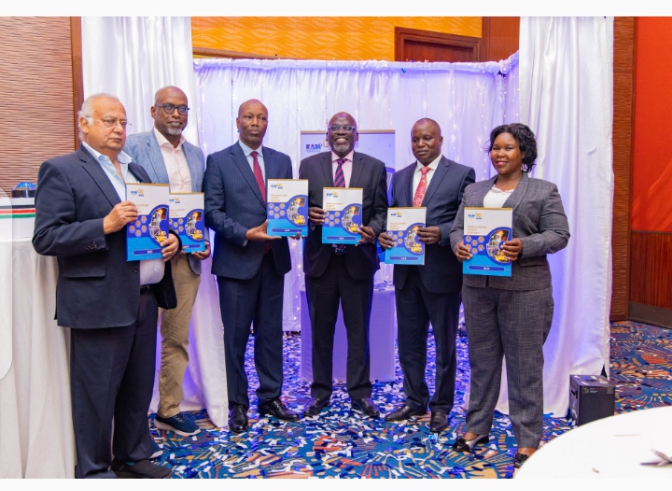
The call came during the launch of the Regulatory Audit Report for the Manufacturing Sector by the Kenya Association of Manufacturers (KAM).
The study shows that manufacturers operate in a complex regulatory environment, with multiple licensing requirements, overlapping mandates among agencies, and increasing compliance costs at both national and county levels.
In many cases, businesses must obtain numerous permits and undergo repeated inspections from different agencies regulating similar operations, driving up the cost of compliance.
Speaking at the launch, Investments, Trade and Industry CS Lee Kinyanjui acknowledged the regulatory challenges raised by manufacturers and reiterated the Government’s commitment to strengthening Kenya’s industrial policy framework.
He said the government is developing a new Industrial Policy to address structural challenges affecting the sector, including fiscal policy issues, regulatory predictability, and industrial competitiveness.
“Manufacturing remains the only sector with the strong potential to create sustainable jobs for our economy. The industrial policy which we are developing will set out solutions to many of the issues raised by manufacturers, including fiscal policy concerns and regulatory stability and predictability. While government often views regulation as necessary for oversight and revenue, industry experiences it as a cost of doing business," Kinyanjui said.
"What is important is that we strike the right balance to ensure predictability and the sustainability of Kenyan industries, particularly as they navigate global disruptions such as delays in the shipment of raw materials and other supply chain shocks.”
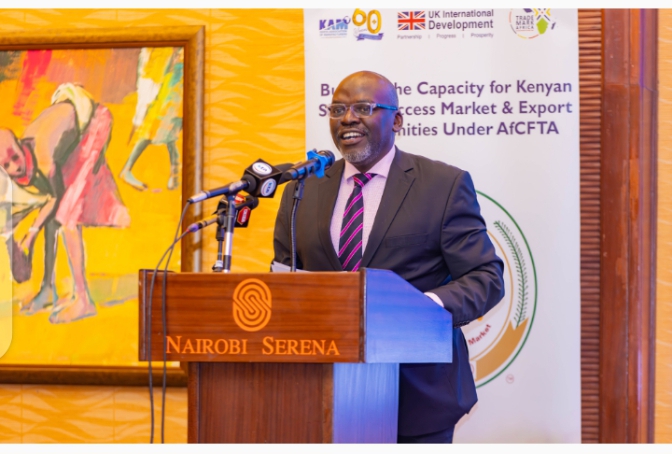 KAM CEO Tobias Alando during the launch of the Regulatory Audit Report for the Manufacturing Sector by the Kenya Association of Manufacturers (KAM) in Nairobi on March 10, 2026/ HANDOUT
Chief of Staff at the Office of the Deputy President, Christopher Wanjau, also addressed the meeting, highlighting efforts to tackle illicit trade and counterfeit goods that continue to threaten legitimate manufacturers.
He said the Government has established a multi-agency committee coordinated by the Office of the Deputy President to strengthen enforcement against illicit trade and protect compliant businesses from unfair competition.
“Unfair competition from counterfeit and illicit products continues to undermine legitimate manufacturers who invest heavily in quality production, regulatory compliance, and taxation. Through the multi-agency committee on illicit trade coordinated by the Office of the Deputy President, we are strengthening enforcement to ensure that businesses operating within the law are protected and that the market remains fair for local industries,” Wanjau noted.
KAM Chief Executive Tobias Alando said the Regulatory Audit Report shows that regulatory inefficiencies—especially duplication of fees, levies, and compliance requirements at both national and county levels—have become a major constraint to industrial growth.
He said the cumulative regulatory burden on manufacturers has steadily increased, forcing companies to navigate an extensive network of approvals before they can operate effectively.
“The cumulative regulatory burden on manufacturers has grown significantly over time. In some manufacturing sectors, businesses must obtain more than 50 licences, permits, fees, and charges from multiple regulatory agencies at both national and county levels. To mention just a few examples, the Pharmaceutical and Medical Equipment sector requires up to 57 licences, the Chemical and Allied sector 53, and the Food and Beverage sector 51. These overlapping mandates and rising compliance costs divert resources away from investment and innovation, ultimately weakening Kenya’s competitiveness in regional and global markets,” Alando said.
He warned that unless regulatory processes are streamlined, Kenya risks losing its competitive edge in emerging regional and global trade frameworks.
Alando noted that Kenyan manufacturers must remain competitive in key markets under the African Continental Free Trade Area (AfCFTA), the East African Community (EAC), and the Common Market for Eastern and Southern Africa (COMESA), as well as under trade agreements such as the EU–Kenya Economic Partnership Agreement and the African Growth and Opportunity Act (AGOA).
The report recommends reforms to ease the regulatory burden on manufacturers. These include harmonising regulatory mandates between national and county governments, improving fiscal predictability, and adopting county tariff policies that reflect the actual cost of services provided.
It also calls for stronger enforcement against illicit trade and the development of a national AfCFTA implementation strategy to support Kenyan manufacturers in accessing regional markets.
Industry leaders said implementing these reforms would significantly lower the cost of doing business, improve regulatory predictability, and strengthen Kenya’s manufacturing sector’s competitiveness regionally and globally.
The Regulatory Audit Report was developed with support from TradeMark Africa, funded by the British High Commission in Kenya.