In 2022, a young woman exposed corruption in her county government. Within days, elders were dispatched to her parents’ home with threats of sexual violence meant to “discipline” her.
In Nairobi, a journalist who has consistently reported on procurement scandals once remarked that every investigative piece he writes feels like “a candidate for a lawsuit”.
These are not isolated stories. They are symptoms of growing and deeply troubling patterns in Kenya: the strategic use of lawsuits not to seek justice, but to intimidate Kenyans. These cases are widely known as Strategic Lawsuits Against Public Participation (SLAPP suits).
Across counties and in the capital, SLAPP suits have quietly become one of the most effective tools for shrinking civic space.
They target journalists, bloggers, whistleblowers, youth activists, community organisers and increasingly, advocates working on governance, accountability and even sexual and reproductive health and rights (SRHR).
The objective is rarely a victory in court. It is to drain the defendant’s resources and morale.
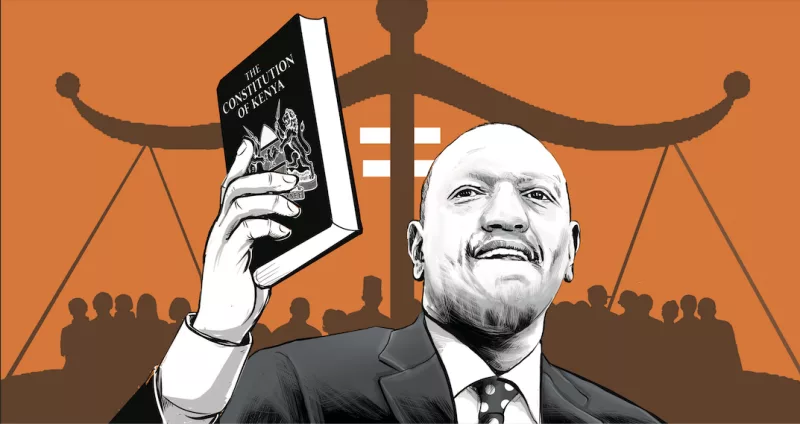
Kenya’s constitutional architecture is clear. Article 33 of the Constitution of Kenya 2010 guarantees freedom of expression.
Article 34 safeguards media freedom. Institutions such as the Media Council of Kenya were established to promote responsible journalism while protecting press independence.
Yet, over time, these guarantees have increasingly collided with the misuse of defamation laws, cybercrime provisions and other statutory instruments.
Even after the High Court declared criminal defamation unconstitutional in Jacqueline Okuta & Another v Attorney General (2017), complainants have continued to rely on civil defamation suits and alternative criminal charges to pursue critics.
The result is a chilling effect that goes far beyond the courtroom.
Evidence from recent Kenyan SLAPP suit patterns reveals that a majority of such cases are triggered by attempts to expose corruption or abuse of public office.
Many others arise from efforts to mobilize communities or question powerful interests.
Common charges levelled against targets include defamation, misuse of licensed telecommunication systems, false publication and cyber harassment.
These charges may appear legitimate on paper. However, when examined closely, a pattern emerges: the complainants are often politically connected individuals, senior public officials, or powerful private actors.
The targets are typically individuals from lower socio-economic backgrounds.
The Imbalance is deliberate
Litigation is expensive. Even when cases lack merit, the process itself can be the punishment. Court appearances, legal fees, reputational damage and emotional strain can stretch on for years. For a young activist or community organiser, one lawsuit can derail an entire advocacy agenda.
For women and youth defenders, the intimidation frequently extends beyond the courtroom into gendered threats, online harassment and community stigma.
As a youth advocate working in SRHR and policy reform spaces, I have observed how quickly advocacy can be reframed as “defamation” or “incitement” when it challenges entrenched power structures.
When young people question county health budgets, demand accountability for maternal health funds, or expose procurement irregularities in health commodities, they are not merely raising concerns on policy, they are confronting financial interests.
In a context where reproductive health remains a politically sensitive topic, the combination of moral panic and political power can produce swift retaliation. A demand for transparency becomes “character assassination.” A policy critique becomes “false publication.”
This is precisely how SLAPP suits function: they repackage public interest speech as private injury.
The damage extends beyond individual defendants. When journalists self-censor to avoid litigation, corruption flourishes in the dark. When youth activists retreat from public engagement, community voices disappear from policy debates. When civil society organisations divert resources from programming to legal defence, service delivery suffers.
The Judiciary has, in some instances, demonstrated independence in upholding constitutional freedoms.
However, without explicit procedural safeguards to identify and dismiss SLAPP suits at an early stage, courts can unintentionally become arenas where power is leveraged against participation.
Parliament, too, bears responsibility
Legislative reform is needed to prevent the abuse of civil defamation and related laws. Comparative jurisdictions have adopted anti-SLAPP frameworks that allow courts to quickly strike out cases primarily intended to silence public participation. Kenya should seriously consider similar safeguards.
Confronting SLAPP suits requires a multi-sectoral approach. The Judiciary needs to develop jurisprudence and procedural rules to detect and dismiss cases that target public interest speech. Our legislative houses need to review defamation and cybercrime provisions to close loopholes that enable abuse.
The existing media houses must provide legal backing and institutional protection for investigative journalists. Human rights institutions need to strengthen rapid response mechanisms for defenders facing retaliatory litigation.
With the exploration of citizen activism, there’s a dire need to build solidarity networks to ensure that no whistleblower stands alone.
Importantly, public interest litigation must not be conflated with malicious speech. Accountability and free expression are not threats to democracy; they are its lifeblood.
Kenya’s democratic journey has never been linear. From the struggle for multiparty democracy to the promulgation of the 2010 Constitution, progress has always depended on citizens willing to speak, organize and question.
If SLAPP suits are allowed to proliferate unchecked, we risk normalizing a culture where power is insulated from scrutiny. The Constitution envisioned an engaged citizenry, not one intimidated into silence by the weight of endless litigation.
As young people, journalists, community organisers and policy advocates, we must insist that the courts remain spaces for justice, not weapons for repression. The defense of public participation is not a niche legal issue. It is a generational imperative.
Silencing critics may protect reputations temporarily, but protecting free expression safeguards the Republic.
Kenya must decide which legacy it chooses.
Kelvin is a communications consultant and an SRHR Advocate.