
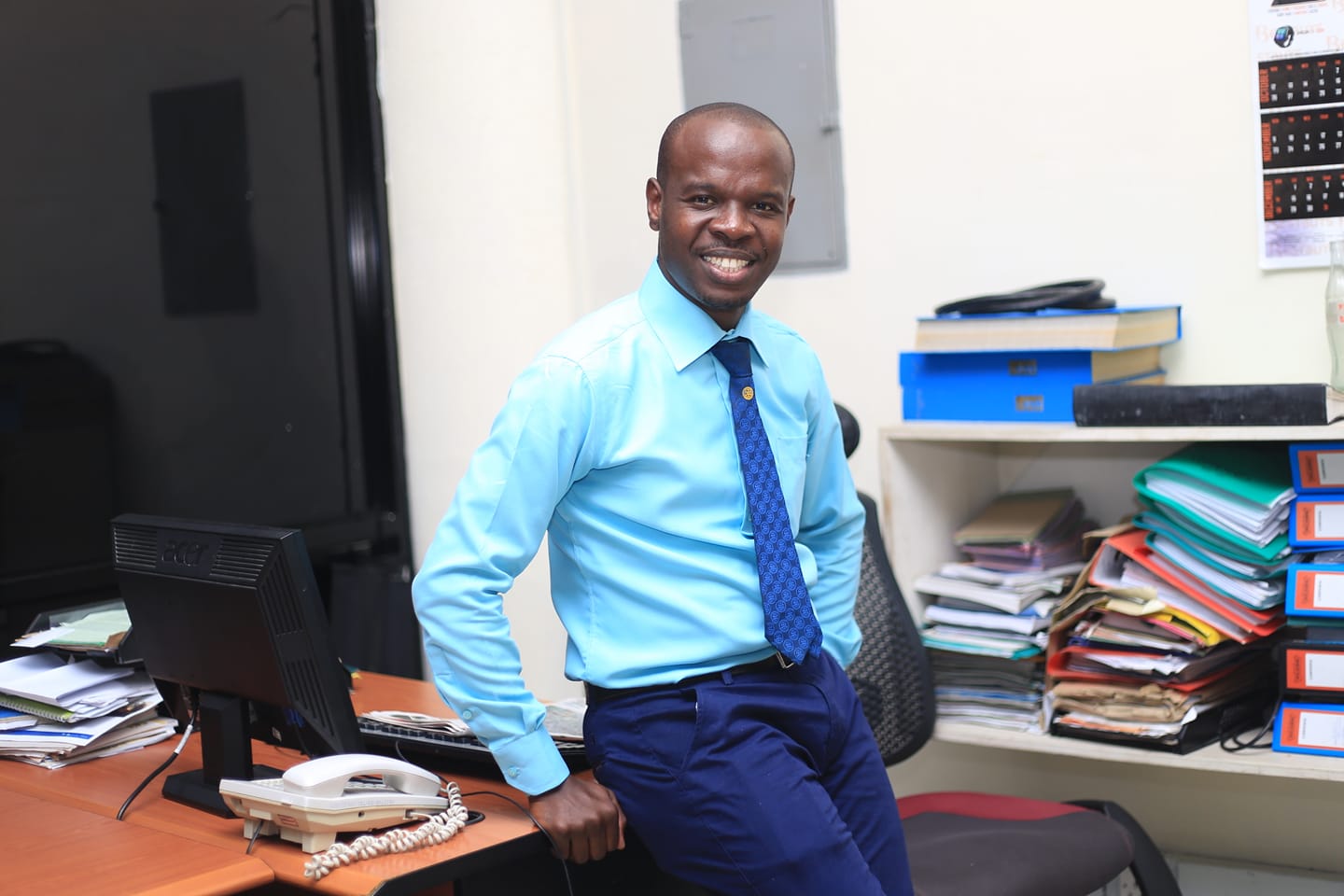
He is supposed to deliver water to millions amid scarcity, ageing infrastructure and deep financial constraints.
The position he occupies is widely seen as a hot political seat, with frequent leadership turnover, intense scrutiny from county governments and mounting public pressure over chronic water shortages.
However, Mguza, a career civil servant with more than two decades in public service, says his mission is simple: stabilise the agency and expand water supply across the Coast region.
“Water is an essential commodity, it is very emotive topic, just like land here at the Coast. If there is no electricity in your house, you can buy a candle, but if there is no water, what will you do?” he told the Star.
Mguza describes himself as a lifelong public officer who has spent most of his career in government institutions.
He began his career in the late 1990s at the former Municipal Council of Mombasa, later moving to the Nairobi City Council before returning to the Coast to work at the Mombasa Water and Sewerage Company.
After a brief stint in the private sector with Base Titanium, he returned to government as director of human resources in Kwale county.
He later joined the Kenya Roads Board, rising from senior manager for human resource and administration to director of corporate services before being appointed CEO of the water agency.
“To reach the apex of a public organisation is an achievement. Many people join public service but never reach this position,” he said.
A region thirsty for water
The Coast Water Works Agency is responsible for developing bulk water infrastructure across the coastal region, supplying water mainly to Mombasa, Kilifi, Kwale and Taita Taveta counties.
Currently, the demand for water exceeds supply.
According to Mguza, the region requires about 436,000 cubic metres of water per day, but the agency is only able to provide around 270,000.
That deficit, combined with rapid urban growth and climate pressures, has intensified the urgency to complete several long-delayed water projects.
At the centre of Mguza’s strategy is a portfolio of major infrastructure projects intended to transform water supply across the region.
The flagship project is the Mwache Dam, which will include a water treatment plant and a major pipeline network linking Mombasa Island, the north and south mainland and parts of Kwale.
Once completed, Mwache is expected to produce about 186 million litres of water per day, significantly easing shortages in Mombasa and surrounding areas.
Other key projects include the Baricho Wellfield Solarization.
The agency is installing solar power at the Baricho water wells in Kilifi to reduce electricity costs.
Currently, the facility consumes about Sh50 million in electricity per month, but solarisation (the use of solar) could cut the bill by nearly half.
Makamini Dam (Kwale) is a project expected to deliver about 10 million litres of water daily to communities in Kwale county. Construction has resumed after earlier delays, with completion targeted by December.
Mzima II Pipeline is also a major upgrade to the aging Mzima pipeline system originally commissioned in the 1950s.
The new line will unlock more water from the Mzima springs and improve supply to Taita Taveta, Kwale and Kilifi.
Mkurumudzi Dam project in Kwale, which was handed over to the government by Base Titanium after mining operations ended, is being prepared for water supply development.
Plans include a treatment plant and pipelines supplying Ukunda, Diani, Tiwi and Shimoni.
Taveta Lumi Water project, which is funded by a grant from the Italian government and estimated at about Sh700 million, will expand water distribution in Taveta through new pipelines and storage tanks.
Mguza said these projects combined could significantly close the water deficit in the region.
“If all these projects are completed, the water situation at the coast will improve greatly,” he said.
The 2029 target
The CEO believes the turning point could come by 2029, when the Mwache project and associated pipelines are expected to be operational.
Once that happens, water from Mwache will primarily serve Mombasa and nearby areas, while existing sources such as Mzima can focus on supplying inland counties like Taita Taveta.
“By around 2029, we expect the water problem in the region to have eased considerably,” he said.
However, infrastructure remains a major challenge.
Some of the pipelines currently in use date back nearly a century.
The Marere pipeline, for instance, was commissioned in 1923, while the Mzima line was built in the 1950s.
Ageing pipes frequently burst, causing water losses and costly repairs.
Vandalism of infrastructure also compounds the problem.
“The pipeline is old and we have frequent bursts because of wear and tear. Vandalism is also bringing us down,” Mguza said.
Billions in debt and unpaid bills
Beyond infrastructure challenges, the agency faces severe financial pressure.
Mguza said that the agency carries about Sh19 billion in debt from earlier water projects undertaken in the region.
The agency also struggles to meet obligations such as paying abstraction fees to the Water Resources Authority, which charges Sh2.50 per cubic metre of water drawn from natural sources.
But the biggest challenge, he says, is unpaid bills from water service providers and county governments.
The agency relies on these payments to fund operations, yet many water companies pay only 30 to 40 per cent of what they owe.
“Some are not paying even half of their bills,” he said.
For the agency to remain financially sustainable, at least 95 per cent of billed revenue must be collected, he added.
Mguza also dismissed claims by some county leaders that they are paying for water that never reaches residents.
“You cannot be billed for water that is not supplied,” he said.
Instead, he called for an honest discussion between the national agency and county governments about responsibilities in the water sector.
Under Kenya’s devolved system, counties manage water distribution through local water companies, while bulk infrastructure development remains under national agencies.
He said the four counties of Mombasa, Kwale, Kilifi and Taita Taveta owe the Coast Water Works Agency Sh6 billion accrued since 2012.
“Before 2012, the total bill for the four counties was Sh400 million. However, since 2012, the figure has grown to Sh6 billion. The counties need to pay only 30 per cent of that for us to operate optimally,” he said.
Mguza believes stronger collaboration is needed.
“Both sides have work to do,” he said.
Running the agency itself is expensive.
Mguza estimates the organisation requires more than Sh300 million per month for operations — covering salaries, water treatment chemicals, electricity bills, maintenance and loan repayments.
Electricity alone accounts for millions each month, particularly for pumping water.
Solarisation projects, he said, will be key to lowering those costs in the long run.
With water shortages often triggering political tensions, the CEO acknowledges the sensitivity of his job.
Governors face pressure from residents demanding reliable water supply, while the agency must manage large infrastructure projects and financial obligations.
“We have since written to the national government asking them to allow us run the operations of the county water companies, because clearly the governors are failing in their duty,” he said.
“However, before that, we can always agree on the payment plan of the pending bills, and counties can continue managing those companies.”
Despite the challenges, Mguza remains optimistic.
“Water scarcity is a global issue,” he said. “But if we complete the projects underway and work together with the counties, the Coast can finally overcome its long-standing water crisis.”
Instant analysis
The interview with Hamoud Mguza highlights the complex mix of infrastructure, finance and politics shaping water supply at the Coast. While massive projects such as the Mwache Dam and Mzima II Pipeline promise long-term solutions, the agency is currently constrained by ageing pipelines, high electricity costs and a large debt burden. Mguza also points to strained relations with county governments, which he says are not paying water bills in full, undermining operations.







