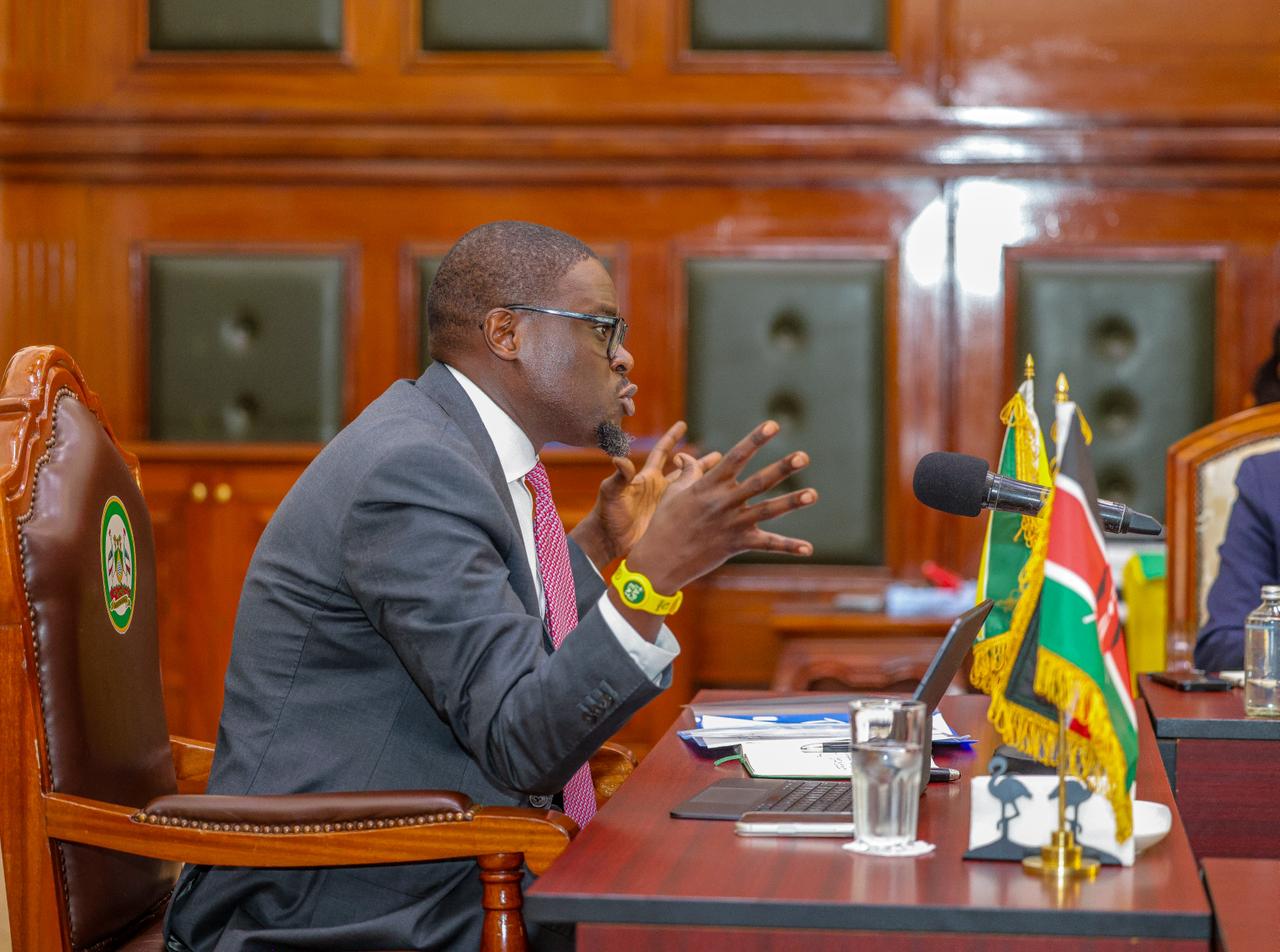
The Nairobi Governor Johnson Sakaja on Monday held an inaugural meeting days after the devolved unit entered into a cooperation agreement with the national government.
Sakaja said the new move is provided for under the Urban Areas and Cities Act but has never been implemented.
The governor told the press that apart from Nairobi being a devolved unit, it is also the capital city, the seat of the national government.
“We host the diplomatic community and therefore, infrastructure to support the seat of the capital and the seat of the national government needs that coordination,” Sakaja said.
Sakaja said the city cannot be financed and run just like any other county, or be left to the budget of the equitable share formula that is given to every other county.
“So for me it's a milestone that we're able now to have this coordination together. The agreement was taken through public participation on February 26 at City Hall, and on the 27 in the 17 subcounties. The members of the public overwhelmingly support this because it's about service delivery, and the report was submitted on the 1st, I think the 1st or 2nd of March at the county assembly,” Sakaja said.
Sakaja said the framework will be used by the county to get additional resources through the appropriation of the national budget as well as the county budget, but everyone shall do their work.
“We are not going to create other institutions; that was the agreement, let us use the structures that we already have within the national government and also within the county government.”
Sakaja said the meeting will also agree on coordinating a joint secretariat.
He said the report of the county assembly will be made available to the national government.
“There were minor amendments that they proposed that we shall discuss at the steering committee,” he said.
Sakaja said the structure of the agreement has two tiers.
“We have a steering committee that is chaired by the Prime Cabinet Secretary and has cabinet secretaries and representation from Nairobi County, and we have this implementation committee.”
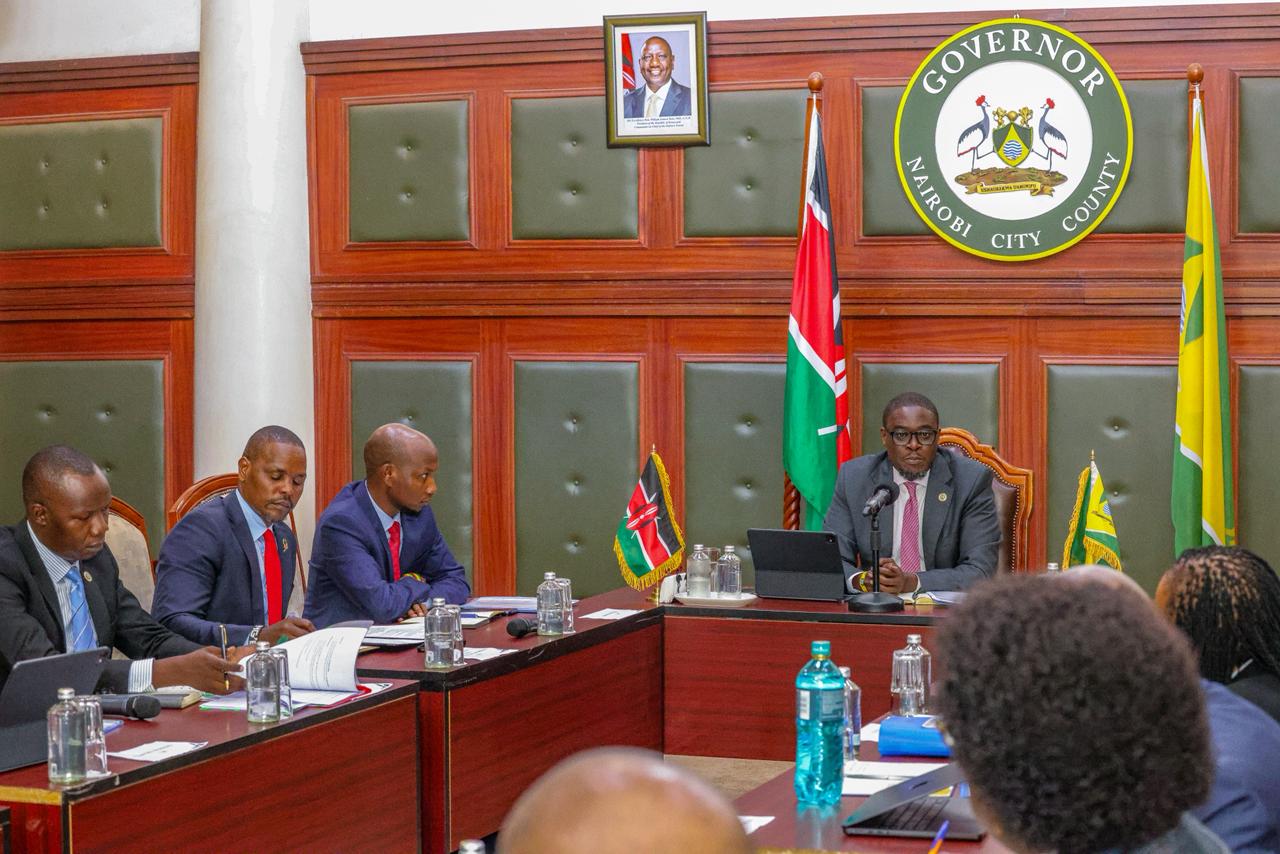
Sakaja termed the implementation committee as the engine of getting things done.
“We want to be able to move quickly. We are to meet once a month according to this provision, but I think in the beginning, for the first month, we shall meet possibly weekly, I guess for the first month and fortnightly, and we shall be flexible enough to have it virtual so that we can also keep moving.I appreciate that all of you are very busy Kenyans in your different dockets, but Nairobi is lucky that once a week we can have the focus of the national government for our capital city,” Sakaja said.
Sakaja said the new move should have been entered into 14 years ago.
He said the idea of entering into an agreement came when he was the city senator.
The governor said the inaugural meeting is meant to do housekeeping and establish the protocols that will be followed in the upcoming meeting.
Sakaja said the interim Secretary has come up with an agenda to set up the committees and have a work plan in place.
Sakaja said the inaugural meeting was meant to set the tone, agree on the modalities of how they will coordinate and agree on the subcommittees.
He said the agreement looks at roads, infrastructure, housing and delivery.
Sakaja said the meeting comes against the backdrop of flooding that has claimed lives and impacted negatively on city dwellers.
He said the steering committee will be setting the general policy and direction, and is supposed to meet quarterly.
Sakaja said the committee can also meet more often in order to deliver.
He said the Principal Secretaries are the accounting officers as well as those from county government.
Present during the inaugural meeting include deputy governor Njoroge Muchiri, officials from the office of the prime minister, officials from the devolution ministry, National Treasury, Nairobi Rivers commission, county executive members, PS Environment Festus Ng’eno, National Environment Management Authority DG Mamo Mamo, among other officials.
On February 17, Nairobi signed an agreement with the national government, setting the county for a major financial and infrastructural boost.
Authorities said the move is meant to unlock billions of shillings for the capital’s urban renewal.
The pact, anchored on Section 6 of the Urban Areas and Cities Act, establishes a formal framework for collaboration between the National Government and Nairobi City County.
The agreement was signed by Prime Cabinet Secretary Musalia Mudavadi on behalf of the National Government and Governor Sakaja on behalf of the County Government at State House, marking what leaders described as a long-overdue institutional milestone in the governance of Kenya’s capital.
President Ruto, who witnessed the signing, moved quickly to dispel concerns that the deal signalled a takeover of county functions, stressing that the arrangement is purely cooperative and financial in nature.
“What we are formalising today is not a transfer of functions. Let me repeat, there is no transfer of functions taking place. For the avoidance of doubt, I have no interest in running the city; my hands are already full,” he said.
The Governor and his team must continue to run the city, he added.