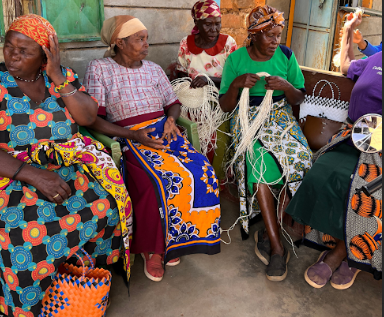
 Women weaving Kiondos/SHABA
As the world marks International Women’s Day, conversations about women’s empowerment often highlight boardrooms, policy spaces and leadership positions. Yet far from the spotlight, in rural villages across Kenya’s Ukambani region, empowerment is unfolding.
On most mornings in Kitangi village in Machakos County, the day begins with the soft rustle of sisal fibres being twisted and woven together.
Under a shade near their small weaving centre, a group of women sit in a circle, their hands moving quickly and confidently as strands of fibre slowly take the shape of a kiondo; a traditional sisal basket known locally as thungi.
The work looks effortless, almost rhythmic, but behind each basket lies years of skill, patience and a story of women who refused to let their craft remain invisible.
For Penninah Mweni, weaving is not just work. It is a lifetime.
“I started weaving in 1986,” she said. “Back then we did not have organisations or markets. We were just women trying to make something small to help our families.”
Like many women in Ukambani, Penninah learned weaving by watching older women in her community. The craft was passed down informally from one generation to the next.
But while the skill was valuable, the income it generated was painfully small.
For years, Penninah and other women in her village relied on brokers who travelled through rural communities buying baskets, leaving the women with little control over the prices.
“Some baskets would go for Sh100,” she said.
But what buyers rarely saw was the work behind that single basket.
Penninah explains that before a kiondo is even woven, women must first buy sisal fibres, often travelling long distances or relying on traders who sell small bundles at inflated prices.
“At times we would buy sisal for Sh50,” she said. “And it would not even be enough to finish one basket.”
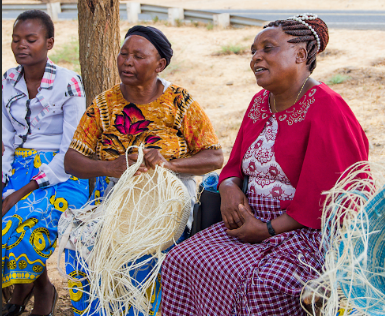 Women weaving Kiondos/SHABA
After preparing the fibres, the weaving itself could take up to two weeks, depending on the design and size.
Yet even after days of labour, the returns were painfully small.
“Sometimes you would weave for two weeks and the broker would only offer Sh300,” Penninah recalled.
For many women, that meant their time, energy and materials were barely recovered.
Yet those same baskets would later appear in urban markets selling for several times more.
“The brokers used to tell us there was no market,” Penninah said. “So we believed them because we had nowhere else to sell.”
Despite the discouraging returns, the women kept weaving, not because it was profitable, but because it was one of the few income opportunities available to them.
Despite these efforts, weaving alone still did not bring enough income.
Over time, they formed a women’s group to support each other, introducing table banking, where members contribute small amounts of money and borrow from the collective savings.
“Most of us are elderly and we did not know much about formal banking,” Penninah said.
The system allowed members to access small loans for emergencies, school fees or farming.
They also began keeping goats collectively.
“If a member receives a goat, the first kid goes back to the group,” she explained. “The second one belongs to the woman.”
That began to change when they partnered with Shaba.
A life shaped by weaving
A few kilometres away, in another weaving community, Mary Munyoli’s story with baskets began long before she became a leader in her group.
Mary was born in Kalawa, now part of Makueni County, and spent much of her life working as a teacher in the Ukambani region.
During her teaching years, she noticed something that fascinated her, women who had little formal education possessed extraordinary skills in weaving kiondos.
“They could weave beautiful baskets while still managing farms, livestock and their families,” Mary said.
For many households, weaving was one of the few ways women could earn independent income, but Mary also saw how the craft was undervalued.
“People did not see weaving as something important,” she said.
When she later moved to Mbembani in 1986, a community known for its strong weaving tradition, she became more involved with the women.
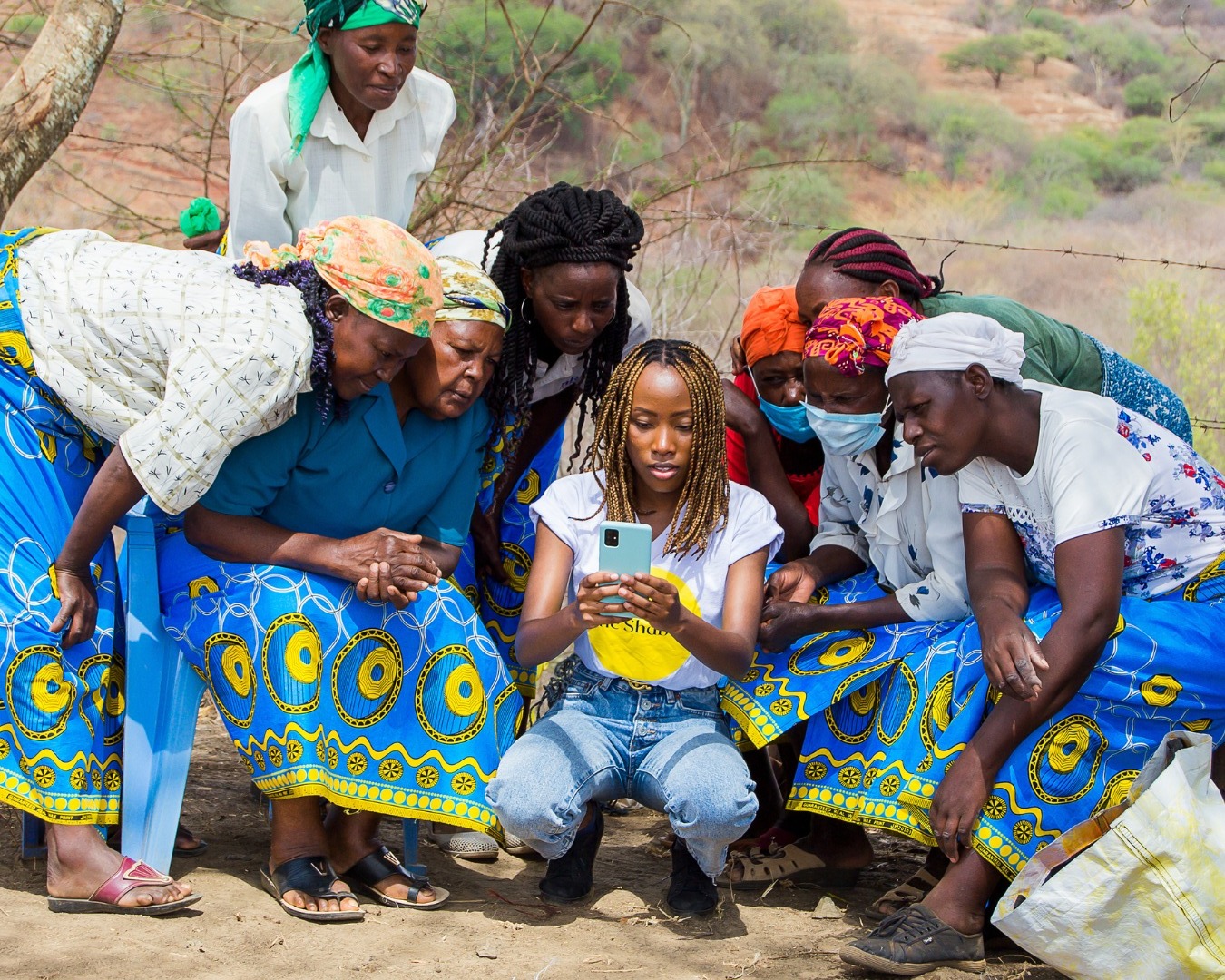 The founder of Shaba, Gloria Kisilu with one of the women group/SHABA
Her education allowed her to help them with tasks many struggled with, such as writing records and organising finances. She supported them in managing savings through table banking and gradually became deeply involved in the groups’ activities.
Eventually, Mary learned the craft herself, what began as curiosity soon became part of her identity.
“Being able to rely on the work of your own hands is very important,” she said.
Her leadership and dedication led to her election as secretary and later chairlady of the Umesio women’s group, which brings together more than 70 women engaged in weaving and other activities such as kitchen gardening and water projects.
Mary says she is proud to see women in her group gradually gain confidence through weaving and group activities, adding that the experience has also helped many women learn skills such as record keeping, teamwork, product finishing and better organisation of their production work.
However, she notes that challenges still remain, including irregular orders at times and difficulties accessing raw sisal materials, which sometimes slows down production for the women.
The arrival of a new opportunity
For years, women like Penninah and Mary had been producing baskets without real access to fair markets,that changed when they encountered Shaba, a Kenyan brand founded by Gloria Kisilu.
Gloria had grown up appreciating the beauty and cultural significance of kiondos, but she also noticed something troubling; the artisans who made them were earning very little.
“These women have incredible skills,” Gloria said. “But the markets they were selling to did not reflect the value of their work.”
Many artisans spent days weaving a single basket only to sell it for between Sh100 and Sh300.
Gloria realised the problem was not the craftsmanship but the lack of structured access to buyers, so, through Shaba, she set out to create a system connecting rural artisans directly with broader markets.
Shaba began working with rural weaving groups in 2021 with the aim of building a fairer market system that allows artisans to earn more from their craft while preserving traditional weaving knowledge.
Today Shaba works with artisan groups across several regions including Machakos, Makueni, Kitui, Taita and Kilifi a model that combines traditional craftsmanship with simple digital tools.
Using smartphones and messaging platforms, Shaba coordinates production across multiple rural communities.
Orders are allocated based on the type of design required and the weaving skills of each group.
“Our model works like a virtual factory,” Gloria explained.
The artisans weave from their homes or community centres, allowing them to balance their work with farming and family responsibilities.
Once the baskets are completed, they are collected and transported to Shaba’s workshop for finishing, quality control and branding, then they are sold to retailers or customers both locally and internationally.
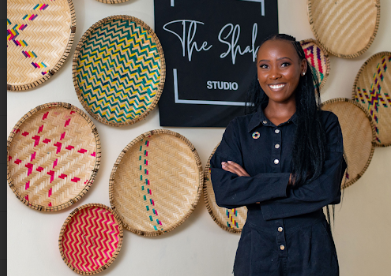 The founder of Shaba, Gloria Kisilu/COURTESY
Gloria says the journey has not been without hurdles, noting that logistics from rural areas, transport costs and ensuring consistent orders for the women remain ongoing challenges the organisation continues to work through.
The difference fair markets make
For Penninah and the women in her group, the change has been significant.
“The baskets that used to sell for Sh100 are now bought for about Sh500,” she said.
At the moment Mary and Penninah confirmed that they earn at least Sh500 to Sh4,000 for each kiondo made ranging from a size of 6-10 inches.
The increase has allowed many women to earn more stable income from weaving as some have been able to support their children’s education while others have made improvements to their homes.
For Mary and the women she leads, the transformation goes beyond money.
“Weaving has given women independence,” she said.
The economic progress has also helped the women invest in their community, through proceeds from their projects including goat sales, now Penninah’s group already bought a small plot of land and built their office centre.
“Before that we used to sit outside in the sun,” Penninah said.
Now the centre protects them from harsh weather and allows them to work together comfortably.
Even on days when weaving orders are low, the women remain active through farming and other small businesses.
Penninah says the women are grateful for the partnership because it has helped them see their craft differently and opened doors to markets they never imagined accessing.
She adds that through the engagement they have also gained new knowledge in quality control, improved weaving techniques and basic financial organisation through their groups.
For Gloria, some of the most meaningful moments are not measured in sales figures but in the confidence, she sees among the artisans.
She recalls visiting one group and watching the women proudly hold finished bags knowing they would travel beyond their village.
“For many of them, this was the first time their work was truly recognised,” she said.
Over time she has watched small but powerful changes unfold. Some women are now able to contribute more consistently to school fees. Others have improved their homes.
Gloria says that more importantly, many now speak about their craft with pride.
Gloria says that while seeing the women gain confidence has been rewarding, another proud milestone came when the work received recognition beyond the communities they serve.
“Our model of combining traditional craft with technology was recognised when we won the Africa Youth in Tourism Innovation Challenge in 2023,” she said, noting that the award affirmed that a solution rooted in rural craftsmanship can also be seen as innovation.
She adds, however, that some of her proudest moments remain the simplest ones.
“For me, it is often sitting with the women as they weave, listening to their stories and seeing a craft that has been passed down for generations continue to support families and carry value into the future.”
Celebrating women’s strength
As the world marks International Women’s Day, Gloria says the story of these women carries an important message.
“Economic empowerment begins when women recognise the value of what they already carry,” she said.
Across Kenya, she believes women possess extraordinary knowledge, creativity and resilience saying that what many lack is access to markets and systems that allow those skills to flourish.
“My message to women is to believe in the worth of their work,” Gloria said.
“Economic independence is not just about money. It is about confidence, choice and dignity.”
Each basket represents hours of patience and skill, but it also represents something more profound according to Gloria saying it tells the story of women who refused to let their craft remain undervalued and who found new pathways to dignity through the work of their hands.