
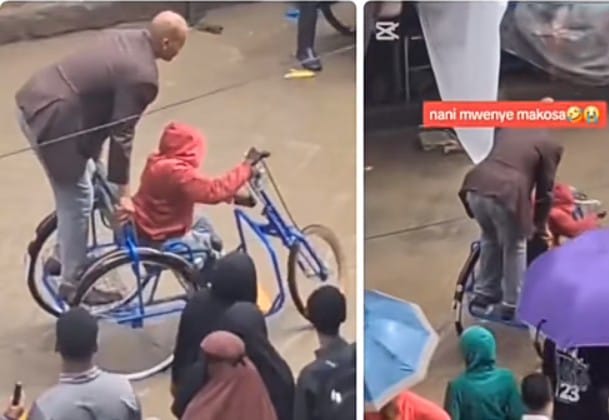
 A person with disability ferrying a man on the back of his wheelchair in a flooded area at a fee./SCREEN GRAB
Videos circulating widely on TikTok and other social media platforms have captured the extraordinary and sometimes risky ways Kenyans are navigating flooded roads following heavy rains that have disrupted movement across several parts of the city.
With roads submerged and drainage systems overwhelmed, residents have been forced to improvise creative ways to cross flooded sections, turning everyday items into makeshift transport vessels.
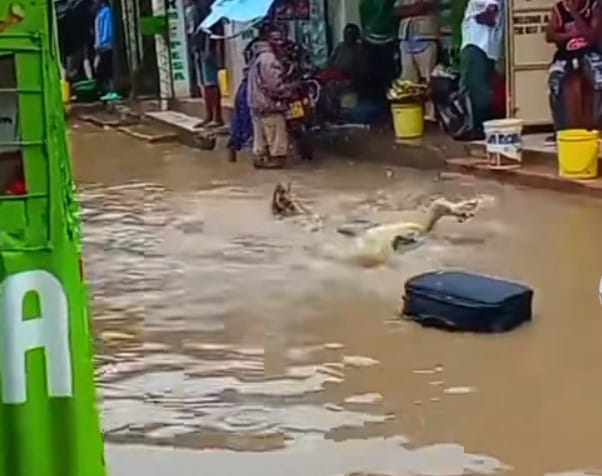 A man swimming along a flooded street in Nairobi./SCREEN GRAB
In some areas, enterprising individuals used hand-pulled trolleys to ferry people across flooded roads for a fee of about Sh50 for short distances.
The trolleys, normally used to transport goods, were pushed slowly through murky waters as passengers balanced carefully on top to avoid falling.
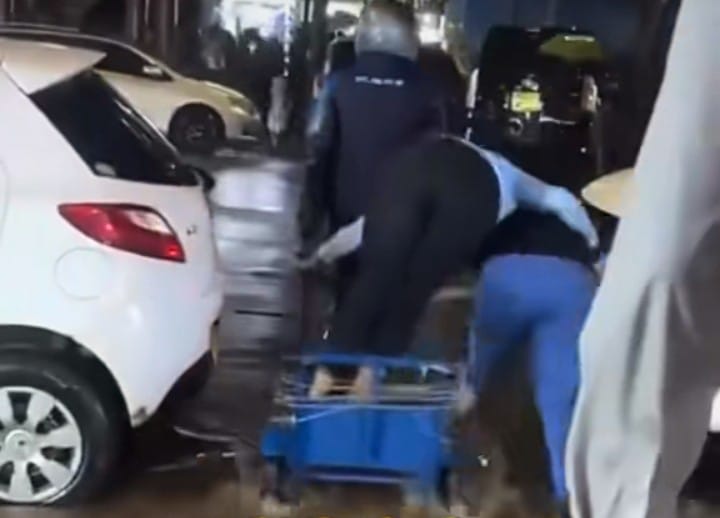 People falling of from a trolley after paying for a safe cross-over ride./SCREEN GRAB
However, not all the crossings went smoothly. Some of the viral clips showed people tumbling off the trolleys after losing balance midstream, drawing reactions ranging from concern to laughter from those recording the incidents.
Elsewhere, a group of young men was seen attempting to sail across flooded sections using large pieces of cardboard, using sticks as paddles to steer themselves through the water.
In one video, bystanders jokingly asked the improvised sailors how much they were charging passengers for the ride home, but the group laughed it off, saying they were not carrying anyone.
 A man using a cardboard as a boat to sail over a flooded area in Nairobi CBD./SCREEN GRAB
In areas where water levels were higher and currents stronger, residents devised another method: using ropes to pull people across.
One group would stand on one side of the flooded stretch and throw a rope to those stranded on the opposite side, then pull them through the water to safety.
Other residents relied on tractors, whose large tyres and strong grip allowed them to navigate the flooded roads.
Videos showed people crowding into the tractor buckets as the machines slowly powered through the water, helping commuters cross sections that had become impassable for smaller vehicles.
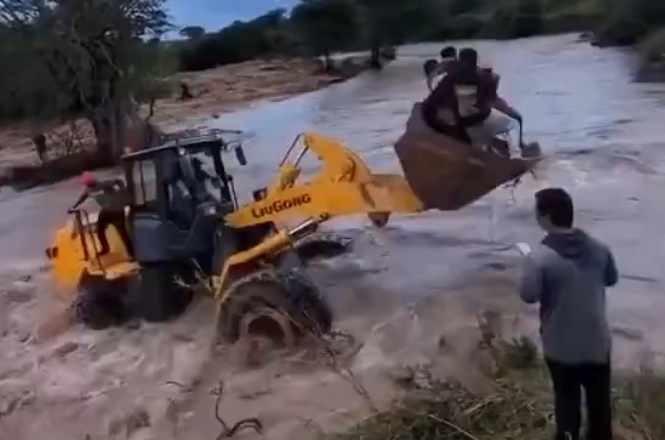 A group of people being ferried by a tractor across a flooded road./SCREEN GRAB
In some neighbourhoods, residents constructed makeshift rafts to float themselves across the flooded paths, while others chose the more daring option of swimming through the waters where currents appeared manageable.
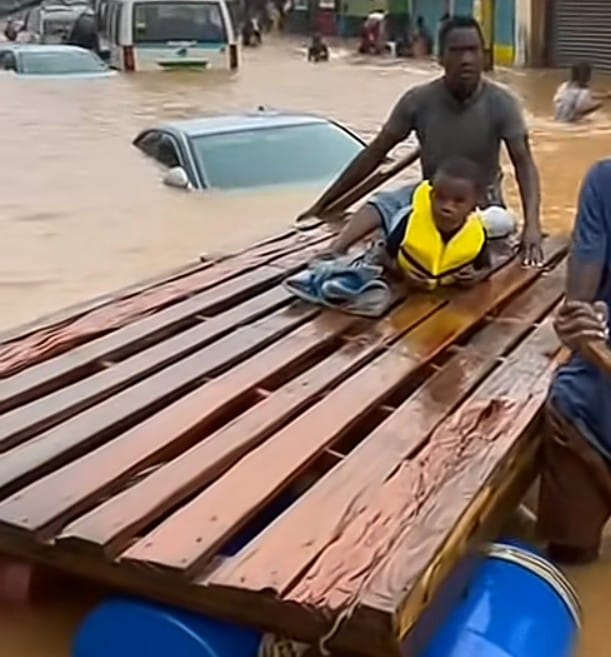 Home-made rafts made to help people cross over flooded areas./SCREEN GRAB
Passengers in some areas were also seen forming human chains to prevent anyone from being swept away.
After alighting from stalled matatus, commuters held each other’s hands tightly while wading through the rushing water to reach safer ground.
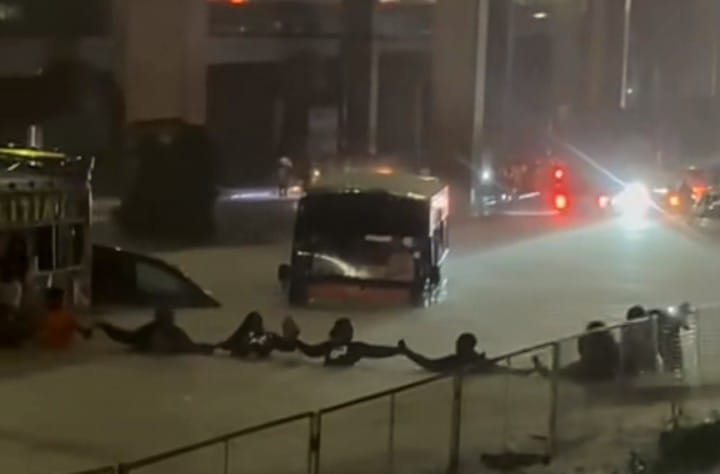 A group of passengers alighting from a matatu holding hands to aid in safe crossing./SCREEN GRAB
The flooding even turned unusual places into scenes of improvisation.
In one flooded mall supermarket, customers filmed themselves moving through the water while riding on shopping trolleys, turning the moment into a mix of survival and humour.
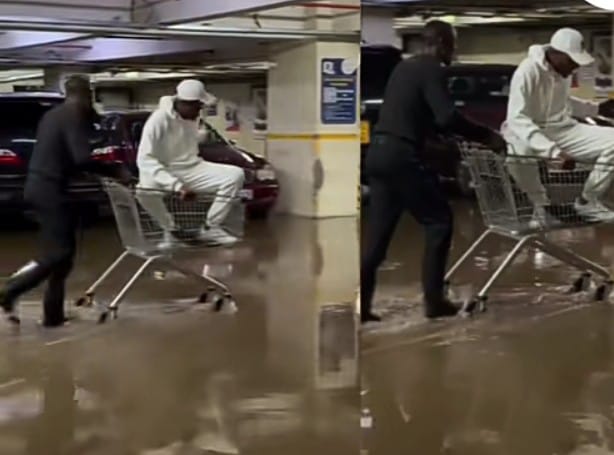 A customer at a supermarket getting a ride on a trolley./SCREEN GRAB
In Eastleigh, People With Disabilities (PWDs) also turned the situation into an opportunity, using their wheelchairs to ferry pedestrians across flooded walkways for a small fee.
Despite the ingenuity displayed by residents, the floods also caused significant danger and disruption.
Several videos showed vehicles, including private cars and Public Service Vehicles, being swept away by powerful currents after attempting to cross flooded roads.
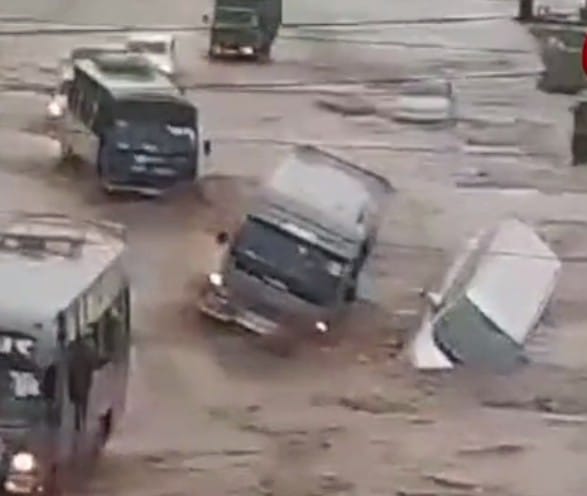 Vehicles with passengers inside being swept away by floods in Nairobi./SCREEN GRAB
The viral clips have sparked widespread discussion online, with many Kenyans praising the creativity and resilience shown in the face of the floods, while others raised concerns about the risks people are taking in the absence of safer crossing options.
As heavy rains continue to pound parts of the country, authorities have repeatedly urged motorists and pedestrians to avoid attempting to cross flooded roads, warning that even shallow-looking waters can carry strong and dangerous currents.







